
Artturi Ilmari Virtanen
Finnish biochemist and Nobel laureate (1945) noted for advances in agricultural and nutrition chemistry, especially an acid-based method to preserve green fodder that improved animal feeding and farm productivity.
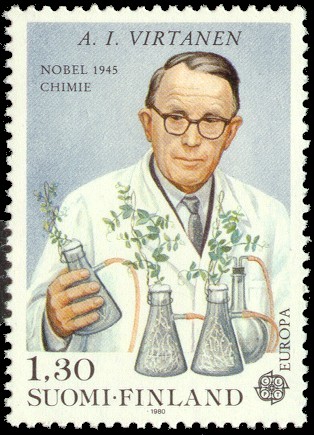
Artturi Ilmari Virtanen (15 January 1895 – 11 November 1973) was a Finnish biochemist whose work connected laboratory chemistry with practical farming problems. Born and died in Helsinki, then part of the Russian Empire and later in independent Finland, he built a career investigating the chemistry of animal nutrition and the preservation of feed.
Image gallery
9 Images


Scientific contributions
Virtanen combined analytical methods with applied research to address spoilage, nutrient loss and fermentation in animal fodder. His investigations covered enzyme activity, nutrient stability and the chemical factors that affect feed quality. These studies led to practical techniques for improving the nutritive value and safety of silage and other conserved feeds.
The AIV fodder preservation method
Most widely known is the preservation technique often associated with his initials, which used controlled acidification to prevent unwanted microbial fermentation and decay of green fodder. By adjusting acidity and handling conditions, the method limited losses of protein and vitamins and made conserved feeds more reliable through storage. This approach had particular value in cold climates where year-round pasture is impossible.
Career and recognition
Virtanen worked as a researcher and academic, focusing on problems at the intersection of chemistry and agriculture. For his research and inventions in agricultural and nutrition chemistry, and especially for his method of fodder preservation, he was awarded the Nobel Prize in Chemistry in 1945. His achievements illustrate how chemical principles can be applied to improve food supply and animal husbandry.
Legacy and notable facts
- His work helped stabilize feed quality and contributed to more efficient livestock production in northern farming systems.
- Virtanen exemplified applied biochemistry: laboratory findings translated into technologies used by farmers and feed producers.
- He remains an important figure in the history of agricultural chemistry and nutrition science.
For readers seeking further information about his life and scientific papers, consult specialized biographies and historical treatments of agricultural chemistry and Nobel archives that discuss his methods and their agricultural impact. Additional resources are available through academic and national collections interested in Finnish scientific history.
More on biochemistry · Context of his birthplace · Finland's scientific institutions
Related articles
Author
AlegsaOnline.com Artturi Ilmari Virtanen Leandro Alegsa
URL: https://en.alegsaonline.com/art/114616
Sources
- nobelprize.org : "Artturi Virtanen - Facts"
- Artturi Ilmari Virtanen