
Arturo Umberto Illia — Argentine physician and president (1963–1966)
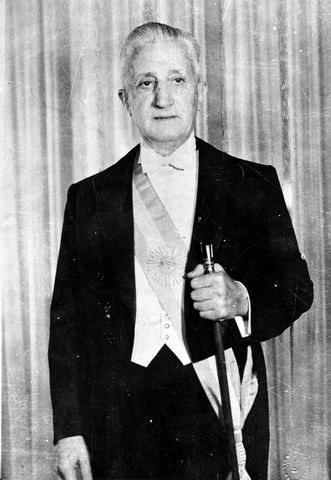
Arturo Umberto Illia (1900–1983) was an Argentine physician and centrist leader of the Radical Civic Union who served as President of Argentina from 1963 until his removal by a military coup in 1966.
Overview
Arturo Umberto Illia (August 4, 1900 – January 18, 1983) was an Argentine physician and politician who led the country as president from October 12, 1963, to June 28, 1966. A member of the centrist Radical Civic Union (UCR), Illia is remembered for a modest personal style, a professional background in medicine, and an emphasis on legality and public service during a turbulent period of Argentine history. His presidency ended when a military coup removed him from office and installed a junta that suspended many democratic institutions.
Image gallery
10 Images



Early life and political background
Illia trained and worked as a medical doctor before entering public life, and his medical profession informed his interest in public health and social welfare. He rose through the ranks of the Radical Civic Union, a long-standing political party in Argentina, and became known for his sober, pragmatic approach to politics. By the time he took office, he had a reputation for personal integrity and relative austerity compared with some contemporary politicians.
Presidency: priorities and policies
During his administration Illia sought to strengthen civilian institutions and to govern within constitutional limits. He placed emphasis on public health and education, attempting to expand access to services and to support professional and technical training. Economically, his government favored measured fiscal policies and policies intended to encourage domestic industry while trying to balance competing demands from business, labor and international interests. Illia also promoted greater transparency in public appointments and restrain on patronage.
Challenges and removal
Illia governed in a context of political polarization and economic pressure. His policies and commitment to legal processes drew criticism from conservative groups and sectors of the military. On June 28, 1966, his administration was overthrown in a coup led by military officers, an event that ushered in a period of direct military rule in Argentina and interrupted the recurring cycle of democratic and authoritarian governments during the mid-20th century.
Legacy and significance
Illia is often remembered as a symbol of probity and constitutionalism in Argentine public life. He has been praised for his personal honesty, for efforts to strengthen public services such as health and education, and for his resistance to authoritarian shortcuts. Although his time in office was short and constrained by powerful opponents, many historians and public figures regard his presidency as a notable attempt to govern by rules rather than by force.
Notable facts
- Served as President of Argentina from 1963 to 1966.
- Professional background as a medical doctor influenced social and health policies.
- Member of the centrist Radical Civic Union (UCR).
- Deposed by a military coup on June 28, 1966, which began another phase of military governance.
- Remembered for modesty, integrity and respect for constitutional procedures.
For further context on mid-20th-century Argentine politics and the role of civilian governments in that era, consult general histories of the country and resources covering the sequence of democratic and military administrations. Additional references and archival materials are available through standard historical collections and public institutions in Argentina.
Related articles
Author
AlegsaOnline.com Arturo Umberto Illia — Argentine physician and president (1963–1966) Leandro Alegsa
URL: https://en.alegsaonline.com/art/114619