
Borr (Bor) — Ancestral figure in Norse mythology
Borr (also Bor) is a scarcely attested figure in Norse myth, son of Búri, husband of Bestla, and father of Odin, Vili and Vé. He links the first generation to the gods who shape the world.
Overview
In Norse mythology, Borr (often anglicized Bor) is a relatively obscure ancestral figure. He is named as the son of Búri, husband of the giantess Bestla, and the father of the three brothers—Odin, Vili and Vé—who are credited with shaping the world and the human race. His role in surviving texts is brief but important because it places him between the primeval ancestors and the active generation of creator gods.
Image gallery
1 Image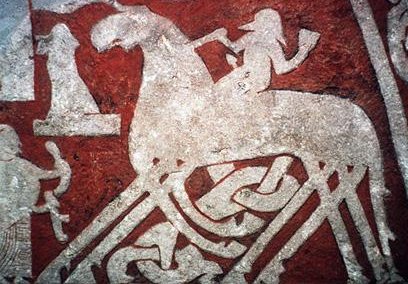
Role in myth and family
Borr stands as a transitional figure rather than an active protagonist. The myths describe how his sons slew the primordial giant and used the parts of that being to fashion the earth, sky and sea, and then created the first humans. Through his marriage to Bestla, a member of the jötunn (giant) stock, Borr represents a formative union between ancestral lines that produce the chief deities of the Norse pantheon.
Name, etymology and scholarly views
The name Borr (Old Norse: Borr or Bor) is brief and its precise origin is debated. Some scholars treat it as an inherited Germanic personal name with cognates in related languages; others see it as a mythic placeholder whose meaning may be lost. Because the surviving references are sparse, commentators differ on whether Borr should be read as a literal ancestral god, a poetic genealogical device, or a later clarification by medieval compilers attempting to organize older oral material.
Sources and attestations
Most of what is known about Borr comes from medieval compilations of Norse myth. The primary literary witnesses are the poems and prose that preserve creation accounts and genealogies of the Æsir. Readers interested in original attestations can consult editions and translations of the traditional sources:
- Creation accounts that mention the descent of the gods
- Lists of gods where Borr appears as a progenitor
- Medieval compilations and scholarly commentaries that summarize the genealogical role of Borr
Significance and legacy
Although Borr himself performs no dramatic deeds in extant myth, his importance lies in genealogy: he is the bridge between the primeval being Búri and the active generation of gods who order the cosmos. The scarcity of detail has encouraged varied interpretations in modern scholarship and popular retellings. Borr occasionally appears in modern adaptations and scholarship as a symbol of origin or as a convenient genealogical node in retellings of Norse cosmogony.
Notable distinctions
Borr should not be conflated with better-attested deities: he is not portrayed with a defined cult, myths, attributes, or set of deeds. Instead, he is primarily a named ancestor—important for lineage and cosmological ordering rather than for independent mythic action.
Odin, Vili and Vé, and connections back to Búri illustrate Borr's place in the family tree; for contextual studies of these relationships see compilations of Norse material and scholarly treatments of creation narratives and god lists.
Related articles
Author
AlegsaOnline.com Borr (Bor) — Ancestral figure in Norse mythology Leandro Alegsa
URL: https://en.alegsaonline.com/art/13158