
Boreads (Calaïs and Zethes): Twin sons of Boreas in Greek myth
The Boreads, Calaïs and Zethes, are the winged twin sons of Boreas in Greek mythology. Known as Argonauts and harriers of the Harpies in some accounts, they appear in classical epic and later art.
Overview
The Boreads (Ancient Greek: Βορεάδαι) are the twin sons of Boreas, the north wind, and usually the Athenian maiden Oreithyia. Their names are given as Κάλαϊς and Ζήτης, commonly Latinized as Calaïs and Zethes. In Greek storytelling they function as semi-divine helpers whose traits reflect their parentage: swiftness, association with cold winds, and a liminal quality between human and aerial being.
Image gallery
2 Images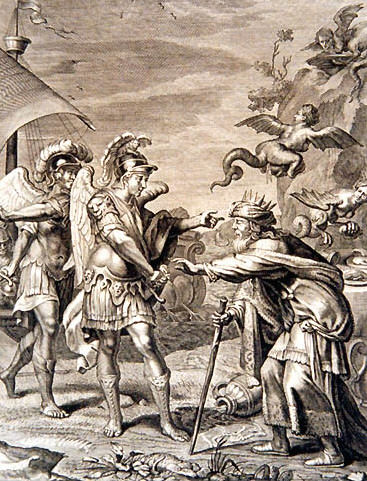

Characteristics and mythic variants
Different authors describe the brothers in varying ways. Many traditions give them wings—sometimes on their shoulders, sometimes on their feet—enabling them to fly. They are often portrayed as handsome, athletic youths with the power to move with supernatural speed. Ancient sources disagree on their ultimate fates: some say they died young, others record divine intervention that altered their destiny. Such contradictions are typical of inherited mythic figures.
Major myths and roles
The Boreads are best known for their connection to the Argonauts' voyage. In several versions of the tale they accompany Jason and the Argonauts and play a part in freeing the blind seer Phineus by driving off the tormenting Harpies. Accounts differ about how the episode ends: in some narratives the brothers pursue the Harpies until the gods restrain them; in others their pursuit has tragic results. Their actions often underscore themes of protection and the reach of the wind-god's power.
Art, symbolism, and cultural significance
In vase painting, sculpture, and later literature the Boreads symbolize the wild, unpredictable energy of the north wind and the crossing of human and divine spheres. Artists used winged figures to signal speed and otherworldliness; as sons of Boreas, the twins embody that visual shorthand. They also illustrate how Greek myth fused local legends (for example, Thracian or Athenian traditions) into pan-Hellenic epics.
Notable distinctions
- Calaïs and Zethes are distinct from other winged heroes by their paternal association with the personified wind.
- Their portrayal varies: literary epic emphasizes deeds and pedigree, while visual art emphasizes flight and form.
- They are sometimes named among the Argonauts but in other lists are absent, reflecting the flexible nature of epic lists.
Because surviving testimonies are fragmentary and often contradictory, modern accounts treat many details cautiously. Nevertheless, the Boreads remain a clear example of how Greek myth used family ties to explain supernatural abilities and to populate legendary expeditions with figures who represent elemental forces.
Related articles
Author
AlegsaOnline.com Boreads (Calaïs and Zethes): Twin sons of Boreas in Greek myth Leandro Alegsa
URL: https://en.alegsaonline.com/art/13086
Sources
- gutenberg.org : Argonautica