
Rafael Correa
Ecuadorian economist and politician who served as president from 2007 to 2017; led a constitutional overhaul, expanded social programs, challenged external debt and became a polarizing figure in national and regional politics.
Overview
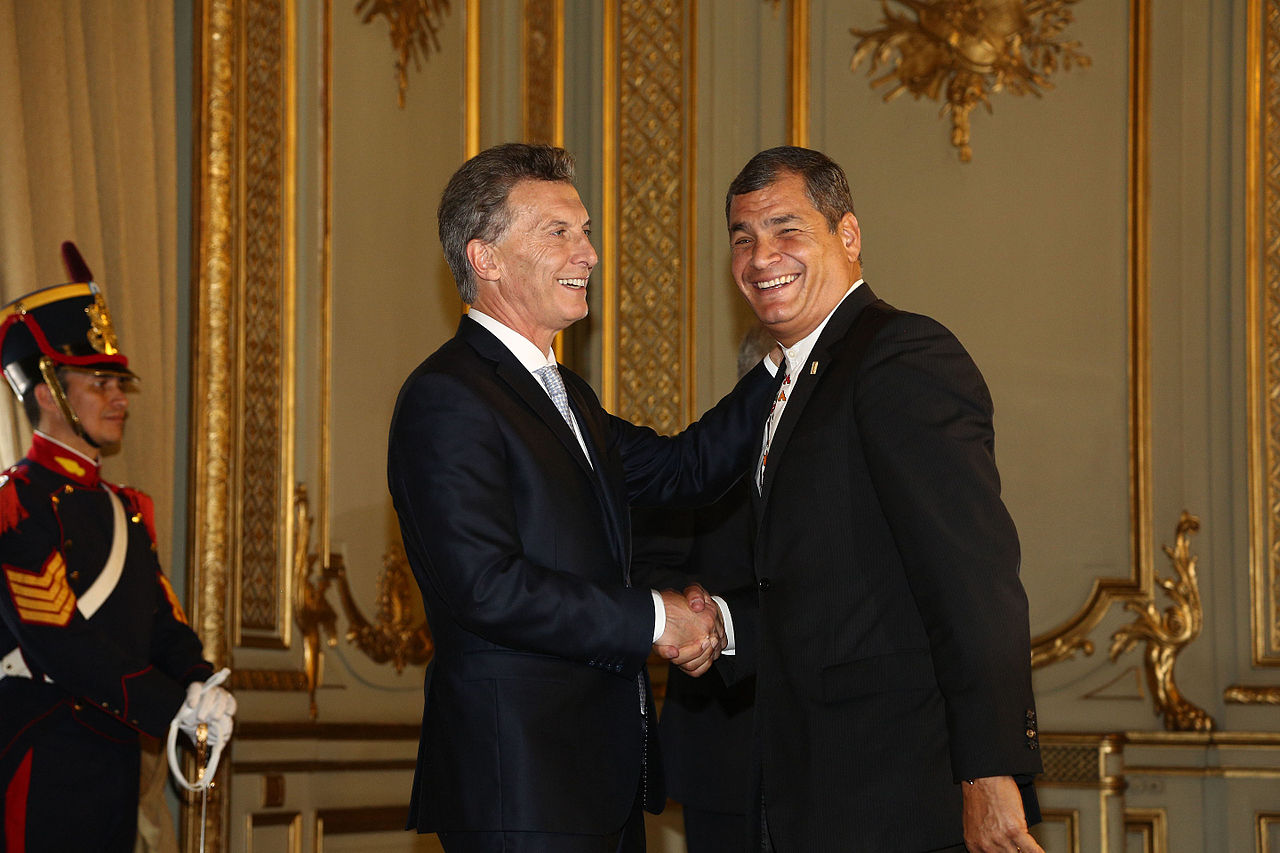
Rafael Vicente Correa Delgado (born April 6, 1963 in Guayaquil) is an Ecuadorian economist and political leader who served three consecutive terms as President of Ecuador from 2007 to 2017. His government promoted what he called a "Citizens' Revolution," combining expanded social spending, greater state involvement in key sectors and assertive diplomacy. Correa also held the rotating presidency of the Union of South American Nations; he served as president pro tempore of UNASUR in 2009–2010 (UNASUR).
Image gallery
10 Images




Background and rise
Trained in economics and active in academia and public finance, Correa worked in government and international institutions before entering national politics. He built a reputation as a critic of the prevailing economic model and of corruption within traditional parties. Running on a platform of redistributive reform and institutional change, he was elected in late 2006 and took office in January 2007.
Constitutional reform
One of the earliest and most consequential initiatives of his administration was a process of constitutional reform. A constituent assembly drafted a new constitution that was approved by referendum in 2008; the change reshaped institutions and prompted early elections in 2009 as part of a broader effort to realign state structures and policy priorities (constitutional process).
Economic policy and public finance
Correa's economic approach combined a larger role for the state in strategic sectors with efforts to increase public investment in health, education and infrastructure. His administration sought to renegotiate contracts and fiscal terms in areas such as petroleum and public services, arguing for greater national benefit from natural resources.
Debt repudiation
In December 2008 Correa's government declared certain external debt instruments as illegitimate, asserting they had been contracted under prior governments whose legitimacy his administration questioned; this stance led to the restructuring or repudiation of selected bonds and provoked international debate about debt legitimacy and creditor rights (national debt decision, see also discussion of contracts by prior regimes).
Social programs and public spending
Throughout his presidency Correa prioritized poverty reduction and social programs, expanding conditional cash transfers and public investment aimed at improving access to education and health services. Supporters credit these measures with reducing inequality and increasing social indicators, while analysts note debates over sustainability and fiscal management.
Governance, media and critics
Correa's style of government was marked by strong presidential leadership and frequent public communication. Critics accused his administration of concentrating power, passing restrictive media regulations and confronting political opponents and independent institutions. Supporters argued that reforms were needed to break entrenched clientelism and corruption.
Later developments and legacy
After leaving office in 2017 Correa remained an influential and polarizing figure. He faced legal proceedings in Ecuador that his backers described as politically motivated; he spent time abroad and continued to influence political debate. Evaluations of his decade in power vary: some emphasize measurable social gains and a reassertion of national control over resources, others highlight concerns about democratic checks, judicial independence and transparency.
Significance
Rafael Correa's presidency is often cited as part of the early-21st-century wave of left-leaning governments in Latin America that combined social policies with state-led economic strategies. His term reshaped Ecuador's institutional landscape and continues to be central to discussions about development strategy, public debt legitimacy and the balance between strong leadership and institutional accountability.
Author
AlegsaOnline.com Rafael Correa Leandro Alegsa
URL: https://en.alegsaonline.com/art/129146