
Yinghuo-1 — China’s first planned Mars spacecraft
Yinghuo-1 was China’s first planned interplanetary probe, launched with Russia’s Phobos‑Grunt in November 2011 to study Mars. It failed to leave Earth orbit and reentered in January 2012.
Overview
Yinghuo-1 was conceived as the first Chinese attempt to send a spacecraft to another planet. Built as a small Mars orbiter, it flew to space attached to the Russian mission Phobos‑Grunt. The combined vehicle launched in November 2011, but a failure in the mission’s propulsion and control systems prevented the stack from leaving low Earth orbit. Both spacecraft remained stranded and later reentered the atmosphere in January 2012.
Image gallery
4 Images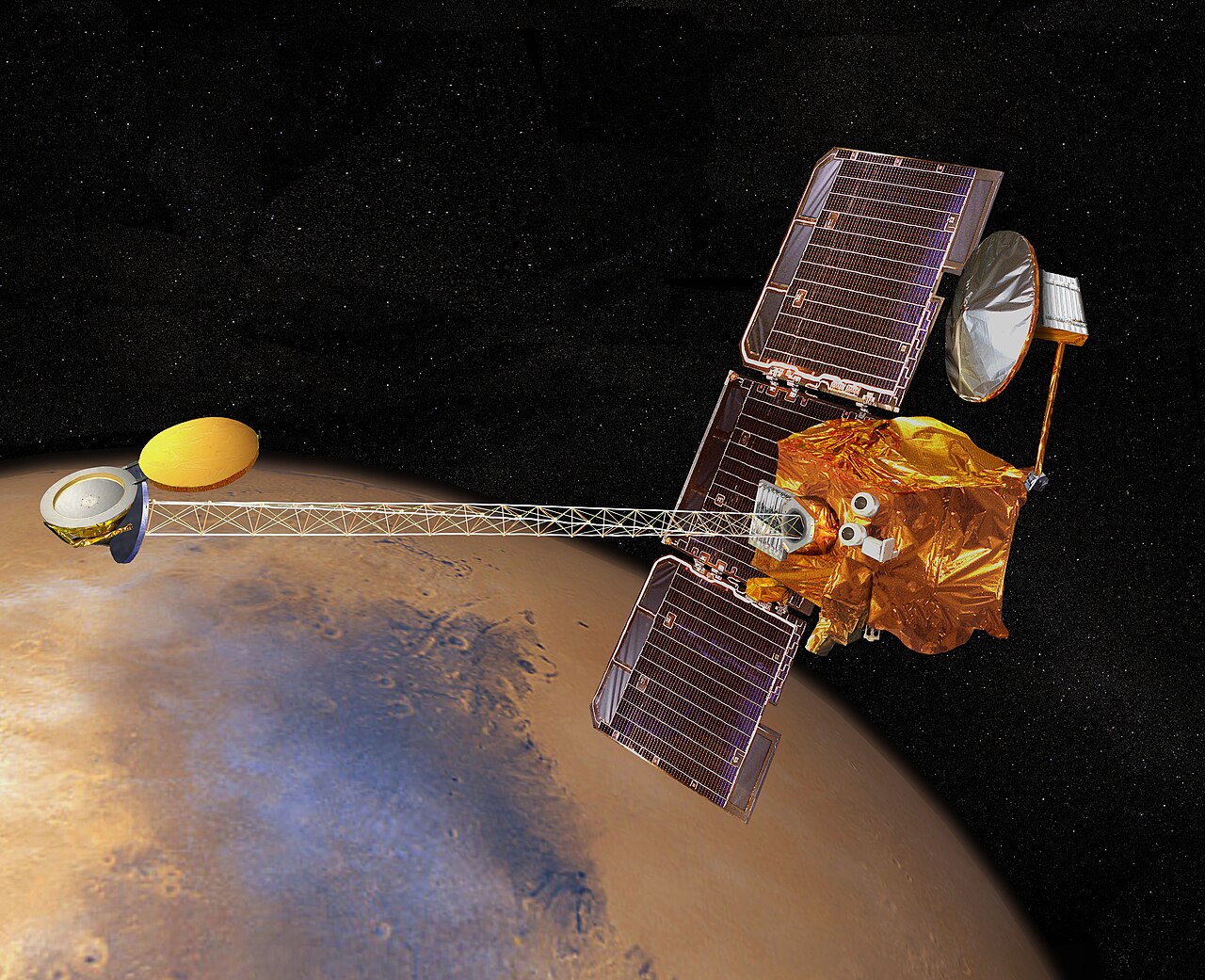


Design and instruments
The probe was a compact, modular orbiter intended to study Martian space environment and atmosphere. Its planned payload focused on imaging and on measurements of magnetic fields, plasma and the ionosphere, and atmospheric properties. Yinghuo‑1 would have relied on Phobos‑Grunt for propulsion to perform the trans‑Mars injection and cruise; its own systems were sized for orbit insertion and operations around Mars.
Mission profile and launch
The mission launched as a cooperative effort: Yinghuo‑1 was carried to orbit by the Russian Phobos‑Grunt launcher/spacecraft. The joint plan called for a cruise to the Martian system, followed by orbital operations to observe Mars and, in Phobos‑Grunt’s case, to visit the Martian moon Phobos. Because Yinghuo‑1 was dependent on the host vehicle for interplanetary departure, the anomaly that left the stack in low Earth orbit prevented any Mars transfer burn.
Scientific goals and significance
Had it reached Mars, Yinghuo‑1 would have contributed data on the near‑Mars plasma environment, the structure and dynamics of the ionosphere, and atmospheric interactions with the solar wind. Those measurements were intended to complement other international efforts to understand atmospheric escape, space weather effects, and regional dynamics on Mars.
Failure, reentry and legacy
After the launch failure, recovery attempts and troubleshooting were unsuccessful. The stranded spacecraft reentered and burned up in January 2012. Although the mission did not achieve its objectives, it provided practical experience for China in spacecraft integration, interagency cooperation, and mission planning. Lessons learned influenced later Chinese planetary programs and helped pave the way for successful missions that followed.
Notable facts
- Yinghuo‑1 was intended as China’s first interplanetary probe.
- The mission was launched with the Russian spacecraft Phobos‑Grunt.
- The probe’s purpose was to study Mars and its near‑space environment.
- Its name, Yinghuo, means "firefly" in Chinese; the craft was developed under Chinese institutions often described as national space entities and agencies (China-related).
- Contemporary reports and technical summaries are available through mission archives and international analyses (more).
Related articles
Author
AlegsaOnline.com Yinghuo-1 — China’s first planned Mars spacecraft Leandro Alegsa
URL: https://en.alegsaonline.com/art/109855
Sources
- planetary.org : "China's Yinghuo-1 Mars Orbiter"
- nature.com : "Russia takes aim at Phobos"
- rian.ru : Запуск станции "Фобос-Грунт" к спутнику Марса отложен до 2011 года
- solarsystem.nasa.gov : "Solar System Exploration"
- solarsystem.nasa.gov : "Yinghuo-1: Read More"