
Witchetty grub: larval insect, cultural food, and natural history
Witchetty grub is the large, edible white larva of several Australian moths, most famously Endoxyla leucomochla. Important in Aboriginal diets, it has distinctive biology, cultural significance and culinary uses.
The witchetty grub is the common name for the large, creamy‑white caterpillar stage of certain Australian moths. In central Australia the term most often refers to the larva of the cossid moth Endoxyla leucomochla, but it is also used more loosely for the larvae of other cossids and some hepialid (ghost moth) species. These larvae are wood‑ and root‑borers that live inside stems, roots or underground tunnels where they feed and grow until pupation.
Image gallery
2 Images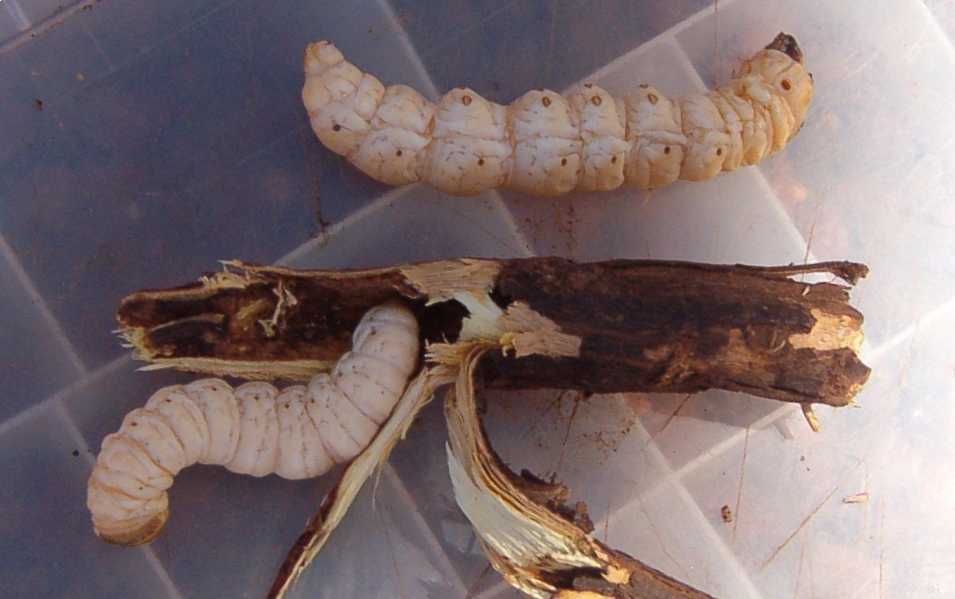

Appearance and life cycle
Witchetty grubs are typically thick, soft-bodied larvae with a pale, almost translucent cuticle and a darker head capsule. Mature individuals can reach several centimetres in length and have powerful mandibles for chewing plant tissue. Their life cycle includes egg, multiple larval instars, pupa and adult moth stages. Larvae spend most of their lives concealed in host plants or soil, emerging only as pupae and then adults. For general information on larval biology see larval stages and moth development resources such as moth families.
Habitat and diet
These grubs are found across arid and semi‑arid regions of Australia where their host shrubs and trees grow. They feed on roots, stems and woody tissue of native plants commonly referred to as "witchetty bush" and related shrubs. Their subterranean or concealed habits help them survive harsh environments and make them a reliable seasonal food source for people living in the outback. For regional information consult Australian fauna guides.
Cultural history and name
Witchetty grubs have long been an important traditional food for many Aboriginal communities in central and southern Australia. They were gathered from roots or by cutting into host plants and could be eaten raw or roasted in coals. The English name derives from the Adnyamathanha word often cited as witjuti or similar forms: elements recorded include wityu ("hooked stick") and vartu ("grub"), referring to the tool used to extract them and the larvae themselves. For perspectives on Indigenous food practices and language see traditional foods and Indigenous languages.
Nutrition, preparation and uses
Witchetty grubs are valued for their nutrient content: they provide protein, fats and micronutrients and were an important source of energy for mobile hunter‑gatherer groups. Contemporary preparation methods include roasting in hot coals, which firms the flesh and brings out a nutty flavor; they are also eaten raw in some contexts. Modern chefs and food researchers have documented culinary uses and nutritional analyses—see resources on edible insects at entomophagy and sustainable food studies at food research.
Taxonomy, conservation and notable facts
- The term "witchetty grub" is vernacular rather than taxonomic: it spans several species and families, chiefly Cossidae and Hepialidae. See taxonomic references at moth taxonomy.
- Because the larvae develop inside plants, their presence can indicate the health and distribution of host shrubs in arid landscapes.
- While traditionally abundant, habitat change and altered fire regimes may affect local populations. Conservation and cultural rights are discussed in sources such as land management and Indigenous stewardship.
Witchetty grubs remain a widely recognized symbol of Indigenous Australian bush foods and a useful example of how insect life histories intersect with human cultures, diet and ecology.
Related articles
Author
AlegsaOnline.com Witchetty grub: larval insect, cultural food, and natural history Leandro Alegsa
URL: https://en.alegsaonline.com/art/108714