
Windows 98 — Overview, features, history and legacy
Windows 98, released by Microsoft in 1998, updated the Windows 95 line with tighter web integration, FAT32 support, new utilities and a notable antitrust controversy; it remained in use on older PCs after support ended.
Overview
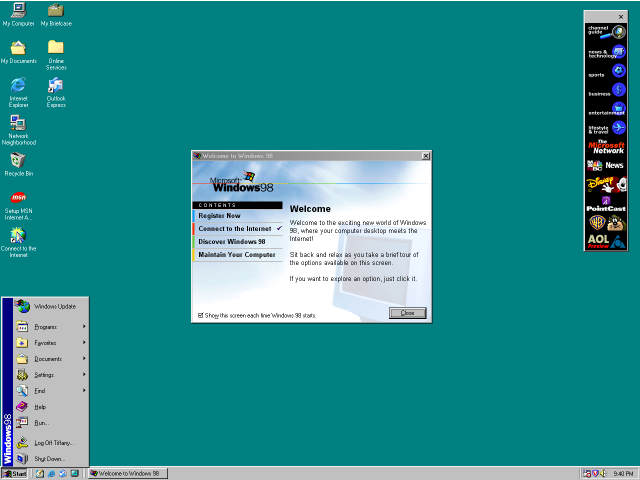
Windows 98 is a personal computer operating system developed by Microsoft. It was publicly released on June 25, 1998 as the follow-up to Windows 95 and preceded Windows XP. Built on the same DOS-based Windows 9x architecture used by its predecessor, Windows 98 was positioned as an incremental but visible upgrade focused on Internet and hardware advances of the late 1990s. Official support from Microsoft ended in July 2006, though it continued to run on many older machines beyond that date.
Image gallery
3 Images
Design and relationship to earlier releases
Rather than a full rewrite, Windows 98 extended the core design of Windows 95, maintaining compatibility with existing applications and drivers. A primary theme was closer integration with online services: the operating system embedded Internet Explorer into the desktop and file-management interfaces, a move sometimes called "web integration." This integration blurred the boundary between local file operations and Internet content and reflected how PCs were increasingly used to access the web browser-based Internet.
Key features and technical changes
Windows 98 introduced several practical improvements aimed at users and hardware makers. Important technical and usability changes included:
- Support for larger disk partitions through the FAT32 file system, which enabled more efficient use of hard drives (FAT32).
- New system utilities intended to simplify maintenance and troubleshooting, such as the System Configuration Utility (Msconfig) and Disk Cleanup.
- Inclusion of components and shell enhancements originally offered separately, for example elements from Microsoft Plus! that enhanced the desktop and visual styles.
- Improved plug-and-play and USB support to reflect a growing ecosystem of peripherals.
History, market reception and legal issues
At release, many reviewers and users characterized Windows 98 as an evolutionary update rather than a revolutionary platform. The incorporation of Internet Explorer into core parts of the user interface led to significant controversy: competitors and regulators argued that bundling the browser with the operating system gave Microsoft an unfair advantage. This dispute contributed to high-profile antitrust litigation involving the United States and other authorities, centered on whether the government should require different packaging or business practices.
Uses, legacy and distinctions
Windows 98 was widely used in homes and small businesses during the late 1990s and early 2000s. It is remembered for making the Internet a more central part of everyday PC use and for improving device compatibility at a time when faster, larger-capacity hard drives and USB devices were becoming common. Although it is no longer supported and lacks modern security protections, Windows 98 remains in use on legacy hardware and in hobbyist projects that preserve older software and games. Its role as an evolutionary step between Windows 95 and later NT-based consumer releases marks it as a significant chapter in the development of desktop operating systems.
For further historical summaries and technical details, see additional resources and archives linked from primary references and retrospectives: Overview, release information, year summary, and official Microsoft material at Microsoft.
Related articles
Author
AlegsaOnline.com Windows 98 — Overview, features, history and legacy Leandro Alegsa
URL: https://en.alegsaonline.com/art/108511
Sources
- support.microsoft.com : "Windows 98, Windows 98 SE, and Windows Me Support ends on July 11, 2006"
- cnn.com : Computer users on Windows 98: It's not revolutionary