
Windows XP: overview, editions, features, lifecycle and legacy
Windows XP (released 2001) unified Microsoft's consumer and business desktop lines. This article summarizes its architecture, editions, notable features, market adoption, security lifecycle and historical legacy.
Overview
Windows XP is a major release in the Microsoft Windows operating system family for personal computers. Officially released on October 25, 2001, the letters "XP" stand for "eXPerience" and emphasize a focus on a refined user experience combined with greater stability. Windows XP merged elements from the business-oriented Windows 2000 line and consumer-oriented Windows ME and Windows 9x products, delivering a single platform suitable for both home and enterprise use. It was succeeded in Microsoft’s consumer product line by Windows Vista, but retained a substantial installed base for many years.
Image gallery
6 Images



Development, architecture and release
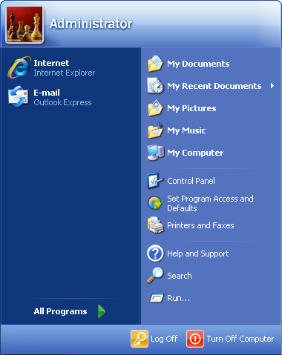
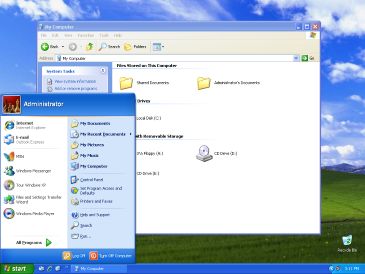
Built on the Windows NT kernel, Windows XP introduced an updated driver model, improved hardware support, and a user interface redesign. The default visual style (commonly called the "Luna" theme) and changes to the Start menu and taskbar were intended to make the desktop more approachable to general users. Under the surface, XP continued the NT family’s emphasis on process isolation, preemptive multitasking, and a more secure privilege model than legacy 9x releases.
Editions and OEM adoption
Microsoft released multiple editions of XP to serve different markets: Home Edition for general consumers, Professional for business users, Media Center and Tablet PC editions for specialized hardware, and later 64-bit variants for compatible processors. The combination of compatibility, improved multimedia and networking features, and broad vendor support led many manufacturers to ship PCs with XP preinstalled. Major OEMs included Dell, Hewlett-Packard, Acer, IBM, Compaq, and Toshiba.
Notable features
- Improved stability and performance compared with earlier consumer releases.
- User interface enhancements including a refreshed Start menu, taskbar behavior, and system themes.
- Fast User Switching and System Restore to aid multitasking and recovery.
- Integrated networking and support for a wide range of peripherals, contributing to rapid OEM adoption.
- Product activation and updates mechanisms intended to reduce piracy and simplify maintenance.
Market adoption and commercial success
Windows XP became one of the most widely used desktop operating systems of its time and sold hundreds of millions of licenses. Its combination of enterprise-grade architecture and consumer features led to extended use in both homes and organizations. By many measures it was the dominant desktop OS for much of the 2000s and held a notable share of worldwide installations well into the following decade; some reports cited it as the second most used desktop operating system globally as late as 2012 (usage reports).
Security, support lifecycle and end of service
Microsoft provided regular security updates for Windows XP for many years. Official mainstream support ended earlier, with extended support and security updates ceasing on April 8, 2014. After that date, Microsoft issued only limited, exceptional patches to address particularly severe threats or widely exploited vulnerabilities—for example emergency updates released in response to major ransomware outbreaks and critical remote-execution bugs such as the BlueKeep family of vulnerabilities. Microsoft and security authorities strongly advised users to migrate to supported platforms due to increasing exposure to modern threats.
Over time, support for legacy online services and games was phased out: Microsoft retired various online game services and other platform-dependent features on different schedules, affecting Windows XP and other older releases. Organizations that needed continued operation sometimes employed compensating controls, isolation of legacy systems, or paid support arrangements to manage risk.
Legacy and historical significance
Windows XP is remembered for bridging consumer convenience and enterprise reliability. Its long lifespan shaped software and hardware ecosystems, influenced user expectations about desktop usability, and highlighted the challenges of migrating large user populations to newer platforms. Even after the end of official support, XP continued to appear in specialized devices, industrial systems, and legacy applications where upgrades were difficult. The factors that prolonged its use—application compatibility, hardware constraints, certification dependencies and organizational inertia—offer lessons for current and future platform transitions.
Further reading and resources
For official documentation, historical overviews and vendor materials consult the following resources and archives. These links are provided as entry points to publisher, technical and historical content:
- Microsoft Windows main site
- Overview of the Windows operating system family
- Personal computing and platform context
- Windows 2000 (related business line)
- Windows NT architecture and kernel
- Windows 9x legacy releases
- Windows Vista (successor)
- Usage and market-share reports
- Dell (OEM examples)
- Hewlett-Packard (OEM examples)
- Acer (OEM examples)
- IBM (historical OEM details)
- Compaq (historical OEM details)
- Toshiba (OEM examples)
- Ransomware incidents prompting emergency updates
- Major malware and vulnerability advisories
- Windows ME (consumer predecessor)
- Windows 7 (subsequent Windows release)
- Windows 8 (later release)
- Windows 8.1 (later release)
Questions and answers
Q: What does the acronym "XP" stand for?
A: XP stands for eXPerience.
Q: When was Windows XP released?
A: Microsoft released Windows XP on October 25, 2001.
Q: What versions of Windows did it replace?
A: Windows XP replaced Windows 2000 and Windows ME.
Q: Who were some of the computer manufacturers that rebadged their computers to use Windows XP?
A: Dell, Hewlett Packard, Acer, IBM, Compaq, and Toshiba all rebadged their computers (mostly laptops) to use Windows XP from Windows 2000.
Q: When did Microsoft stop supporting Windows XP?
A: Microsoft stopped supporting Windows XP on April 8, 2014 with some exceptions such as security updates in 2019 to address ransomware threats and major malware threats like BlueKeep.
Q: How popular was the operating system at its peak?
A: At its peak,Windows XP became the most popular operating system from 2001 to 2007 selling over 500 million copies individually and pre-installed combined.
Q: What percentage of PCs still run on this version of windows today?
A As of June 2021, 0.6% of PCs still run on this version of windows today.
Related articles
Author
AlegsaOnline.com Windows XP: overview, editions, features, lifecycle and legacy Leandro Alegsa
URL: https://en.alegsaonline.com/art/108542