
Wide-angle lens
A photographic lens with a shorter focal length than a normal lens, providing a wider angle of view, distinctive perspective effects, and practical uses in landscapes, architecture, interiors and creative photography.
A wide-angle lens is a photographic lens whose focal length is shorter than that of a normal lens, giving it a larger angle of view than a standard lens. The term refers primarily to how much of a scene the lens can capture from a given position rather than to optical quality. For many 35mm-format systems the classic reference or "normal" lens is close to 50mm; lenses of 35mm and shorter are commonly classed as wide-angle. See also focal length and normal lens.
Image gallery
4 Images


Characteristics and types
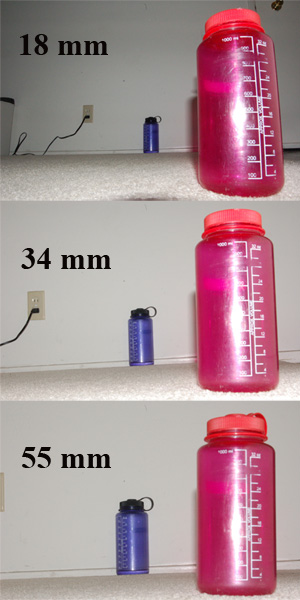
Wide-angle lenses offer a broad field of view and increased depth of field at given apertures, which makes them useful when you want to keep both foreground and background in reasonable focus. They also exaggerate the sense of perspective: objects close to the camera appear relatively larger compared with distant objects. This quality can be used creatively or may require correction in architectural and documentary work.
- Degrees of wide-angle: for the 135 (35mm) film format, common focal lengths are 35mm (about 63°), 28mm (75°), 24mm (84°), 20mm (94°), 17mm (104°) and 14mm (114°).
- Rectilinear vs fisheye: rectilinear wide-angle lenses try to keep straight lines straight, while a fish eye lens produces a characteristic curvilinear distortion that captures an extremely wide field.
- Prime vs zoom: wide-angle primes often deliver higher sharpness and simpler construction; wide-angle zooms provide flexibility across several focal lengths.
History and design considerations
Wide-angle designs evolved as camera bodies and formats changed. In single-lens reflex (SLR) cameras, specialized "retrofocus" or reverse-telephoto optical layouts were developed to increase the distance from the rear lens element to the film or sensor, allowing clearance for the mirror mechanism. Optical compromises such as vignetting, edge softness and various forms of distortion have been reduced over time by better glass, coatings and complex element groupings.
Digital sensors and effective focal length
On digital cameras with sensors smaller than 35mm film, a lens of a given focal length produces a narrower angle of view than it would on full-frame film. This is often described using a "crop factor" or multiplier. For example, some digital bodies with a 1.5× crop factor will make an 18mm lens behave like a 27mm lens in terms of angle of view; an 18mm on such a body can give roughly the same field of view as a 28mm lens on 35mm film. Key references include discussions of sensor size and APS-C formats—see information for digital cameras and the 135 (35mm) film format and other film types.
Uses and practical examples
- Landscape photography: capture wide vistas and foreground detail.
- Architecture and interiors: include large structures or confined spaces, often combined with perspective control or tilt-shift lenses to reduce converging verticals.
- Street and documentary work: emphasize context and environment around subjects.
- Creative and dramatic effects: foreground exaggeration or immersive viewpoints; fisheye lenses are common for stylized or scientific applications.
Distinctions and related terms
Wide-angle lenses are the opposite of a telephoto lens, which has a long focal length and narrow angle of view. Within the wide-angle category, terms such as "ultra-wide" and "super-wide" are used informally to describe progressively shorter focal lengths. Architects and product photographers may prefer tilt-shift or perspective-control wide-angle lenses to correct perspective distortion, while filmmakers and photographers may select different wide-angle zooms or primes depending on the desired look and working distance.
For practical comparisons and lens specifications consult technical resources or manufacturer data. Further reading and examples of focal length behavior, image circles and format equivalence can be found via general photography references and manufacturer guides: focal length, normal lens, 135 film, film, digital cameras and telephoto lens.
Related articles
Author
AlegsaOnline.com Wide-angle lens Leandro Alegsa
URL: https://en.alegsaonline.com/art/107954