
Wind chill
Wind chill is the perceived decrease in temperature on exposed skin caused by wind increasing heat loss; used by meteorologists to indicate frostbite and hypothermia risk in cold conditions.
Wind chill describes the apparent lowering of temperature felt on exposed skin when moving air increases heat loss from the body. It combines a measured air temperature with the cooling effect of wind to produce a single value — the wind chill — that is typically lower than the actual thermometer reading. The concept helps convey how cold conditions are likely to affect people outdoors.
Image gallery
4 Images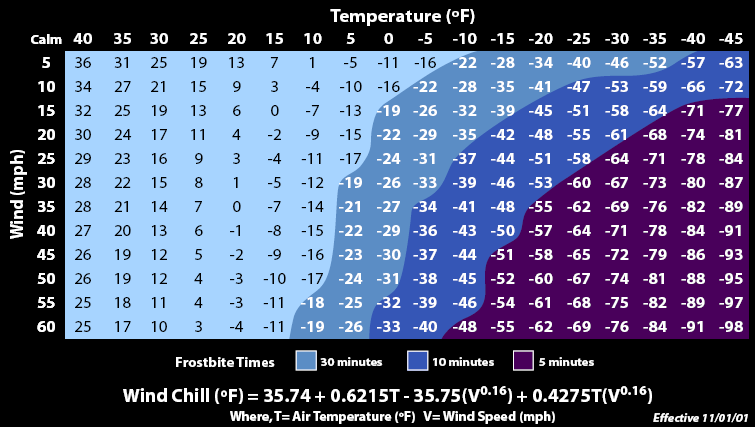
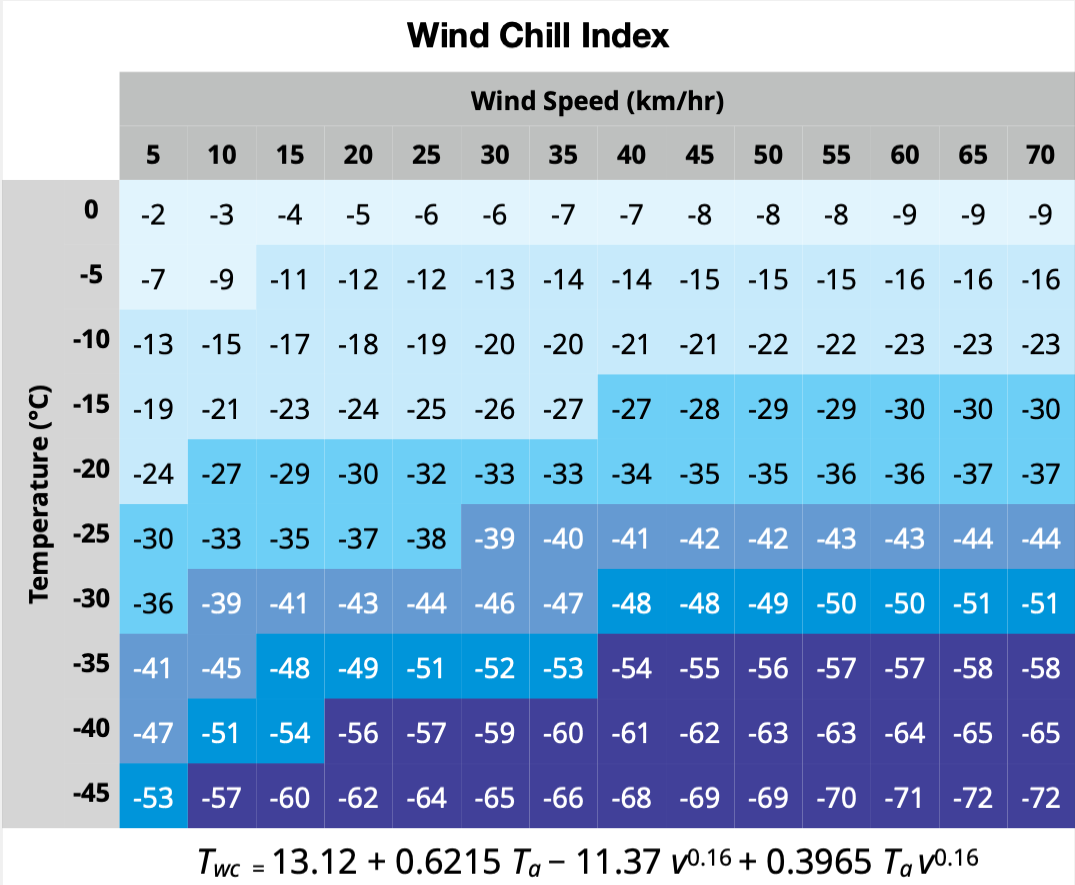


How wind chill works
Wind increases convective heat transfer from skin and from layers of clothing, so the body must produce more warmth to maintain normal temperature. Wind chill estimates the rate of heat loss and expresses it as an equivalent temperature. Important caveats: wind chill applies to exposed, living tissue and does not lower the physical temperature of solid objects below the ambient air temperature. Standard wind-measurement assumptions are used when calculating wind chill so forecasts are consistent.
- Health risks: higher wind chill accelerates heat loss, raising the risks of frostbite and hypothermia.
- Not for objects: it does not literally make inanimate surfaces colder than the air.
- Depends on exposure: clothing, activity, and wetness change the effective risk.
History and standards
The first formal wind chill scale grew out of field work in the 1940s by explorers who measured cooling effects on skin. Meteorological agencies later refined the index and, in the early 21st century, an updated standard formula replaced older scales to give more accurate, comparable values. Different countries may present wind chill with slightly different conventions, and forecasters pair it with other metrics such as the heat index when communicating apparent temperatures under different conditions.
Practical use of wind chill appears in weather forecasts, public safety warnings, and planning for outdoor work or recreation. Simple precautions — layered, windproof clothing, covered extremities, and limiting exposure — reduce risk. Children, older adults, and people with certain medical conditions are especially vulnerable.
For further technical or educational reading, sources typically explain the measurement basis (standardized wind height and instrument settings) and why the index focuses on human thermal comfort rather than object temperatures. To learn more about the component terms, see entries on air temperature, wind, and human thermal response body.
Questions and answers
Q: What is wind chill?
A: Wind chill is the decrease in air temperature felt when wind touches the body.
Q: Are wind chill numbers higher or lower than the actual outside temperature?
A: Wind chill numbers are always lower than the actual outside temperature.
Q: What is used to measure temperature when the temperature felt outside is higher than the actual temperature?
A: The heat index is used.
Q: How does wind chill affect the body?
A: Wind chill can make the body feel much colder than the actual temperature outside, leading to potential frostbite or hypothermia.
Q: Can wind chill affect different parts of the body differently?
A: Yes, wind chill can affect exposed areas of skin like the face and hands more severely than areas covered by clothing.
Q: Is wind chill only a concern in extremely cold temperatures?
A: No, wind chill can be a concern even in mildly cold temperatures if there is a strong wind.
Q: How can someone protect themselves from the effects of wind chill?
A: To protect themselves from the effects of wind chill, someone should dress warmly in layers, cover exposed skin, and limit exposure to wind when possible.
Related articles
Author
AlegsaOnline.com Wind chill Leandro Alegsa
URL: https://en.alegsaonline.com/art/108469
Sources
- nws.noaa.gov : "NWS Windchill Temperature"