
Whiskey Rebellion (1791–1794): tax resistance and federal authority in early U.S.
An overview of the Whiskey Rebellion (1791–1794): causes, events in western Pennsylvania, federal response led by George Washington, and its significance for federal power and taxation.
The Whiskey Rebellion was a major early challenge to the authority of the new federal government of the United States. It grew from popular resistance to an excise tax on distilled spirits and culminated in violent protests and intimidation in the 1790s. The episode raised questions about taxation, regional economics, and how far the national government could enforce its laws among citizens and local communities.
Image gallery
10 Images






Background and causes
In the aftermath of the American Revolutionary War, the federal government faced heavy debts and limited revenue. Secretary of the Treasury Alexander Hamilton proposed a range of measures to stabilize finances, including an excise on domestically distilled spirits. Small-scale distilling was common on the frontier: for many small farmers in western Pennsylvania and other frontier areas, converting grain into whiskey reduced bulk, preserved value, and served as a medium of exchange. Many farmers perceived the tax as an unfair burden that privileged large eastern distillers and penalized frontier economies.
Course of events
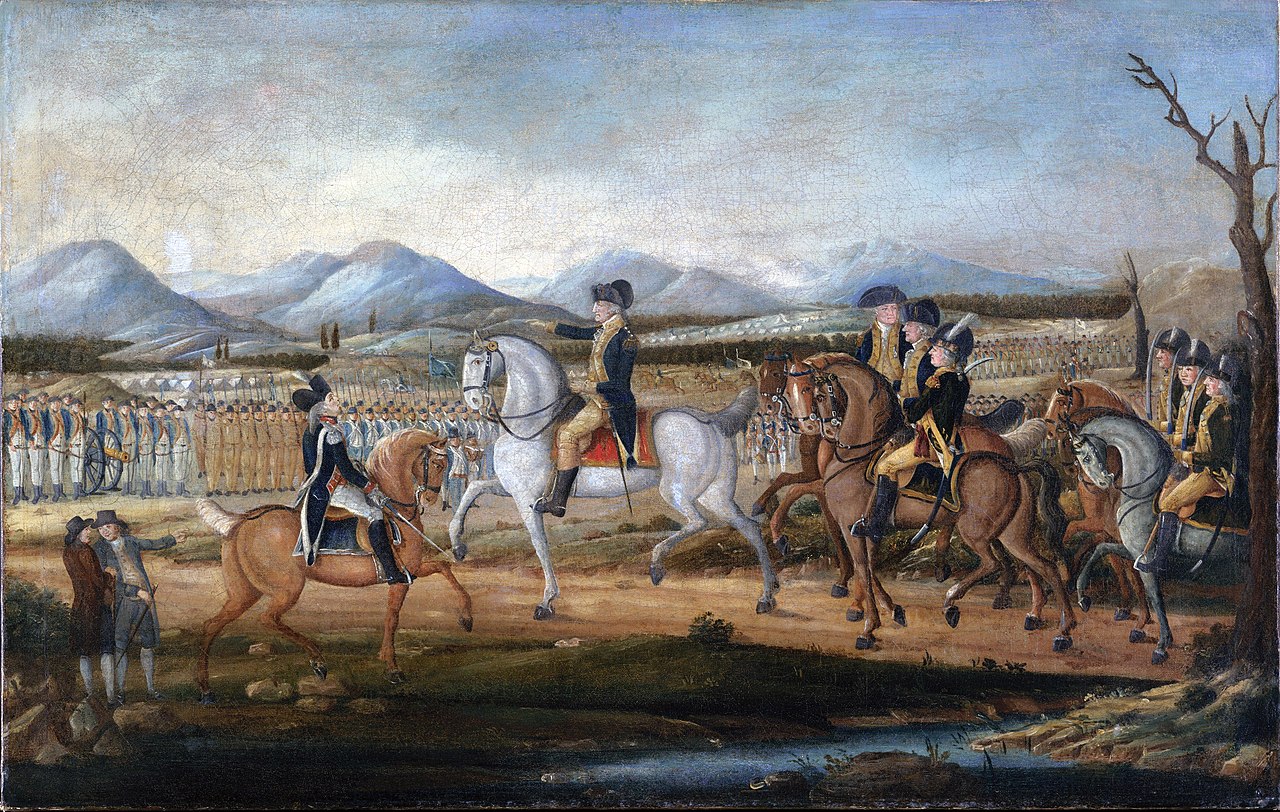
Protests escalated from petitions and refusals to pay into attacks on tax collectors and officials. Local resistance featured both peaceful and violent actions; courts and federal officials recorded threats, tarring-and-feathering, and armed assemblies. The situation intensified by 1794, prompting the national government to respond. President George Washington, with counsel from Hamilton, called out militia forces and personally oversaw the mobilization of a large federal and state militia force to enforce the law. Washington's decision to lead and to bring roughly 13,000 troops to the region persuaded many insurgents to disperse before a major confrontation occurred.
Aftermath and significance
The show of force resulted in relatively few arrests and few violent clashes, but it established an important precedent: the national government would act to enforce federal laws. The response strengthened the practical authority of the presidency and the federal judiciary while highlighting political divisions between supporters of a strong central government and advocates of greater local autonomy. Some indicted participants were later pardoned, and the tax system itself continued to evolve.
Key points and legacy
- The dispute began as opposition to an excise tax on distilled spirits and reflected frontier economic realities.
- Resistance clustered in western Pennsylvania but inspired similar sentiments elsewhere.
- Washington's use of militia and federal authority remains a defining early test of the Constitution and national power.
- The episode involved many actors and local incidents documented in courts and newspapers of the time; it is often cited by historians when discussing federal enforcement and civil unrest.
For further reading on primary sources and detailed accounts, see contemporary records and later historical studies that examine the tax, the protests, and the government's response in context. The conflict is sometimes referenced as the only occasion when a sitting U.S. president personally directed militia operations in the field, underscoring how novel the federal government's assertion of power was at the time. For broader context on the political debates and economic background, consult resources on early American fiscal policy and the administrations that shaped it.
Related topics include the broader tensions between frontier and coastal interests, the development of federal taxation, and the emergence of organized political factions in the 1790s. These themes connect the Whiskey Rebellion to continuing questions about taxation, protest, and governmental authority in the United States.
See also: national policy of the early republic, legal responses to insurrection, and biographies of key figures such as Alexander Hamilton and George Washington for their roles in shaping the response to the crisis. Additional contextual links and collections of primary materials are available through specialized archives and historical projects that document the period.
Primary judicial and press accounts provide granular detail about incidents, participants, and local motivations; researchers often consult those sources to understand how community-level disputes became a national political issue. The Whiskey Rebellion remains a frequently cited example of how the early United States balanced popular resistance and enforcement of federal law.
Other relevant resources and explanations of terms related to this event can be found through archival collections and academic summaries that discuss the causes, timeline, and consequences of the conflict.
For quick reference: the rebellion tied fiscal policy to questions of legitimacy, compelled a forceful federal response, and influenced how subsequent administrations approached law enforcement and taxation—issues still debated in American political life.
Further searches and collections may be discovered through specialized historical portals identified in research guides and academic bibliographies; these often link to digitized documents and analyses for deeper study.
Additional reference starting points: United States government records, regional histories of western Pennsylvania, and scholarly works on early American fiscal policy.
Related articles
Author
AlegsaOnline.com Whiskey Rebellion (1791–1794): tax resistance and federal authority in early U.S. Leandro Alegsa
URL: https://en.alegsaonline.com/art/107772