
Alexander Hamilton: Founding Father, financier, and political leader
Concise encyclopedia entry on Alexander Hamilton: his life, roles in the Revolution and founding era, financial program, writings, rivalry and legacy, with further reading links.
Alexander Hamilton was a central figure in the American founding era: a soldier, lawyer, political organizer, author and the first Secretary of the Treasury of the United States. Born on the island of Nevis in the Caribbean, he rose from modest and uncertain beginnings to become one of the most influential architects of the early federal government. Hamilton's work shaped the nation's financial institutions, legal arguments for a stronger union, and the contours of early party politics. His life combined public achievement with intense personal conflict, and his death in a duel made him a lasting symbol of the volatile early republic.
Image gallery
10 Images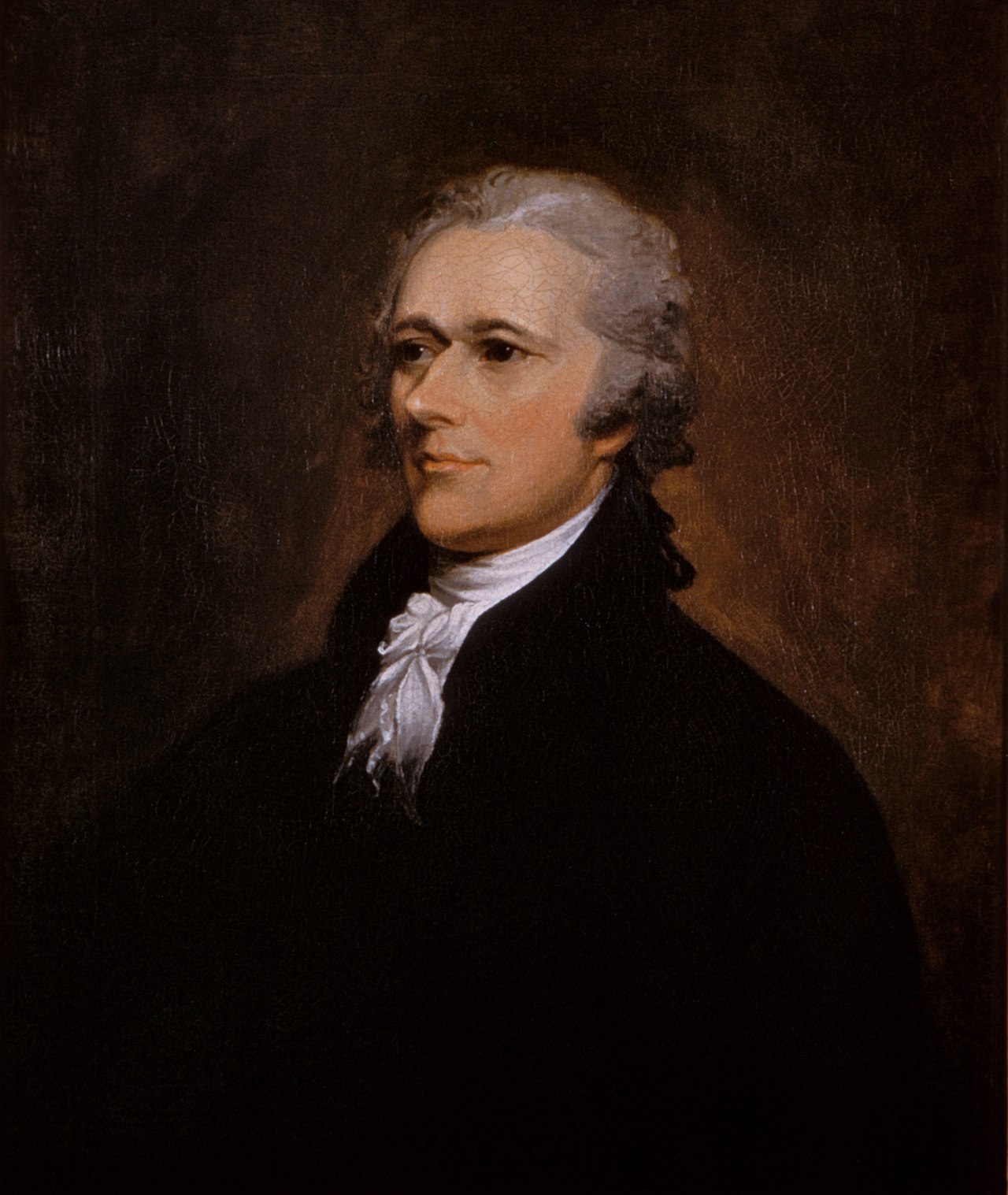




Early life and military service
Hamilton's exact year of birth is sometimes reported as 1755 or 1757; he was born on January 11 and spent his youth in the West Indies. Educated in part through local patrons and self-study, he emigrated to the continental mainland and enrolled in school in New York. When the Revolutionary War broke out he joined colonial forces and quickly won notice for his energy and skill. Hamilton served as an artillery officer and later became a trusted aide to General George Washington, performing duties that ranged from staff work to battlefield leadership. That wartime experience and the connections it produced were decisive for his later political career.
Political thought, writing, and institution building
After the war Hamilton trained in law and practiced in New York while remaining active in public debates. He was a prominent advocate for a stronger national government and played a major role at the Constitutional Convention. With James Madison and John Jay he produced the Federalist Papers, a collection of essays arguing for ratification of the Constitution and explaining the proposed system of checks and balances. As the first Secretary of the Treasury under President Washington, Hamilton designed a financial program that emphasized public credit, a centralized banking institution, and federal assumption of state debts. Those policies established steady credit for the new nation and promoted commercial development, but they also provoked political opposition and helped crystallize early partisan lines.
Party conflict, rivalry, and political career
Hamilton's economic program and his preference for a commercially oriented, broadly centralized republic put him at odds with leaders who favored agrarian independence and decentralized government, most notably Thomas Jefferson and his allies. Hamilton became a leader of the Federalist faction, which supported investment in national institutions and stronger executive authority. Internally he combined high intellect with an often combative personal style; his leadership produced both loyal supporters and determined adversaries. He remained active in political controversies after leaving his cabinet post, influencing policy debates, supporting candidates, and engaging in journalism and legal work.
Death and legacy
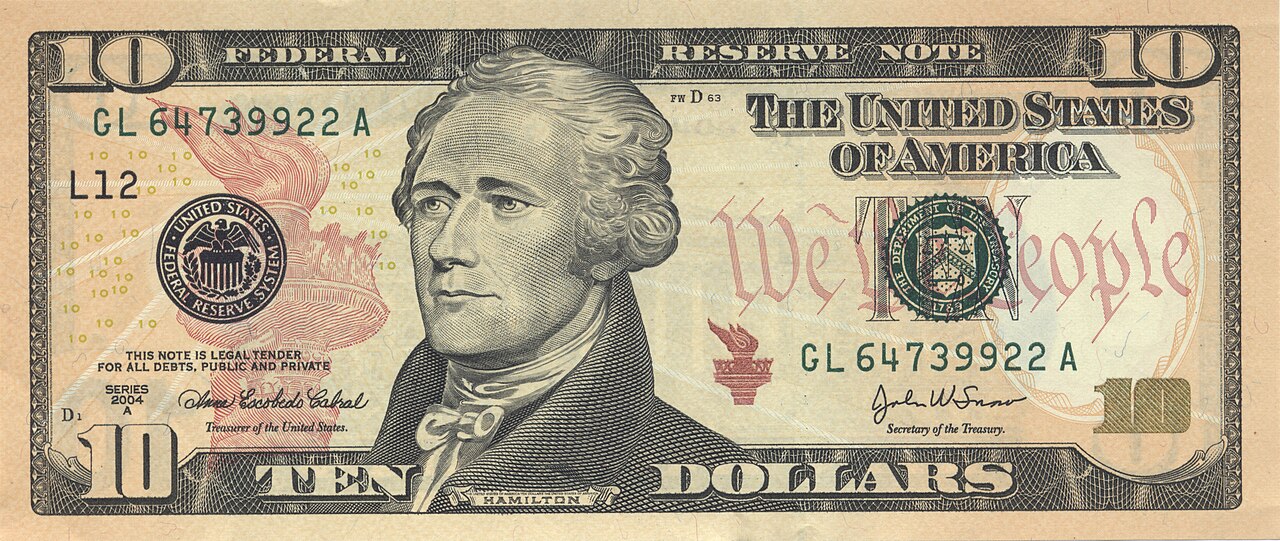
Personal enmities and political disputes culminated in a fatal encounter in 1804 when Hamilton was mortally wounded in a duel with Aaron Burr, the sitting vice president. His death abruptly ended a career of prominent public service and left mixed assessments: admired for his policy innovations and constitutional arguments, criticized by opponents for his political tactics. Hamilton's influence endures in the structure of American public finance, the practice of constitutional interpretation, and in popular memory: his portrait appears on the United States ten-dollar bill and his life has been the subject of extensive historical study, biographies, and cultural portrayals.
Notable aspects and examples
- Founding documents: Co-author of the Federalist Papers, a key source for interpreting the Constitution; see biographical overview.
- Financial system: Proposed public credit, a national bank, and federal assumption of state debt; see policy summary.
- Legal and journalistic work: Practiced law and wrote pamphlets and essays shaping public debate; see essays and papers.
- Military service: Aide to George Washington and Continental Army officer; consult military records.
- Cabinet role: First Secretary of the Treasury under Washington; see official records at Treasury archives.
- Political faction: Leader of the Federalist Party and rival of Thomas Jefferson; background at party history.
- Personal life: Early life in Nevis and New York career; biography resources at Caribbean origins and New York years.
- Constitutional influence: Contributions to debate over federal power; analysis at constitutional studies.
- Economic legacy: Foundations for American banking and credit; scholarly summaries at economic history.
- Controversies: Debates over his policies and conduct; documented in collections at contemporary critiques.
- Duel and death: Killed in 1804 in a duel with Aaron Burr; accounts at duel accounts.
- Portrait and memory: Appears on the U.S. ten-dollar bill and in museums; see iconography.
- Federalist Papers collaborators: See material on James Madison at Madison and John Jay at Jay.
- Primary documents: Letters and official reports compiled at document archives.
- Bank proposal: The First Bank of the United States and its charter debated widely; further reading at bank history.
- Public credit: Plans to restore national solvency and gain investor confidence; analysis at credit policy.
- Partisan rivalry: Long-standing political antagonism with Jeffersonian Republicans; context at partisan origins.
- Personal relationships: Complex alliances and enmities, including with Aaron Burr; correspondence at personal letters.
- Legal arguments: Views on federal authority and commerce; legal commentary at legal theory.
- Public ceremonies: Burial, monuments and commemorations; see memorials.
- Educational use: Frequently taught as an exemplar of early American statecraft; curricula references at teaching resources.
- Biographical portraits: Numerous biographies and modern interpretations; surveys at biography indexes.
- Monetary recognition: Representation on the U.S. ten-dollar bill; currency information at currency notes.
Hamilton's life bridges military service, legal thought, political advocacy and practical institution building. His proposals for national finance and his writings remain essential reference points for understanding the formation of the United States and the early exercise of federal power. For readers seeking primary texts, archival collections and modern analysis are available through the linked resources above.
Questions and answers
Q: Who was Alexander Hamilton?
A: Alexander Hamilton was a statesman, political theorist and economist. He was one of the Founding Fathers of the United States and the first Secretary of the Treasury.
Q: Where was he born?
A: He was born on the island of Nevis in the Caribbean.
Q: What did he do during the American Revolutionary War?
A: During this time, he served in the Continental Army as a close aide to General George Washington.
Q: What did Hamilton help set up after leaving military service?
A: After leaving military service, he started a bank and helped set up the United States' financial system.
Q: What party did Hamilton lead?
A: Hamilton led the Federalist Party.
Q: How did his life end? A: His life ended when he was killed in a duel with political rival Aaron Burr in 1804.
Q: How is Hamilton remembered today?
A: Today, Hamilton is usually thought of as one of the most important early leaders and his portrait appears on US ten-dollar bill.
Related articles
Author
AlegsaOnline.com Alexander Hamilton: Founding Father, financier, and political leader Leandro Alegsa
URL: https://en.alegsaonline.com/art/113656
Sources
- history.com : "Federalist Papers"
- treasury.gov : "Alexander Hamilton (1789 - 1795)"
- eyewitnesstohistory.com : "Duel At Dawn, 1804"
- atlasobscura.com : "Weehawken Dueling Grounds"
- goodreads.com : "Alexander Hamilton Quotes"
- coastguard.dodlive.mil : "The Long Blue Line: Alexander Hamilton – first member of the long blue line"
- theimaginativeconservative.org : "The Legacy of Alexander Hamilton"
- pbs.org : "The Federalist Party"
- usatoday.com : "USA TODAY Entertainer of the Year runner up: Lin-Manuel Miranda"