
Waterspout
A waterspout is a rotating column of air and condensed water over a body of water. This article explains its types, formation, appearance, hazards, and how it differs from land tornadoes.
A waterspout is a rotating column of air that forms over a body of water and is visible because of condensed water droplets and spray. Although often called a funnel, a waterspout is not simply water being drawn upward; the visible tube is mostly condensed moisture. In popular usage the term covers several phenomena that vary in formation, strength and duration.
Image gallery
10 Images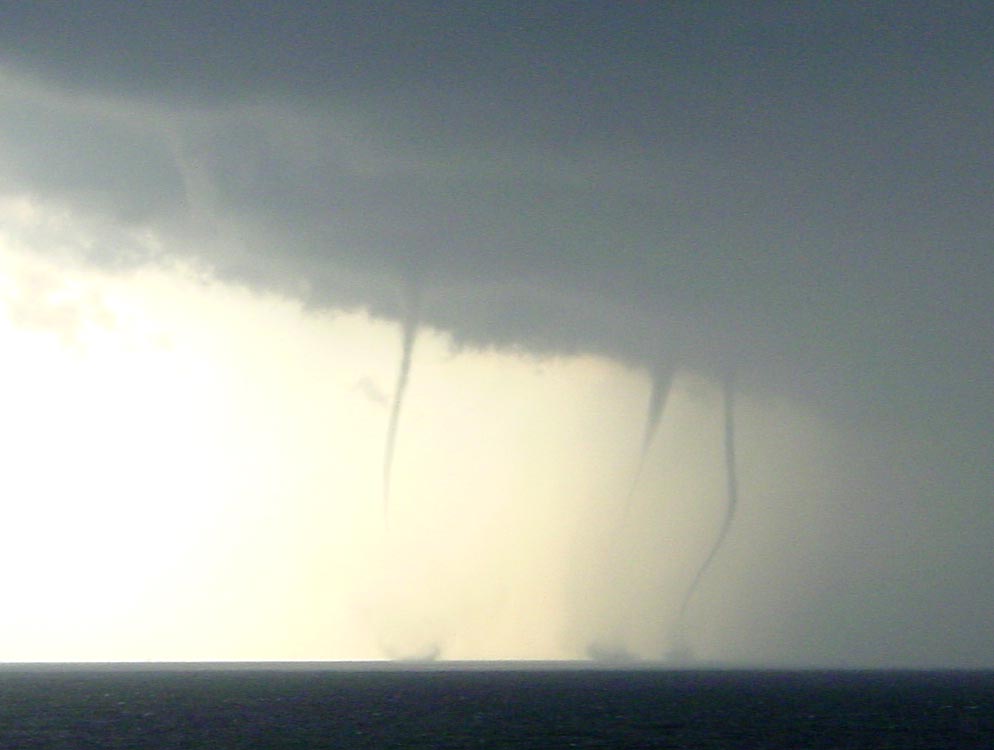



Types and formation
Meteorologists commonly distinguish two principal types. "Tornadic" waterspouts are associated with strong thunderstorms and the same rotating updrafts that produce tornadoes on land; they may form when a storm's mesocyclone extends over water. "Fair-weather" or non-tornadic waterspouts typically develop in relatively calm winds beneath cumulus clouds and grow upward from the water surface. Both begin as localized rotation in the boundary layer that intensifies and concentrates into a visible column.
Appearance and structure
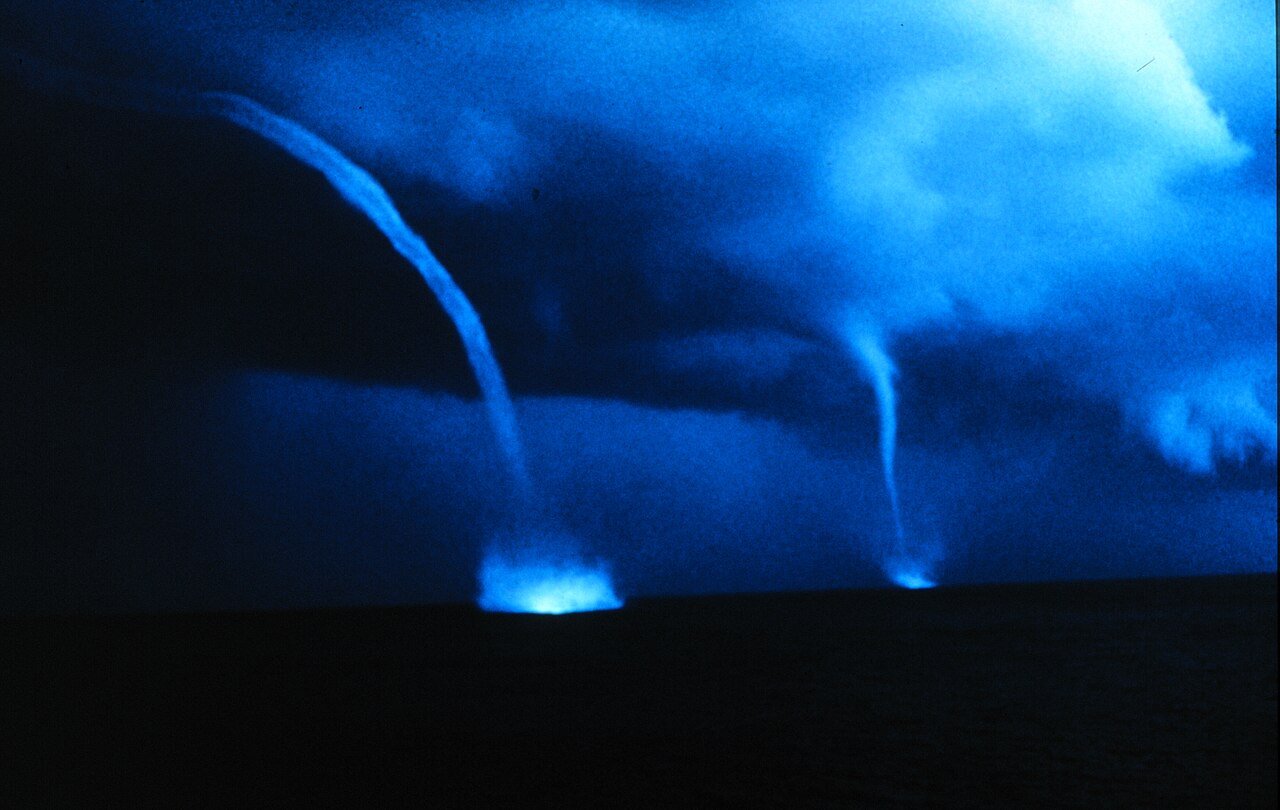
Visually a waterspout may appear as a narrow, tapered tube connecting a cloud base to the water. The core contains rapidly rotating air; the funnel often contains condensed droplets, and spray at the base may be lifted from the surface. Winds and waves around the feature can be turbulent, and accompanying rain, gusts, and lightning are common when associated with convective storms.
Hazards and safety
- Many waterspouts are weaker than typical land tornadoes, but they can still capsize small boats, damage coastal structures, and threaten aircraft during takeoff and landing.
- When a waterspout is spotted or forecast, mariners are advised to give it a wide berth, seek shelter if possible, and monitor weather warnings and radar.
- Coastal observers should treat nearby lightning and strong winds as additional hazards.
For more on how a funnel becomes visible, see the concept of a funnel cloud. For comparisons with tornadic phenomena, consult materials on the tornado classification and behavior.
Waterspouts are of interest both to scientists studying boundary-layer and convective processes and to the boating and coastal communities because of their sudden appearance and localized but sometimes severe effects. Observations, forecasts and warnings from national weather services remain the best guidance for avoiding harm.
Related articles
Author
AlegsaOnline.com Waterspout Leandro Alegsa
URL: https://en.alegsaonline.com/art/106861
Sources
- britannica.com : "Waterspout"
- amsglossary.allenpress.com : Waterspout.
- galeschools.com : Fair weather waterspout.
- weather.com : weather.com - Glossary