
Water-tube boiler
A boiler in which water circulates inside tubes heated externally by combustion gases. Common in power plants, marine propulsion, and industry because of high-pressure and high-capacity capability.
Overview
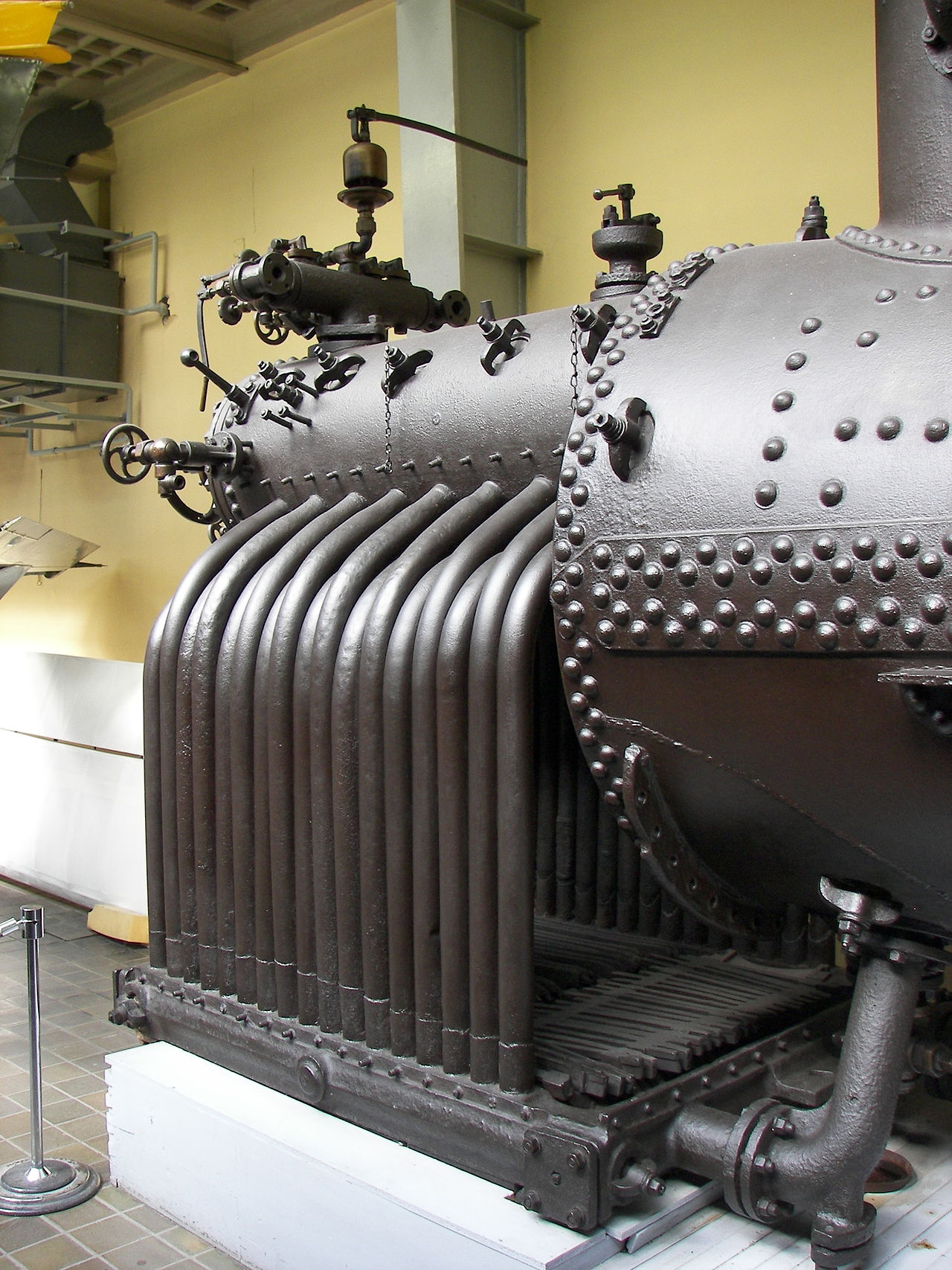
A water-tube boiler is a steam-generating device in which water flows through tubes that are heated externally by hot gases produced in a furnace. This arrangement contrasts with fire-tube boilers, where hot gases pass through tubes surrounded by water. The design allows rapid heat transfer, quick steam production and reliable operation at elevated pressures, making water-tube boilers the usual choice for large-scale and high-pressure applications.
Image gallery
5 Images



Design and main components
Key parts are arranged to circulate water and carry away steam. Typical elements include drums, headers, banks of small-diameter tubes, superheaters and economizers. Burners deliver the fuel and air mixture into the combustion zone to generate hot gases. Feedwater pumps and steam outlets are integrated with controls to maintain safe levels and temperatures.
- Steam drum and mud drum
- Waterwalls and banks of tubes
- Superheater, reheater and economizer
- Burner, furnace and exhaust gas paths
History and development
Water-tube boilers were developed in the 19th century to overcome the size and pressure limits of fire-tube designs. As industrial power demands and marine steam propulsion grew, engineers evolved arrangements—straight tubes, curved banks and once-through circuits—to increase capacity, efficiency and safety. Over time adaptations produced specialized designs for power generation, shipboard service and process steam.
Uses, advantages and limitations
Water-tube boilers dominate electric power stations, large industrial sites and many modern ships because they tolerate higher pressures and temperatures, respond quickly to load changes and present less catastrophic risk on tube rupture. They also permit incorporation of superheaters for dry, high-quality steam. Drawbacks include greater complexity, higher initial cost, more demanding water treatment and maintenance needs compared with small fire-tube units.
Operation, maintenance and types
Safe operation requires control of water chemistry to prevent scale and corrosion, routine inspection of tubes and pressure parts, and functioning safety valves and instrumentation. Variants include packaged and field-erected models, once-through designs for very high pressures, and classic arrangements named by tube geometry. For further technical summaries see water-tube boiler resources and manufacturer guidance.
Related articles
Author
AlegsaOnline.com Water-tube boiler Leandro Alegsa
URL: https://en.alegsaonline.com/art/106820