
Warehouse — buildings, functions, equipment, and logistics
Comprehensive overview of warehouses: purpose, common equipment, functions in supply chains, types, operations, safety and technology trends including automation and sustainability.
A commercial building known as a warehouse provides space for the short- or long-term storage of goods, materials and packaged products. Operators include manufacturers and importers, as well as exporters, wholesalers and specialist logistics providers. Warehouses also serve users such as transport carriers and regulatory authorities like customs. Facilities range from simple single-storey sheds to multi-level buildings in urban settings designed to maximize land use and proximity to demand.
Image gallery
10 Images




Design, layout and handling
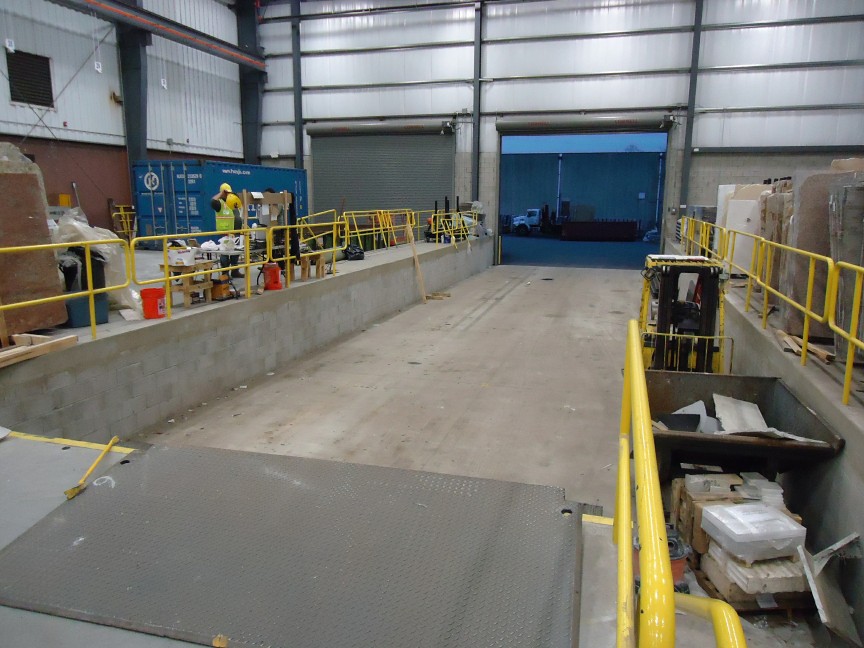
Most warehouses have large clearfloor areas, high ceilings and designated aisles to allow efficient movement of goods and vehicles. Loading docks accommodate trucks for frequent inbound and outbound movements; some facilities are configured for direct transfer to or from rail terminals, airports or seaports. Inside, material handling equipment such as cranes and forklifts move unitized loads. Storage systems include pallet racking, shelving, bulk stacking and mezzanine levels, chosen to balance storage density, pick speed and inventory protection.
Key functions in logistics and inventory management
A warehouse performs more than passive storage: it buffers inventory to smooth supply and demand imbalances, consolidates or deconsolidates shipments, and enables order picking, sorting and light value-added tasks such as labeling, kitting or repackaging. Specialized forms—distribution centers and fulfillment centers—prioritize rapid throughput and order accuracy to serve retail and e-commerce channels. Bonded warehouses provide controlled storage for imported goods pending customs clearance and duty payment.
Types and operational models
- General and bulk storage: for raw materials and slow-moving items, emphasizing volume over rapid handling.
- Cold storage: temperature-controlled environments for food, pharmaceuticals and other perishables.
- High-bay and automated warehouses: use automated storage/retrieval systems (AS/RS), conveyors and robotics to raise density and reduce manual handling.
- Cross-docking: facilities that minimize storage time by transferring items directly from inbound to outbound vehicles.
- Third-party logistics (3PL) and fourth-party logistics (4PL): outsourced models where providers manage warehousing and distribution services for multiple clients.
Technology, systems and performance metrics
Modern warehouses rely on software such as warehouse management systems (WMS), transport management systems (TMS) and inventory-control tools. Barcodes and RFID support item tracking; data and analytics inform slotting, replenishment and labor planning. Common performance indicators include order accuracy, on-time shipments, inventory turnover and space utilization. Automation and robotics can improve throughput and consistency, though they require capital investment and integration with IT systems.
Safety, regulation and environmental considerations
Key planning criteria include fire protection, sprinkler systems, emergency access, floor load capacity, and compliance with regulations for hazardous materials or controlled-temperature products. Security measures encompass access control, surveillance and inventory audits. Sustainability efforts address energy-efficient lighting and HVAC, insulated construction to reduce thermal loss, rooftop solar installations, and site selection that reduces transport distances and related emissions.
Operational practices and workforce
Effective warehouse operations balance layout, picking strategies (such as batch, zone or wave picking), staffing and training. Labor considerations include ergonomics, mechanization to reduce manual lifting, and safety training. Seasonal demand variation often requires flexible staffing models or temporary labor, while cross-training and continuous improvement practices help maintain productivity and accuracy.
Economic and strategic role
Warehouses are integral to supply chains: they enable geographic separation between production and consumption, support inventory strategies that protect against uncertainty, and provide points for value-added services that increase product readiness for final markets. Choice of facility type and location is a strategic decision affecting cost, service level and environmental footprint. Understanding these trade-offs helps businesses align warehouse capabilities with commercial objectives.
For further technical guidance on planning and design, equipment specification and regulatory compliance, consult industry resources and local authorities or subject-matter specialists. Practical decisions about a particular facility depend on product characteristics, throughput requirements and the broader network in which the warehouse operates.
Related articles
Author
AlegsaOnline.com Warehouse — buildings, functions, equipment, and logistics Leandro Alegsa
URL: https://en.alegsaonline.com/art/106530