
Voortrekker Monument — Pretoria memorial to the Great Trek
A monumental granite memorial in Pretoria commemorating the Voortrekker migrations from the Cape (1835–1854), noted for its large frieze panels, central cenotaph and role in Afrikaner heritage and South African history.
Overview
The Voortrekker Monument is a prominent stone memorial on a hill in Pretoria, South Africa. Erected to honour the Afrikaner pioneers known as the Voortrekkers, it commemorates the migrations away from the Cape Colony during the period commonly called the Great Trek (1835–1854). The structure is built of substantial stone and occupies a commanding position above the surrounding landscape, making it both a landmark and a site intended for reflection on a formative episode in South African history. For more information about the monument itself see Voortrekker Monument, and for its urban context see Pretoria and South Africa.
Image gallery
10 Images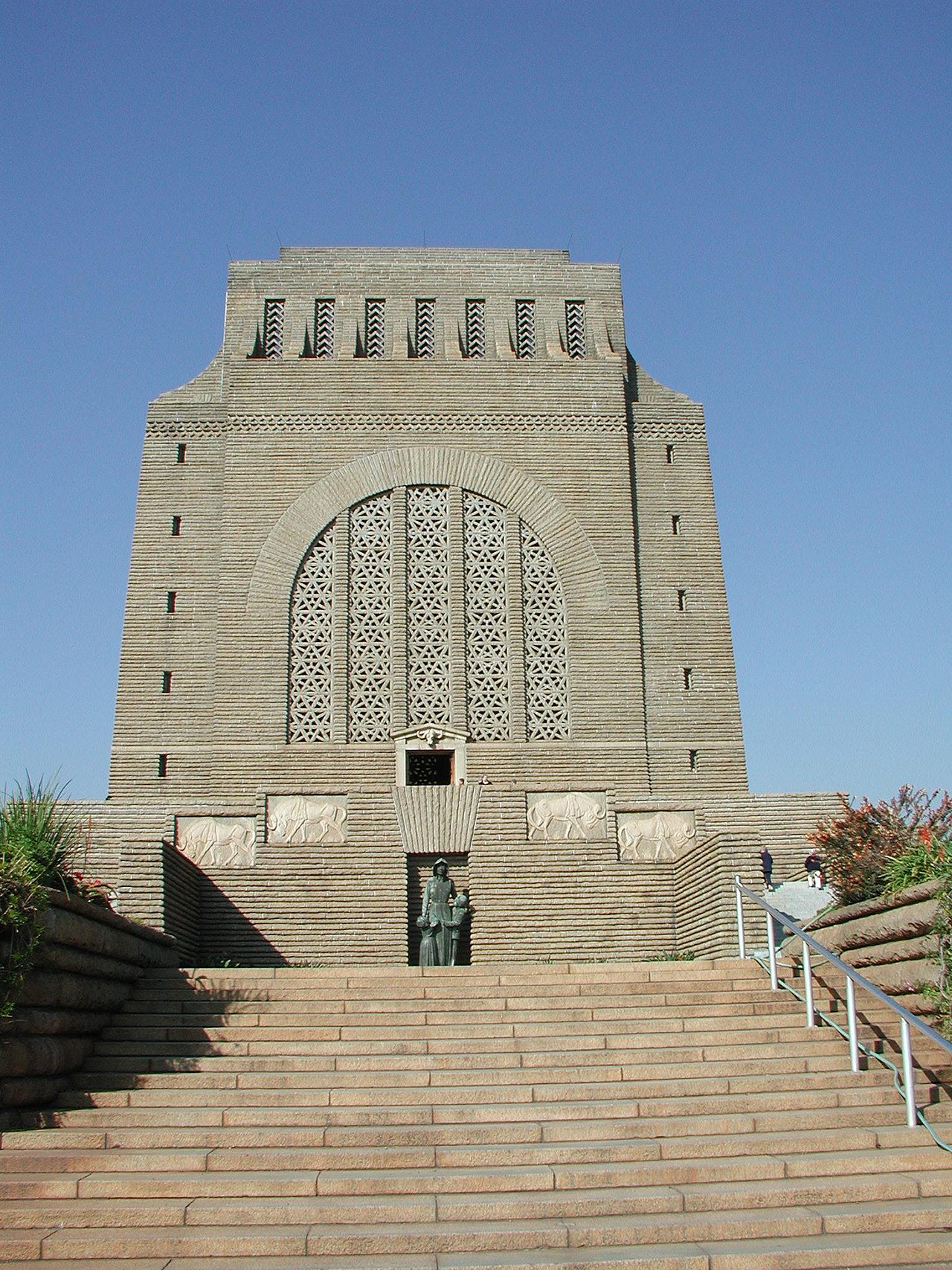


Design and principal features
The monument is notable for its massing and the use of durable stone, giving it a fortress-like appearance. Internally, a large central chamber contains a memorial centerpiece and is encircled by carved frieze panels that depict scenes from the Voortrekker experience. A long sculpted narrative, presented in relief, portrays episodes associated with the migrations and early settler life. The architecture also incorporates symbolic alignment: a controlled shaft of light is directed into the interior at a specific time of year to illuminate the central memorial. The building materials, including the predominant use of coarse stone, contribute to the monument's monumental aesthetic; for details on the stonework see granite and masonry.
History and purpose
Conceived in the early decades of the 20th century, the memorial was developed as a focal point for remembering the Voortrekkers and for expressing aspects of Afrikaner identity. It was intended both as a funerary or commemorative monument and as a didactic space where visitors could encounter a particular narrative of the past through sculpture, inscriptions and display. While the monument specifically commemorates people who left the Cape Colony and travelled north and inland, it also became a ceremonial site for anniversaries and public remembrance ceremonies.
Cultural significance and perspectives
The Voortrekker Monument occupies a contested place in South African memory. For many Afrikaners it has been an important heritage symbol reflecting endurance, migration and communal sacrifice. At the same time, other South Africans view the monument in the context of later political developments and debates about representation, race and memory. Since the end of apartheid the site has been reinterpreted by scholars, curators and the public, and it now functions both as a historical museum and a place where the complexities of the country's past are examined.
Features, uses and visiting
- Key visual elements: expansive exterior massing, interior friezes and a central memorial chamber.
- Educational role: exhibitions, guided tours and interpretive displays present the history and artefacts associated with the Great Trek.
- Ceremonial use: the design permits ritual observance and commemorative gatherings tied to historic dates.
- Access and location details can be found via official channels and maps; approximate coordinates and visitor information are publicly available.
Notable facts and distinctions
The monument is one of South Africa's best-known purpose-built memorials that links architecture, sculpture and landscape in order to tell a national story. Its interior frieze panels are often cited as an ambitious example of narrative relief in stone, and the deliberate positioning of the building to catch a beam of sunlight on a commemorative date is a distinctive alignment feature. Contemporary interest in the site focuses on conservation, interpretation that acknowledges multiple perspectives, and its role as both heritage and tourist destination.
Related articles
Author
AlegsaOnline.com Voortrekker Monument — Pretoria memorial to the Great Trek Leandro Alegsa
URL: https://en.alegsaonline.com/art/105919