
Benoît Mandelbrot
Mathematician who founded modern fractal geometry and popularized the Mandelbrot set; worked in France, at IBM, and later as a professor in the United States.
Overview
Benoît B. Mandelbrot (1924–2010) was a mathematician best known for founding much of modern fractal geometry and for popularizing the visual and conceptual idea of the Mandelbrot set. Born into a family of mixed background in Warsaw, he lived and worked in several countries, including Poland, France and the United States. His writings and images showed how similar patterns recur at many scales in nature, technology and data.
Image gallery
10 Images




Life and career
Mandelbrot came from a Jewish family of Lithuanian origin and spent his early years in Europe. He held multiple national ties, often described as Polish and French-American in biographical summaries. Mandelbrot worked for decades at industrial research centers where he developed practical mathematical tools before taking an academic position; he later served as a professor at institutions including Yale and produced books aimed at both specialists and a general readership.
Work and legacy
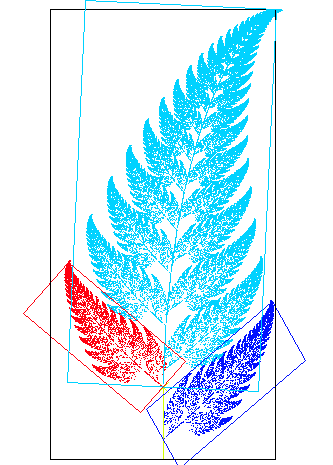
Mandelbrot coined and popularized the term fractal to describe irregular shapes and sets that have similar structure at different magnifications. His approach bridged pure mathematics, visual computing and applied studies in fields such as geology, turbulence, biology and finance. He emphasized empirical observation combined with computer experimentation to reveal patterns that classical Euclidean geometry could not describe easily. Many scientists and artists adopted fractal ideas to analyze data and create visual works.
The Mandelbrot set and examples
First described around the late 1970s, the Mandelbrot set became an iconic illustration of how simple iterative rules produce intricate boundaries and infinite complexity. Its images—generated by repeatedly applying a quadratic map in the complex plane—demonstrated self-similarity and richly detailed structure. Practical applications of fractal concepts include modeling coastlines, signal processing, image compression and the statistical properties of market data.
Notable facts and further reading
Mandelbrot spent part of his career working in industrial research environments and later in academia. He died at age 85 in Cambridge, Massachusetts, after a battle with pancreatic cancer. For concise biographical or technical summaries, see linked resources and archival pages held by scientific institutions.
- Nationality and background: Polish, French-American, born in Warsaw (Poland), family of Jewish and Lithuanian origins.
- Career highlights: industrial research and later academic posts including professor roles and affiliation with Yale.
- Legacy pointers: canonical image set (Mandelbrot set) and many applied uses from geology to finance; see specialist sources for details on his mathematical work.
Further institutional or bibliographic material can be found through the indicated links and archived biographies maintained by research organizations and universities. For visual demonstrations and interactive explorations of his central examples consult computational exhibits and educational sites.
LINK_1 LINK_2 LINK_3 LINK_4 LINK_5 LINK_6 LINK_7 LINK_8 LINK_9 LINK_10 LINK_11 LINK_12 LINK_13
Related articles
Author
AlegsaOnline.com Benoît Mandelbrot Leandro Alegsa
URL: https://en.alegsaonline.com/art/10579
Sources
- nytimes.com : "Benoit Mandelbrot, Mathematician, Dies at 85 - Obituary - NYTimes.com"
- nndb.com : "Benoit Mandelbrot"
- wikidata.org : wikidata.org/wiki/Q101740
- authority.bibsys.no : 90065702
- catalogo.bne.es : XX973828
- catalogue.bnf.fr : cb11914221j
- data.bnf.fr : (data)
- cantic.bnc.cat : a11299010
- dblp.org : 04/2558
- d-nb.info : 118974203
- isni.org : 0000 0001 2096 8076
- id.loc.gov : n81107154
- kopkatalogs.lv : 000058589
- genealogy.math.ndsu.nodak.edu : 60791
- id.ndl.go.jp : 00448659