
Adonis: Greek god of beauty, desire, and seasonal rebirth
Adonis is a figure of Greek myth associated with youth, desire, and vegetation cycles; his cult featured female-led rites, seasonal gardens, lamentation, and widespread cultural influence.
Adonis is a figure from ancient Greek religion and myth, best known as a very handsome youth associated with love, desire and the recurring cycle of life and death in nature. In myth he is most often linked with the goddess Aphrodite (or Aphrodite-Ishtar syncretisms in eastern traditions), and his story became the focus of a popular cult in which women played a prominent role. Scholars emphasize Adonis as a symbolic representation of seasonal vegetation, a theme reflected in both ritual practice and poetic imagery.
Image gallery
10 Images



Myth and principal characteristics
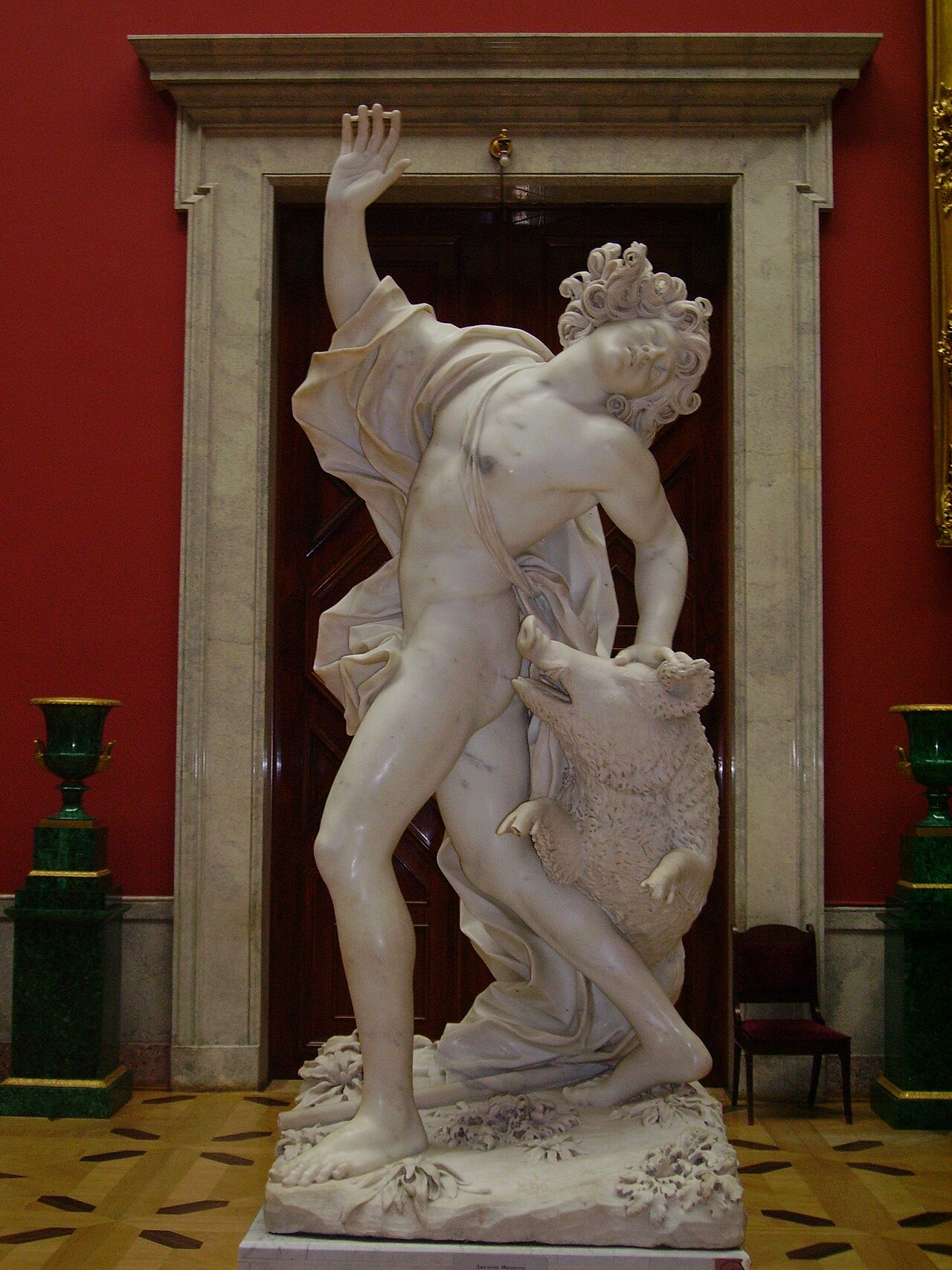
In myth, Adonis is portrayed as eternally young, the beloved of Aphrodite, who grieves his violent death and then celebrates his return. This pattern of dying and partial return came to stand for the seasonal ebb and flow of plant life. Because of that association he is commonly described as a vegetation deity. The narrative elements—beauty, premature death (often by a boar), mourning by female devotees, and periodic reappearance—are central to how ancient communities understood fertility and the renewal of spring and summer.
Rituals and the cult
The cult of Adonis was distinctive for its popular and predominantly female participation. Women planted small, fast-growing plants in shallow containers—so-called "gardens of Adonis"—to watch them sprout quickly and then wither, symbolizing the brief life of the god. These rites included mourning, wailing, and later rejoicing when life returned. Archaeological evidence, including finds on the island of Lesbos, suggests these practices were widespread in the Greek world and beyond.
- Planting of quick-sprouting seeds and herbs in shallow pots.
- Mourning ceremonies and lamentation songs performed by women.
- Seasonal festivals, often in mid-summer, that marked harvests and decay.
Ancient sources and modern commentators note that practices varied by city and over time. For example, the cult of Adonis in some places emphasized public processions, while in others the focus remained on domestic or neighborhood rituals.
Origins, spread, and archaeological traces
Adonis likely has roots in Near Eastern traditions of dying-and-regenerating gods (figures such as Tammuz are often compared), and his worship entered the Greek world through contact with Cyprus, Phoenicia and Syria. Excavations on islands such as Lesbos have produced remnants interpreted as evidence of Adonis-related ceremonies; these finds have been discussed in the literature as indicating women's involvement in ritual life (Lesbos finds).
Athens and other Greek cities adopted and adapted Adonis' rites. Classical authors describe Athenian women planting gardens and holding lamentations; such accounts help reconstruct how a seasonal, gendered cult operated within civic life.
Seasonal symbolism and plants
Plants with rapid growth and wilting were central to the imagery of Adonis festivals. Sources name quick-withering species—such as fennel and lettuce—among those used in the ritual gardens. The deliberate selection of ephemeral species made the symbolic association between the youth's brief life and the fragility of summer growth immediate and visible to participants.
Cultural impact and scholarly perspectives
Adonis influenced poetry, art, and later literary traditions: his figure reappears in Hellenistic poetry, Roman literature, and in later European references to idealized male beauty. Modern scholars debate how literally to interpret the "dying-and-rising" label—some emphasize agricultural metaphor and seasonal ritual, others point to layered mythic and political meanings. What remains clear is that Adonis served as a powerful symbol connecting human emotion, gendered ritual expression, and the cycles of nature.
For further reading on ritual practice and interpretation, consult archaeological reports and comparative studies that treat Adonis alongside related Near Eastern deities and Mediterranean fertility rites.
Related articles
Author
AlegsaOnline.com Adonis: Greek god of beauty, desire, and seasonal rebirth Leandro Alegsa
URL: https://en.alegsaonline.com/art/1057