
Vicente López y Portaña
Spanish portrait painter (1772–1850), noted for refined, academic portraiture, court appointment to Queen Isabella II, and a well-known likeness of Francisco de Goya.
Vicente López y Portaña (19 September 1772 – 22 July 1850) was a Spanish painter celebrated for his precise, highly finished portraiture. Born in Valencia, Spain, he established a reputation for technical skill and careful draftsmanship that made him one of the leading portraitists in early 19th-century Spanish art. He later worked in Madrid, where he produced numerous commissions for private patrons and public figures, and where he held official posts that connected him to court circles.
Image gallery
10 Images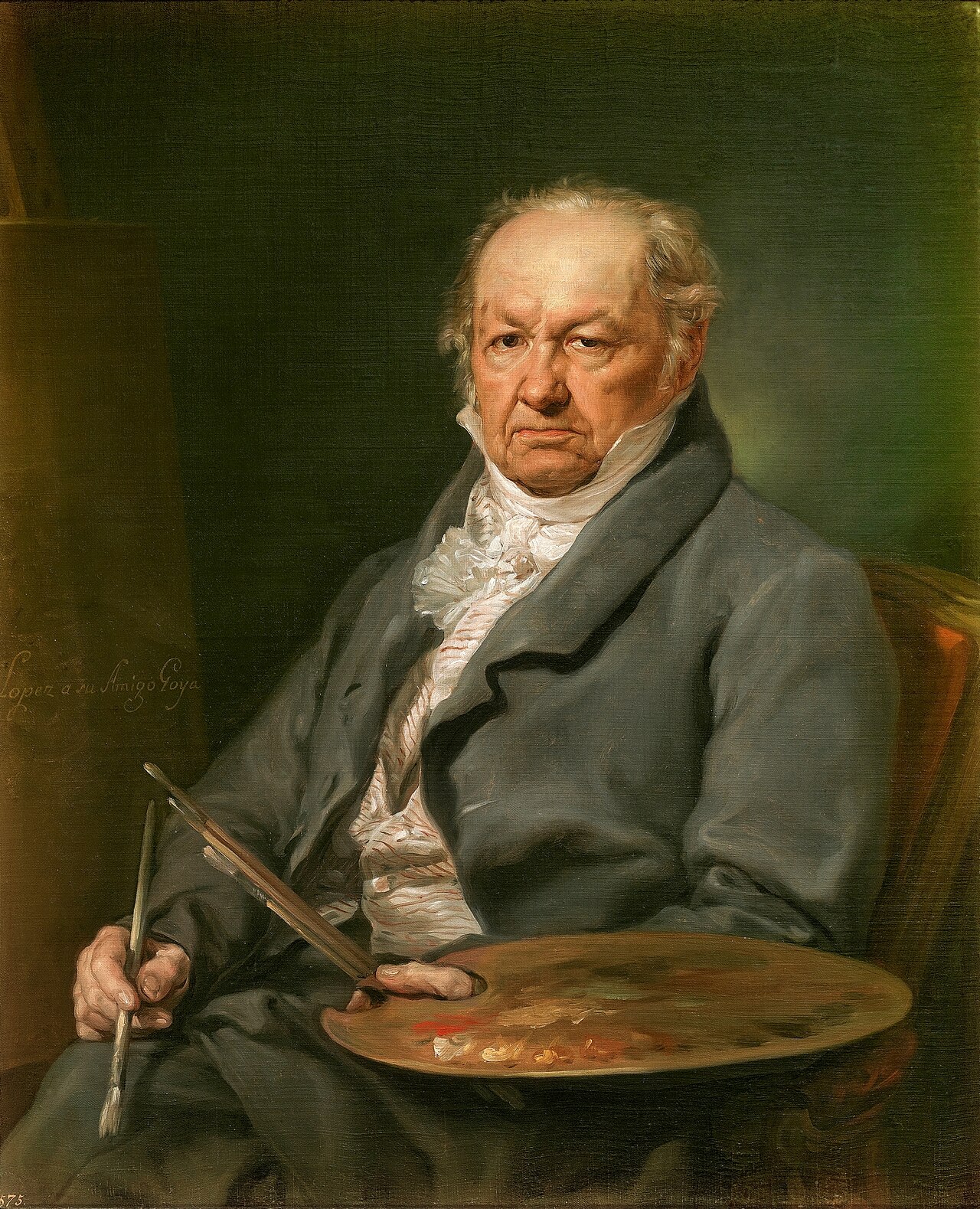


Life and training
López received early instruction in his native region and developed the academic grounding that shaped his mature work. He benefited from the prevailing academic system of instruction, which emphasized drawing from the antique, detailed study of costume and ornament, and careful modeling of the human face. Over the course of his career he balanced studio portrait commissions with assignments of public and ceremonial importance, adapting academic principles to the intimate demands of likeness-making.
Style and technique
Observers recognize several consistent traits in López’s paintings. His draftsmanship is clear and controlled, with an emphasis on accurate proportions and delicate modeling of facial features. Surface treatment is typically smooth, favoring a polished finish that minimizes visible brushwork and enhances the illusion of flesh and fabric. He rendered clothing, insignia and jewelry with meticulous attention, producing portraits that served both as personal likenesses and as records of social rank.
Career and notable works
López’s clientele included aristocrats, clergy, statesmen and cultural figures. He became known as a dependable portraitist for public images as well as private commissions and was appointed a court painter, serving the household of Queen Isabella II. Among his best-known works is a portrait of the celebrated artist Francisco de Goya, a likeness often cited in studies of Spanish artistic circles of the period. Portraits were López’s principal genre and he contributed many examples to the visual record of fashion, rank and official insignia (portraits being the chief type).
Reception and legacy
While not an innovator of avant-garde movements, López is valued for the technical control and documentary qualities of his work. His portraits remain important to historians for their accurate costume detail and for the way they convey social identity through compositional choices. Examples of his paintings are preserved in national and regional collections, where they continue to be consulted by curators and scholars interested in nineteenth-century Spanish portraiture.
Further study
To explore López’s work in depth, consult museum catalogues and specialist studies that survey Spanish academic painting and court portraiture. Exhibition catalogues and institutional records in major Spanish collections provide the fullest documentation of his commissions, sitters and the social contexts in which he worked.
Related articles
Author
AlegsaOnline.com Vicente López y Portaña Leandro Alegsa
URL: https://en.alegsaonline.com/art/104909