
Upland buzzard (Buteo hemilasius)
A large buzzard of open Central and East Asian highlands. Overview of identification, habitat, behaviour, diet, breeding and conservation notes for Buteo hemilasius.
Overview
The upland buzzard (Buteo hemilasius) is a raptor of open country in Central and East Asia. It is a true bird of prey in the family Accipitridae. Adapted to steppe, semi‑desert and alpine grasslands, it is frequently seen perched on low posts or circling while hunting across wide, treeless terrain.
Image gallery
5 Images



Identification and characteristics
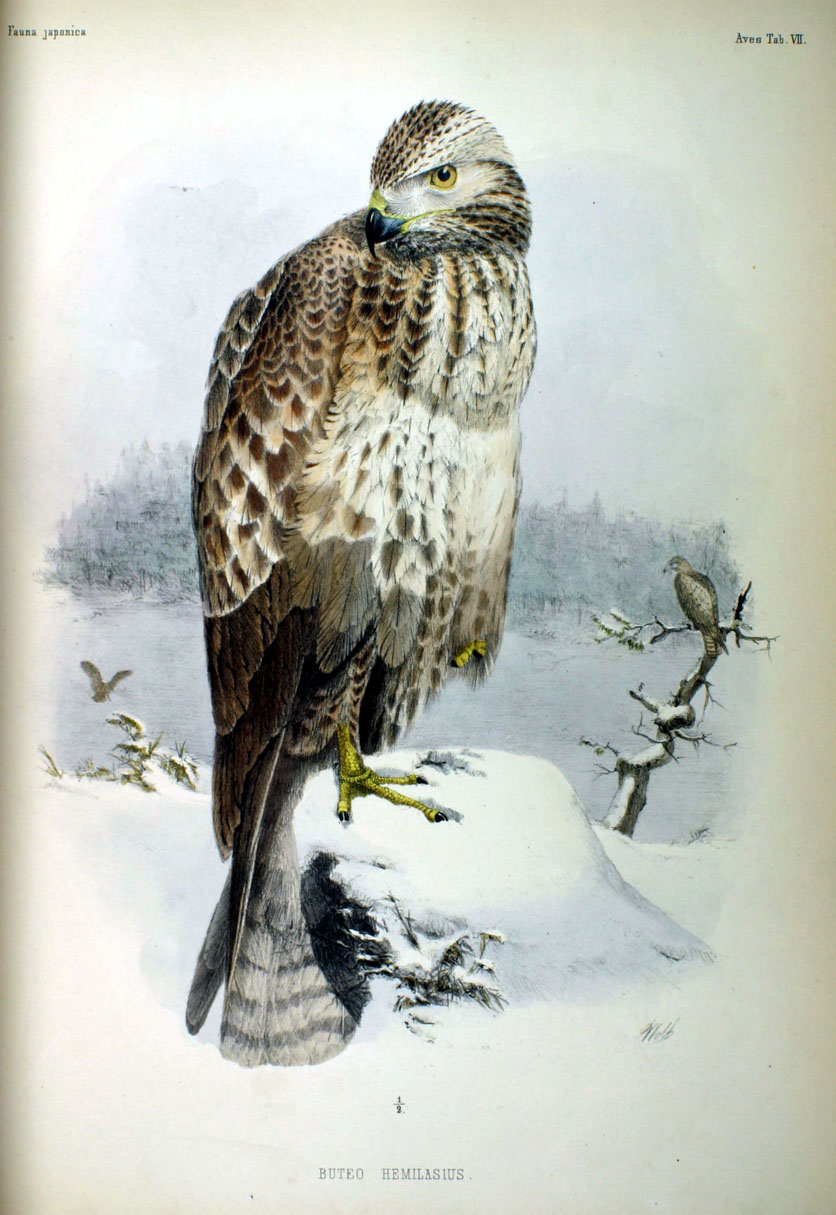
This species is among the larger members of the Buteo group, with long legs and broad wings. Plumage varies from pale to richly streaked forms; underparts are often light with darker streaking while the tail shows narrow banding. In flight the upland buzzard shows steady, shallow wingbeats and long soaring glides. Its voice is a high, plaintive whistle commonly heard near nests and perches.
Distribution and habitat
Breeding populations occur across Mongolia, parts of Siberia, northern and central China and adjacent regions. The bird favors open steppe, plateaus and rocky hills, often above the tree line. Many populations migrate or shift seasonally to lower elevations and more southerly areas in winter, following prey availability.
Diet and behaviour
Upland buzzards hunt mainly small mammals such as pikas, voles and ground squirrels, but will also take birds, reptiles and carrion opportunistically. Hunting methods include quartering low over the ground or watching from a perch before dropping onto prey. They are generally territorial during the breeding season and may form loose migratory concentrations where food is abundant.
Breeding and conservation
Nesting usually involves a stick platform placed on cliffs, rocky outcrops or occasionally trees. Both adults participate in feeding the young. Although not generally considered globally threatened and thought to have stable areas, upland habitats face pressure from land‑use change, rodent control and disturbance, so local declines can occur and monitoring is recommended.
Notable distinctions
- Specialized for open, highland landscapes compared with forest buzzards.
- Longer legs and a more terrestrial hunting style distinguish it from many related Buteo species.
- Variable plumage makes careful study of structure and behaviour important for reliable identification.
For further general information on raptors and accipitrid taxonomy see authoritative field guides and regional avifaunal accounts. Bird of prey and Accipitridae resources provide broader context on ecology and conservation.
Related articles
Author
AlegsaOnline.com Upland buzzard (Buteo hemilasius) Leandro Alegsa
URL: https://en.alegsaonline.com/art/103471