
Utahraptor — large dromaeosaurid predator
Utahraptor was a large, agile dromaeosaurid from the Early Cretaceous, notable for its oversized sickle-shaped toe claw, birdlike anatomy, and importance to studies of raptor evolution.
Utahraptor is a genus of large dromaeosaurid theropod known from rocks of the Early Cretaceous in what is now the western United States. It is often cited as one of the largest and most formidable members of the group commonly called "raptors." Fossils show a blend of features familiar from smaller, feathered relatives and adaptations for powerful predation: a stiffened tail for balance, grasping hands with curved claws, serrated teeth in a strong jaw, and a greatly enlarged sickle-shaped claw on the second toe of each foot.
Image gallery
10 Images


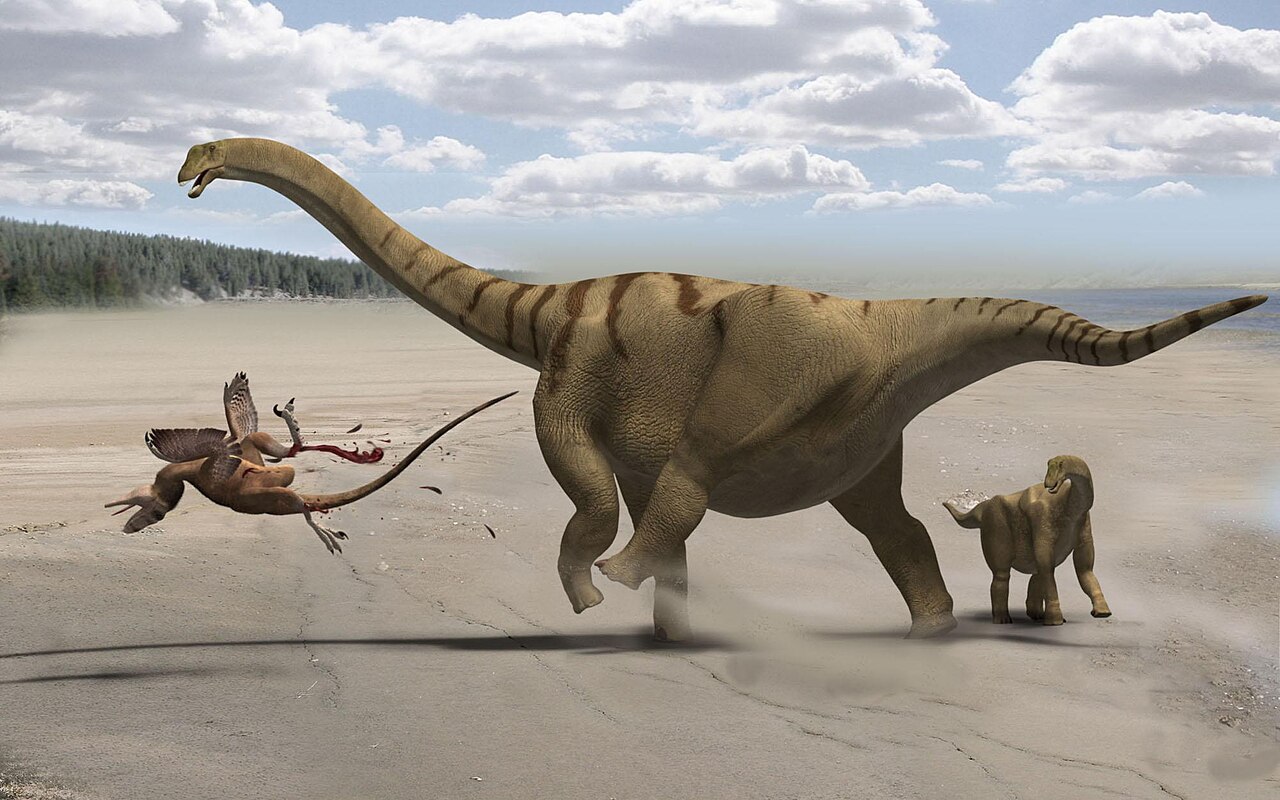


Anatomy and distinguishing features
Utahraptor combined agility with substantial size. Adults are estimated at several metres in length and a mass on the order of a few hundred kilograms, making them far larger than the better-known Velociraptor. The second pedal claw was long and recurved (commonly reported in the 23–38 cm range), and the tail possessed ossified structures that increased rigidity and improved maneuverability. The skull was relatively large with serrated, blade-like teeth suited to cutting flesh, while the forelimbs bore three functional fingers ending in strong, curved claws.
- Locomotion: bipedal and likely fast and agile, aided by a long counterbalancing tail.
- Hunting tools: large sickle claw, grasping hands, serrated teeth and powerful jaws.
- Sensory capacity: relatively large brain and eyes suggest good coordination and vision.
Feathers, behavior and ecology
Although direct skin or feather impressions for Utahraptor are limited or absent, close relatives in the dromaeosaurid family are known to have had feathers; most paleontologists therefore consider feathering probable for Utahraptor as well. Its anatomy points to an active predator that may have hunted medium- to large-sized vertebrates in woodland or floodplain environments. Interpretations of its behavior range from an ambush or grapple-and-slash predator using the sickle claw for disabling prey, to more complex social hunting scenarios; evidence for coordinated pack hunting is debated and not settled.
Discovery, naming and research significance
Fossils attributed to Utahraptor were recovered from Early Cretaceous deposits in Utah and were recognized and named in the early 1990s. The discovery garnered attention because it showed that some dromaeosaurids reached sizes much larger than previously known, prompting reevaluation of ecological roles for these predators. Important context for the site and formation can be explored through summaries of the local geological setting and field reports on the original fossils. Specialized studies and museum descriptions frequently discuss the claw morphology in more detail; see a representative summary at claw anatomy studies.
Notable facts and further reading
Utahraptor is frequently highlighted in popular accounts of dinosaurs because it challenges the idea of dromaeosaurids as uniformly small. It illustrates evolutionary links between non-avian theropods and birds; for context on that relationship see resources about avian relatives. For scientific overviews and peer-reviewed discussion consider consulting general paleontology reviews and specific articles in the scientific literature. Because new finds and analyses continue to refine our understanding, some aspects of Utahraptor's life appearance and behavior remain matters of ongoing research and cautious inference.
Questions and answers
Q: What is Utahraptor?
A: Utahraptor is a large mid-Cretaceous dromaeosaurid predator with 9-15 inch middle-toe claws.
Q: How did Utahraptor move?
A: Utahraptor was a fast-moving, agile, bipedal (walked on two legs), bird-like dinosaur.
Q: What was the shape of Utahraptor's neck?
A: Utahraptor had a curved, flexible neck.
Q: What kind of teeth did Utahraptor have?
A: Utahraptor had sharp, serrated teeth set into very powerful jaws.
Q: How many claws did Utahraptor have on each arm?
A: Each of its three fingers on each arm had large, sharp, curved claw.
Q: How long was Utahraptor?
A: Utahraptor was 16-23 feet (5-7 m) long.
Q: How much did Utahraptor weigh?
A: Utahraptor may have weighed about .5 ton.
Related articles
Author
AlegsaOnline.com Utahraptor — large dromaeosaurid predator Leandro Alegsa
URL: https://en.alegsaonline.com/art/103720