
Urial (Ovis orientalis vignei): wild sheep of western Central Asia
The urial is a wild sheep subspecies native to western Central Asia, noted for reddish coats, large male horns and conservation concerns from hunting, livestock competition and habitat loss.
The urial (Ovis orientalis vignei), also called arkal or shapo in parts of its range, is a wild sheep closely related to mouflons and other members of the genus Ovis. It is one of the taxa often grouped under Ovis orientalis and is commonly referenced in literature as a distinct subspecies or, by some authors, as a separate species. The urial is recognized for its conspicuous appearance and its importance to mountain and steppe ecosystems.
Image gallery
4 Images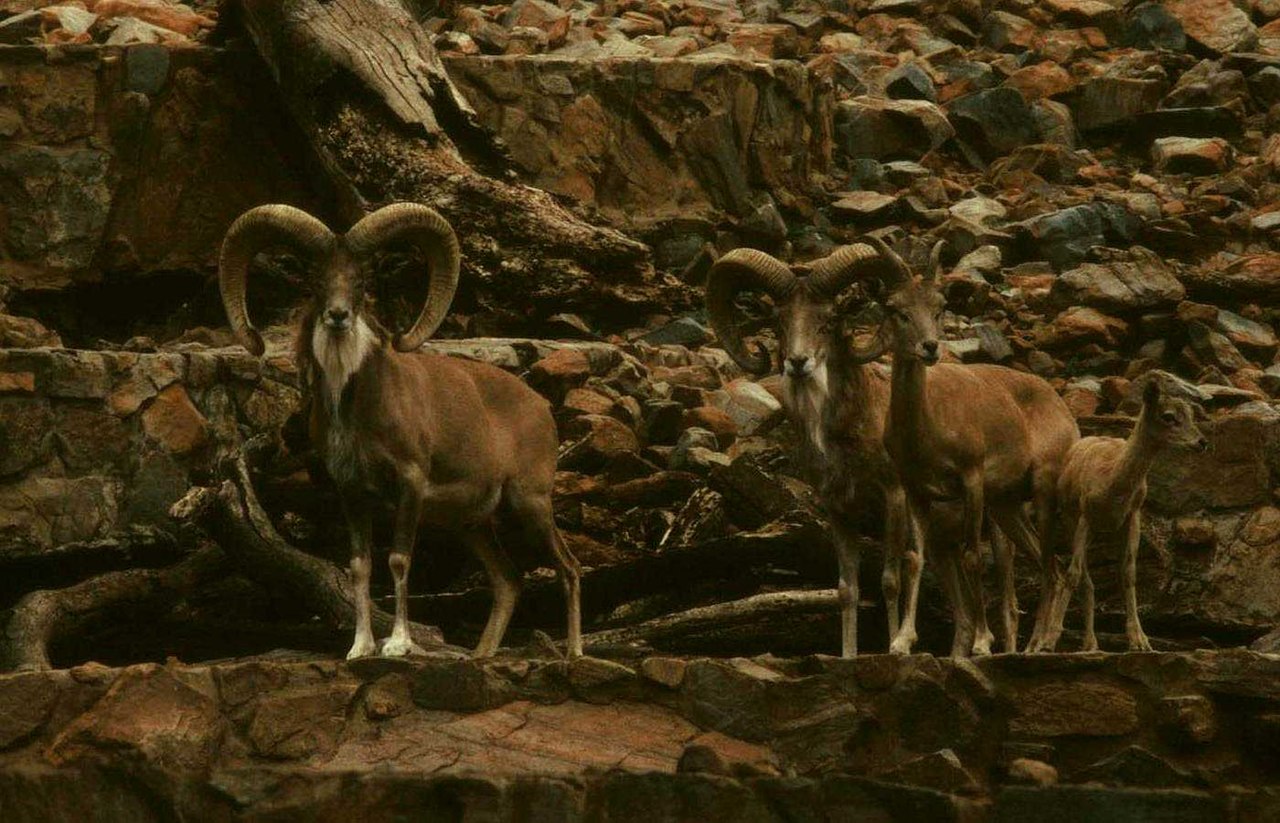


Characteristics
Urials are medium‑sized wild sheep with a reddish‑brown coat that may fade or grow paler in winter. Adult males (rams) typically show strong sexual dimorphism: they have a pronounced black or dark ruff along the throat and chest and carry large, outwardly curved horns. Ewes are smaller, usually lighter in build, and possess smaller, more slender horns or only short protuberances. Both sexes are adapted to rugged terrain with compact bodies and sure-footed hooves.
Range and habitat
The species inhabits open foothills, arid grassy slopes, rocky outcrops and montane steppe across parts of western central Asia and adjacent regions. Its distribution spans a mosaic of dry mountains and plateaus where it browses and grazes seasonally. Populations are fragmented and occupy elevations and habitats that reduce competition with domestic livestock when possible.
Behavior and ecology
Urials are social animals, forming flocks that vary in size by season and age class. They are primarily grazers but will browse shrubs when grasses are scarce. The species has a seasonal breeding cycle, with males competing for access to females during the rut. Natural predators include wolves and other large carnivores where ranges overlap; young animals are most vulnerable.
- Distinctive traits: reddish coat, male throat ruff, prominent curved horns.
- Diet: grasses, herbs and browse adapted to semi‑arid environments.
- Social structure: mixed and sex‑segregated groups outside the breeding season.
Conservation and human interactions
Many urial populations face declines from habitat loss, competition with domestic livestock, illegal hunting and disease transmission. Because populations are fragmented, local herds can be particularly vulnerable to overexploitation. Conservation responses include protected areas, regulated hunting, community stewardship projects and occasional captive breeding and reintroduction efforts. The urial is often cited in regional conservation plans as a species of concern, and ongoing monitoring is important to determine trends and priorities.
Taxonomically, the urial is closely compared with mouflon groups; differences in horn shape, coloration and geographic separation help distinguish them. For additional general information on wild sheep, see sources on wild sheep.
Related articles
Author
AlegsaOnline.com Urial (Ovis orientalis vignei): wild sheep of western Central Asia Leandro Alegsa
URL: https://en.alegsaonline.com/art/103602
Sources
- iucnredlist.org : "Ovis orientalis"