
United Kingdom of the Netherlands (1815–1839): formation, structure, and dissolution
Short-lived state established after Napoleon's defeat (1815) combining northern and southern Low Countries; internal divisions led to the 1830 Belgian Revolution and formal separation under the 1839 Treaty of London.
Overview
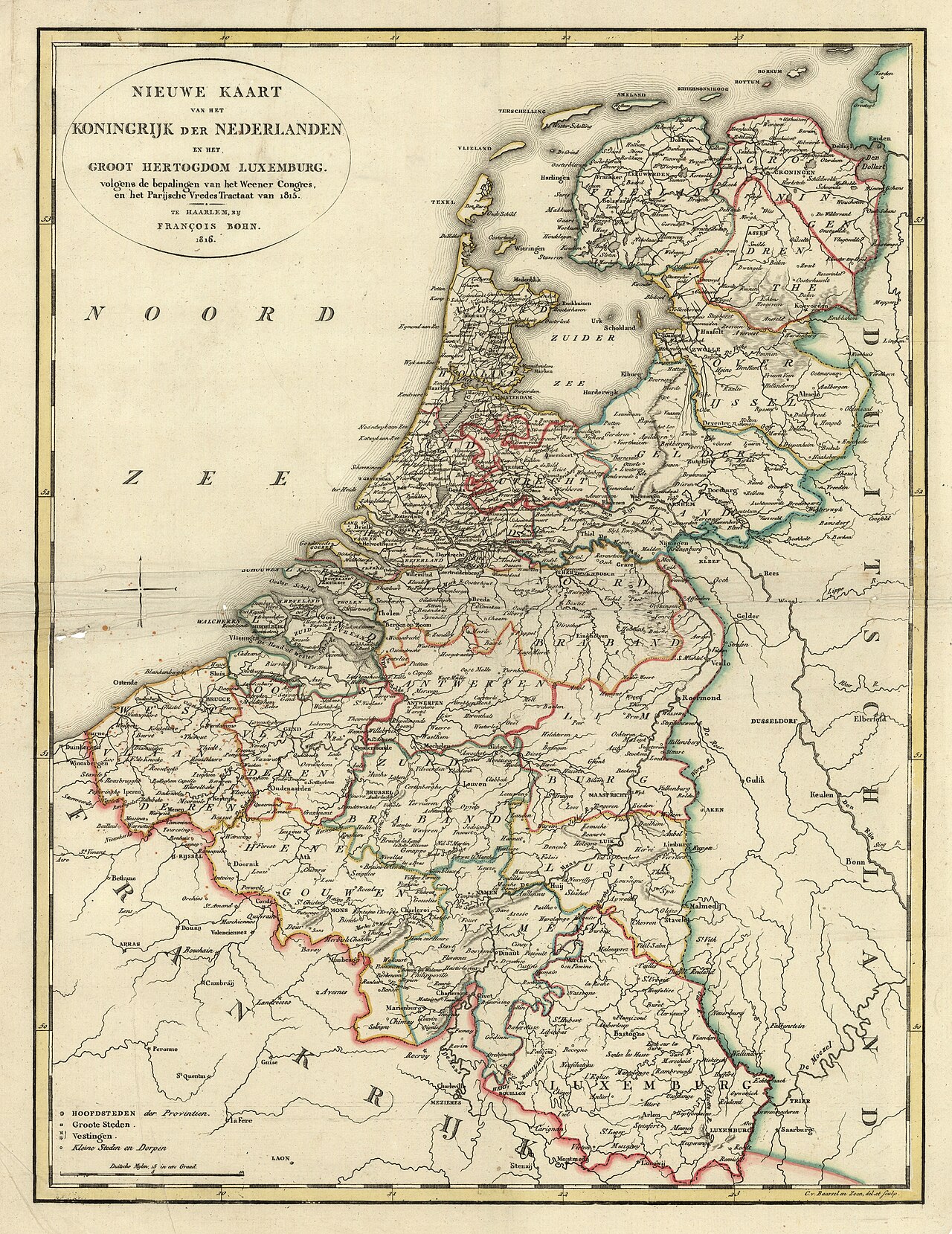
The term "United Kingdom of the Netherlands" is an historiographic label for the state created in 1815 at the end of the Napoleonic era. Formally this polity was the Kingdom of the Netherlands, established to provide a strong, unified state in the Low Countries after the collapse of the First French Empire. Its existence bridged the period from 1815 until the southern provinces broke away in 1830; final international settlement of the borders came with the Treaty of London in 1839.
Image gallery
9 Images




Territory and institutions
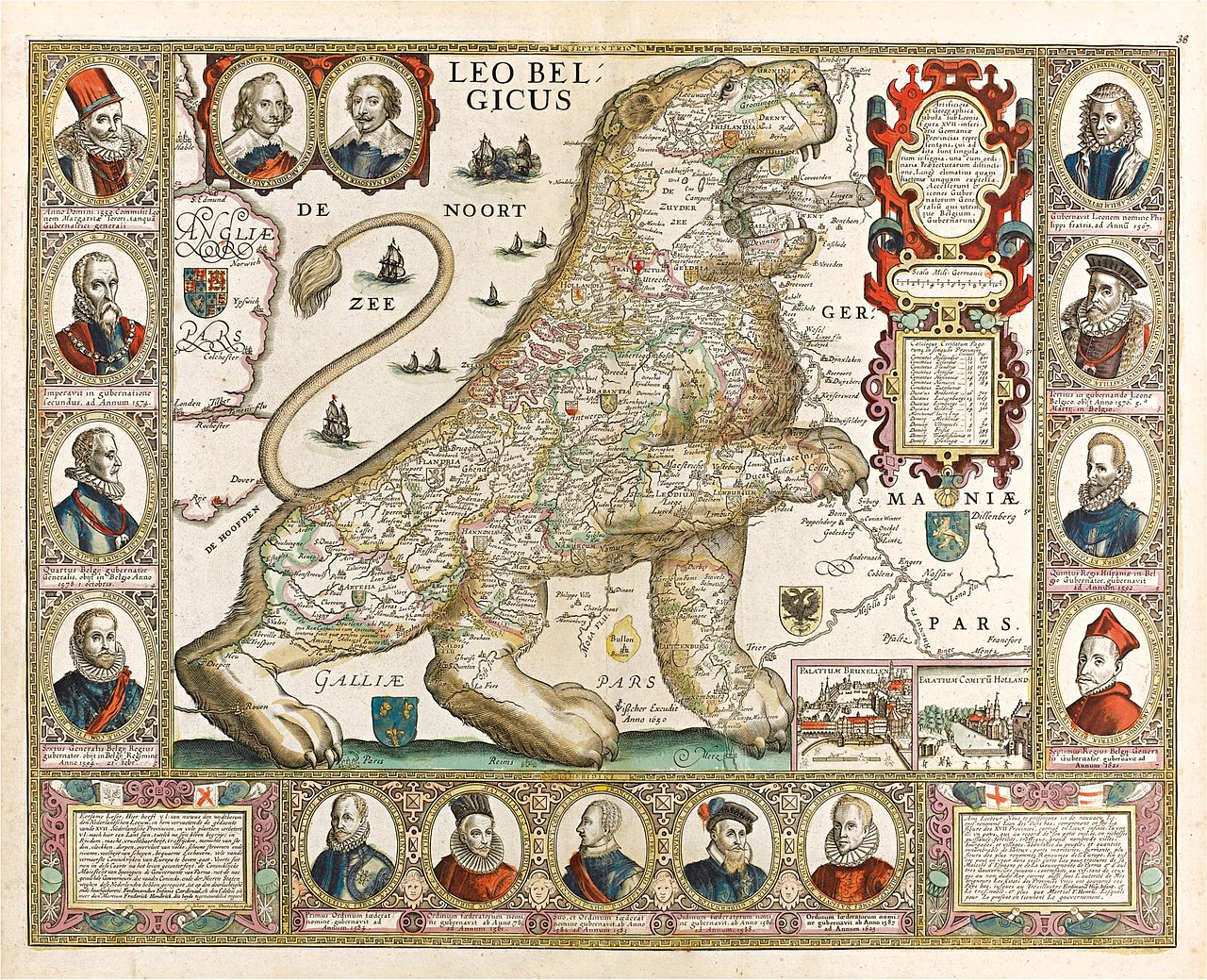
The kingdom combined several pre-Napoleonic entities. In practice it brought together territories from the north, formerly the Dutch Republic, with the southern provinces that had previously been governed as the Austrian Netherlands and other ecclesiastical domains such as the Prince-Bishopric of Liège. The new state also included the Grand Duchy of Luxembourg in personal union under the Dutch monarch.
- Monarchy: ruled by the House of Orange-Nassau; the first king was William I of the House of Orange-Nassau.
- Constitution: a constitutional monarchy with a central administration intended to integrate law, finance and trade across the region.
- Economic and social character: the north remained predominantly maritime and commercial, while the south had important industrial and Catholic social networks.
Causes of division
Tensions between north and south were cultural, religious, economic and political. The south was largely Catholic and French-speaking among its elite, with growing industrial districts, while the north was largely Protestant and Dutch-speaking with a strong mercantile tradition. Policies pursued from The Hague aimed at administrative unity, language promotion and fiscal centralization, which many southern political leaders and communities found disadvantageous. Religious grievances, disputes over representation in government, and differences in economic interest contributed to rising unrest.
The Belgian Revolution and diplomatic resolution
In 1830 revolutionary events in Brussels triggered a wider uprising that established a provisional Belgian government and declared independence. The revolt is commonly called the Belgian Revolution. King William I of the Netherlands refused recognition at first and attempted military efforts to restore control, but diplomatic negotiations and European concern over stability led to prolonged talks. The resulting settlement progressively isolated Dutch claims; de facto Belgian independence became established in the early 1830s and was finally sanctioned when William I accepted the terms of the Treaty of London in 1839, which fixed borders and international recognition.
Aftermath and significance
The secession produced two enduring outcomes: the modern Kingdom of the Netherlands, which retains much of the northern territory and institutions of the 1815 state (the present Netherlands), and the independent Kingdom of Belgium. Luxembourg’s status was altered by the negotiations and later arbitration. The episode illustrates early 19th-century attempts to redraw Europe after Napoleon, balancing strategic concerns against national, religious and linguistic identities.
Notable facts and legacy
- Although commonly called the "United Kingdom of the Netherlands" in historical writing, the official name was the Kingdom of the Netherlands under the House of Orange-Nassau.
- The 1815 arrangement was designed at the Congress of Vienna to create a buffer against future French expansion and to stabilize northwestern Europe.
- The period left lasting institutional, legal and economic links across the Low Countries even after separation, and it shaped the development of Belgium and the Netherlands in the 19th century.
Related articles
Author
AlegsaOnline.com United Kingdom of the Netherlands (1815–1839): formation, structure, and dissolution Leandro Alegsa
URL: https://en.alegsaonline.com/art/102963