
Uninterruptible power supply (UPS): purpose, types, batteries and uses
A UPS provides immediate backup power and power conditioning when mains supply fails. This article explains function, types, batteries, applications, sizing, maintenance and distinctions from generators.
Overview
An uninterruptible power supply (UPS) is a device that delivers temporary electrical power and conditioning when the normal utility supply is interrupted or degraded. Its primary role is to avoid sudden shutdowns, data loss, equipment damage and downtime by switching to stored energy with little or no interruption. UPS systems are commonly deployed in environments that cannot tolerate power interruptions, such as servers, telecommunications, medical equipment and industrial controls. In an emergency they bridge the gap until power returns or until a longer‑term backup like a generator starts.
Image gallery
9 Images



Types and key components
Most UPS systems share a few core parts: a battery or other energy store, an inverter to create AC output, a rectifier/charger, and control electronics. Typical UPS classes include:
- Offline/standby — provides basic backup by switching to battery power when output fails.
- Line‑interactive — includes automatic voltage regulation to handle brownouts and surges without using the battery.
- Online/double‑conversion — continuously converts incoming AC to DC and back to AC, offering the best isolation from input disturbances.
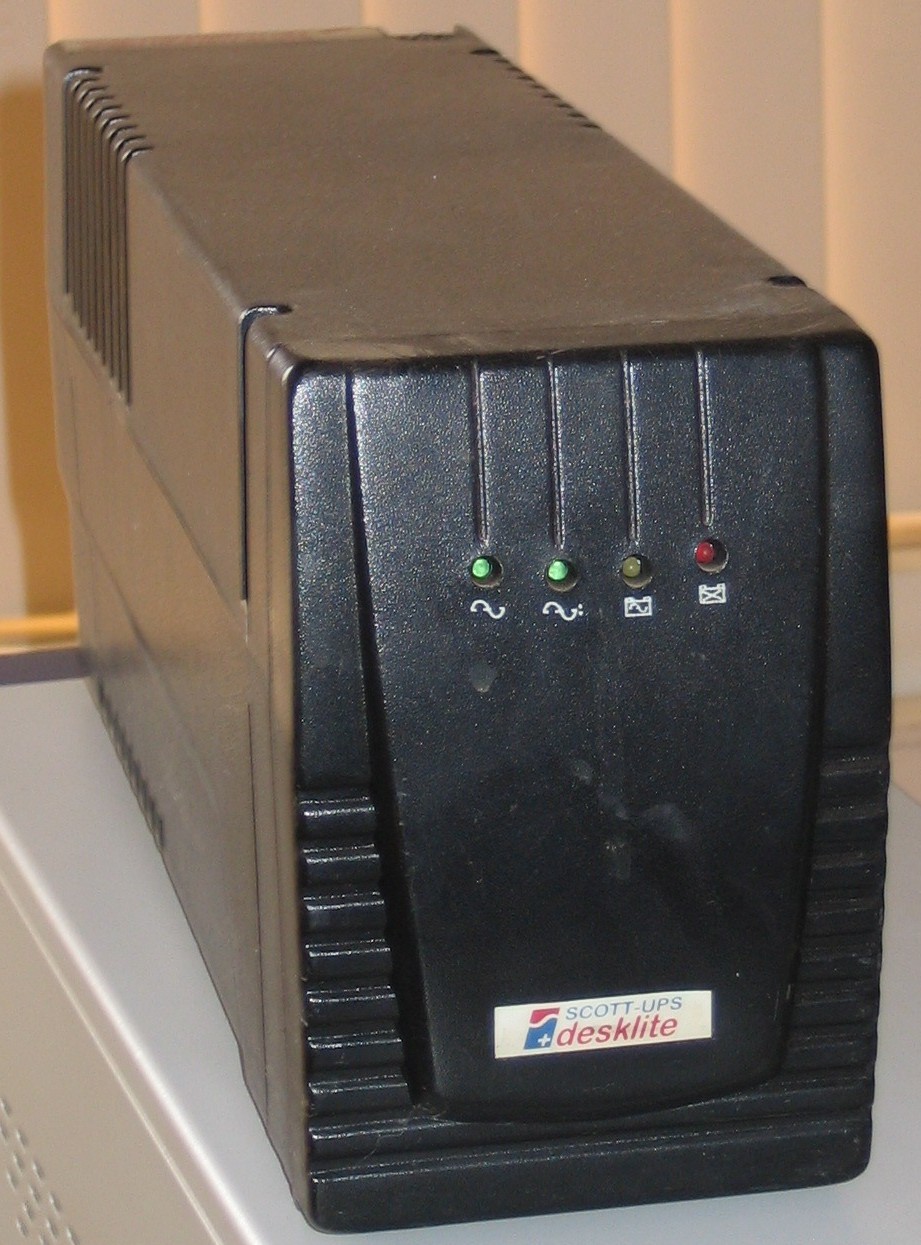
Smaller units are used with personal computers and networking gear (consumer hardware), while larger modular racks and floor units protect server rooms and data centers.
Batteries and power conversion
Most UPS installations use sealed lead‑acid batteries, often valve‑regulated (VRLA), because they are economical, tolerant of a range of temperatures and do not emit fumes under normal conditions. Some systems use lithium‑ion or other chemistries for higher energy density and longer cycle life. Battery packs store DC energy that the inverter converts to a stable AC waveform; the inverter design determines output quality and how cleanly sensitive loads are powered. UPS batteries are typically replaceable modules and require periodic testing and maintenance.
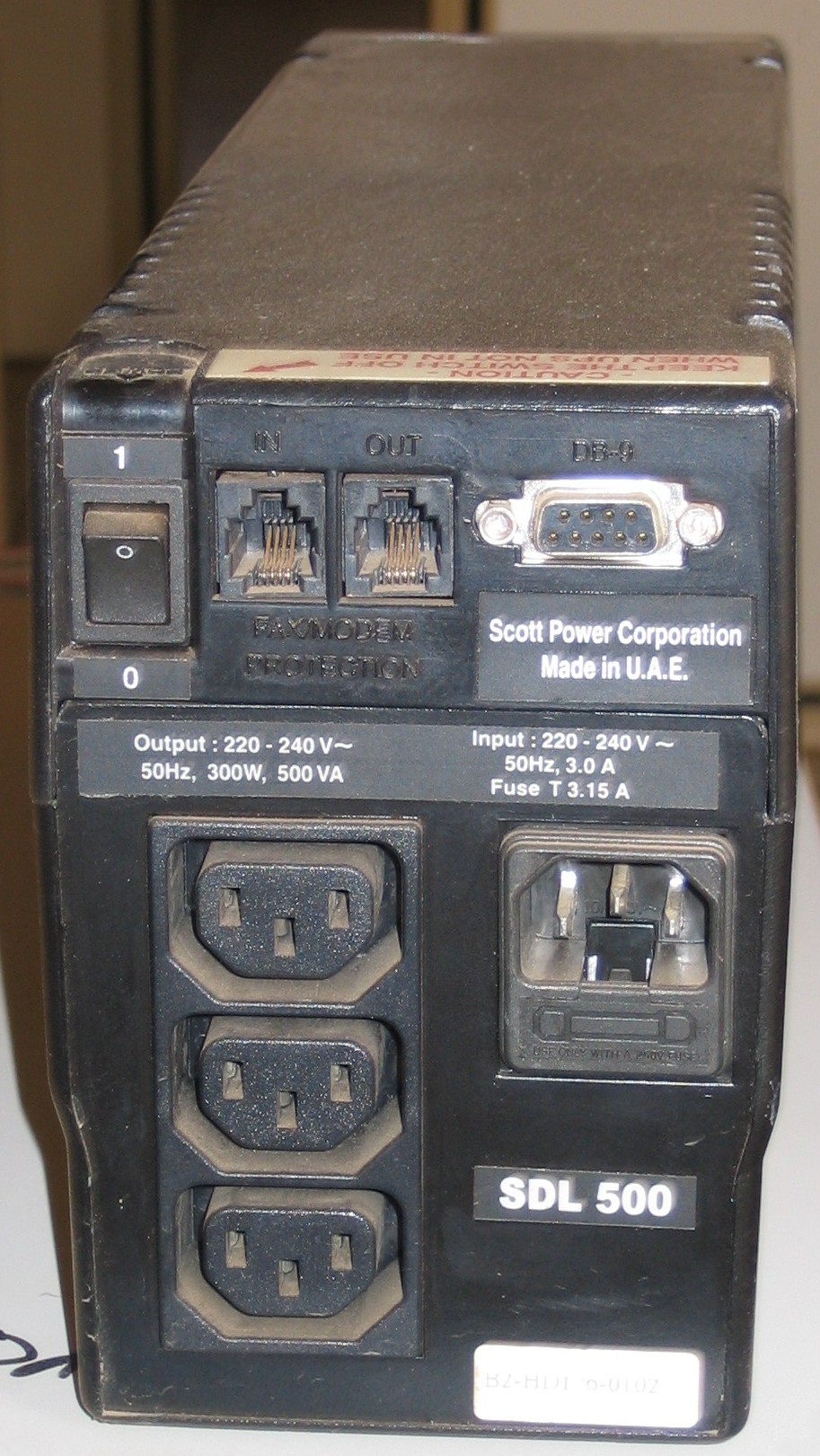
Common sizing measures include volt‑ampere (VA) ratings and watt output; VA characterizes apparent power while watts indicate real usable power. Sizing also accounts for power factor, load type (resistive vs. inductive) and desired runtime.
Applications, sizing and examples
UPS units protect a wide range of equipment: desktop computers, telecommunications gear, industrial controllers, laboratory instruments and life‑support systems. Choosing a UPS involves determining the peak and continuous load, expected hold‑up time, redundancy needs and environmental constraints. Small office units provide a few minutes of runtime to allow graceful shutdown; larger installations can sustain critical systems for hours when combined with external battery banks or generators.
Maintenance, safety and distinction from other backups
Routine tasks include battery health checks, firmware updates, and load testing. Batteries typically require replacement every few years depending on usage and temperature. Unlike standby generators, UPS devices provide near‑instantaneous response and clean power conditioning but usually for a shorter duration; generators supply long‑term power but take time to start and do not correct all power quality issues. UPSes are different from surge protectors because they actively supply energy rather than only blocking or clamping transient voltages.
History, notable facts and further reading
Early UPS concepts emerged to support telecommunications and computing equipment as electronic systems grew sensitive to interruptions. Modern designs emphasize energy efficiency, modular scalability and remote management. For practical selection and standards information consult manufacturer guides and industry standards; see resources for installation, testing and safety best practices (battery types, inverter topologies, maintenance).
Related articles
Author
AlegsaOnline.com Uninterruptible power supply (UPS): purpose, types, batteries and uses Leandro Alegsa
URL: https://en.alegsaonline.com/art/102871