
Alternating current (AC): principles, waveforms, uses and history
Overview of alternating current (AC): how it differs from DC, common waveforms and frequencies, its historical development, major applications, and safety and technical distinctions.
Overview
Alternating current (AC) is an electric current whose magnitude and direction change periodically, in contrast to direct current which flows one way only. In AC the electrons in a conductor move back and forth as the applied voltage reverses, so both the size of the flow and its polarity vary with time. The general concept of alternating current covers power distribution, signal transmission and many laboratory and industrial uses. For a technical definition see alternating current and descriptions of how its magnitude varies in circuits such as an electric circuit.
Image gallery
6 Images


Waveforms and characteristics
The most common AC waveform in power systems is the sinusoid, or sine wave, because its smooth variation minimizes losses and simplifies transformation with transformers. Other wave shapes—square, triangular and pulse trains—are used in electronics and control. The general term for the shape is waveform. Small, inexpensive inverters often produce modified or square waves rather than a true sine wave; such devices are sometimes described as power inverters that generate stepped or paused transitions between polarities.
History and development
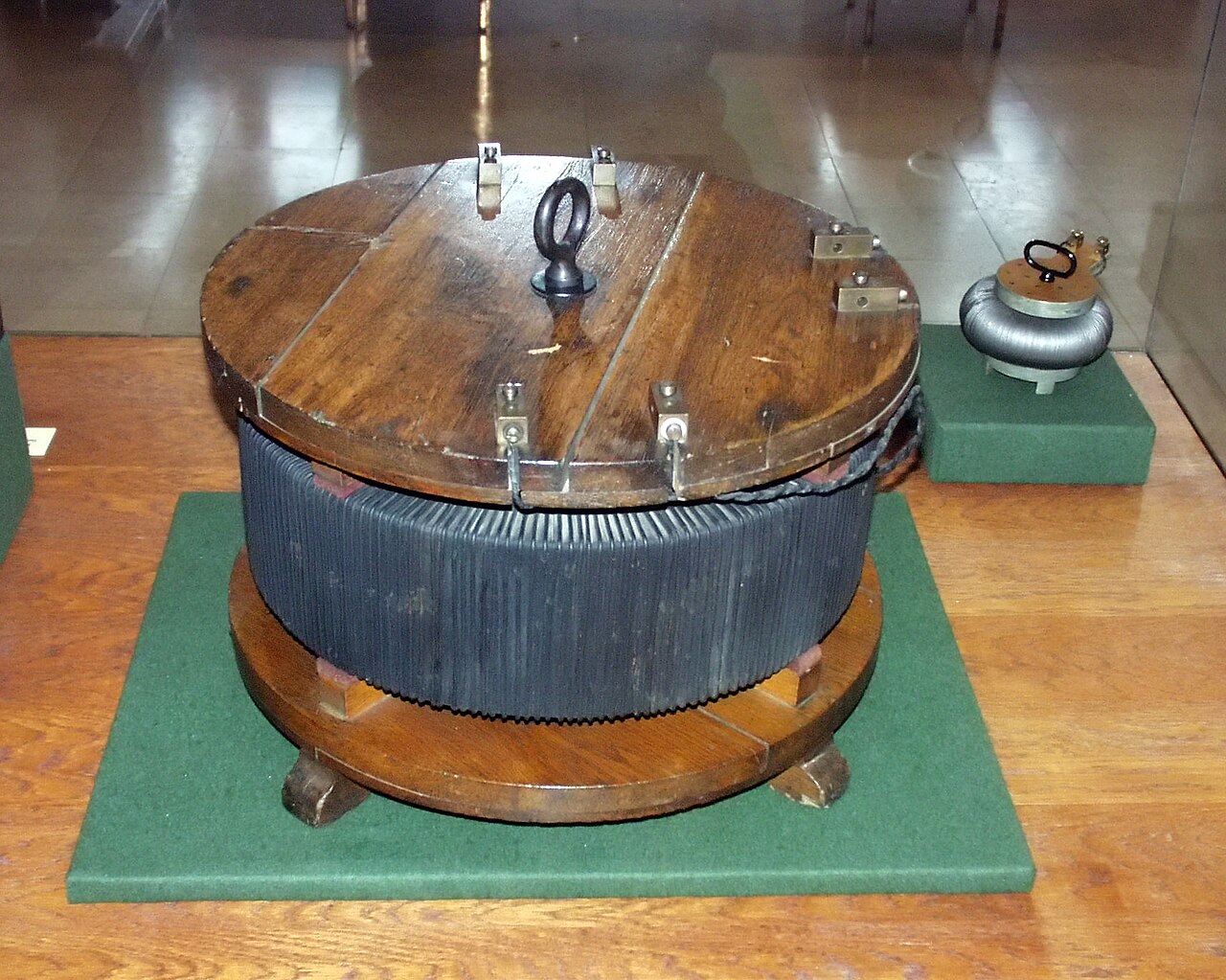
The adoption of AC for electricity distribution during the late 19th and early 20th centuries followed demonstrations that alternating voltage can be changed in amplitude efficiently with transformers, enabling long-distance transmission with lower losses. Debates over AC versus DC were prominent historically, but technical advantages of AC for grid-scale distribution established its dominance in most power networks. The standard mains frequency differs by region—commonly 50 or 60 cycles per second—which causes the line to reverse direction 50 or 60 times per second.
Uses and examples
By far the best-known use of AC is the delivery of household and commercial electricity from power plants to buildings. AC also carries audio and radio-frequency signals: both sound and wireless information are represented by alternating voltages and currents on conductors. Examples include audio signals in loudspeaker wiring and modulated carrier waves in radio systems; these travel along wire or through antennas and carry encoded information that can be recovered by receivers.
Common applications and formats
- Distribution power at standardized voltages and frequencies for homes and industry.
- Electric motors designed to run on AC, from small appliances to large industrial drives.
- Electronics that use AC waveforms for timing, synthesis and signal processing.
- Inverters that convert DC to AC for renewable systems and portable power.
Distinctions and safety notes
Technically, AC differs from DC in its ability to be transformed easily and in how reactive components (capacitors and inductors) respond to frequency. Safety practices vary with voltage and frequency: although household AC can power devices continuously without perceptible flicker, it can be hazardous to people and equipment if not handled with proper insulation and grounding. Understanding waveforms, frequency and peak versus RMS values is essential for design, maintenance and safe operation.
Questions and answers
Q: What is an alternating current (AC)?
A: An alternating current (AC) is an electric current of which magnitude and direction vary, unlike direct current, whose direction remains constant.
Q: What is the usual waveform of an AC power circuit?
A: The usual waveform of an AC power circuit is a sine wave because this leads to the most efficient transmission of energy.
Q: Are there different waveforms used in certain applications?
A: Yes, in certain applications, different waveforms are used, such as triangular or square waves.
Q: What type of wave is produced by inexpensive power inverters?
A: Inexpensive power inverters produce a square wave with a pause between the change in direction.
Q: Where does alternating current come from?
A: When one speaks of alternating current, one mostly refers to the form in which electricity is delivered to businesses and residences, and the AC comes from a power plant.
Q: How many times does the direction of the electricity switch back every second?
A: The direction of the electricity switches back 60 times every second (or 50 times in some parts of the world).
Q: What examples of alternating current signals are carried on electrical wire?
A: Both audio and radio signals carried on electrical wire are examples of alternating current. In these applications, an important goal is often the recovery of information encoded or modulated onto the AC signal.
Related articles
Author
AlegsaOnline.com Alternating current (AC): principles, waveforms, uses and history Leandro Alegsa
URL: https://en.alegsaonline.com/art/3053
Sources
- ndt-ed.org : "Alternating current"
- neuronet.pitt.edu : "Nikola Tesla"
- physics4kids.com : "Electricity & Magnetism: Alternating Current"