
Bell X-1: First Manned Aircraft to Break the Sound Barrier
The Bell X-1 was an American rocket-powered research airplane that in 1947 became the first piloted craft to exceed Mach 1 in controlled level flight, piloted by Chuck Yeager. Its trials informed supersonic design.
The Bell X-1 was an American experimental aircraft developed to investigate flight near and beyond the speed of sound. Purpose-built as a rocket-powered research plane, it carried instruments and structural features aimed at understanding transonic and supersonic aerodynamic behavior. On October 14, 1947, with Captain Charles "Chuck" Yeager at the controls, an X-1 achieved controlled flight beyond Mach 1 in level flight, a milestone in aviation history.
Image gallery
10 Images


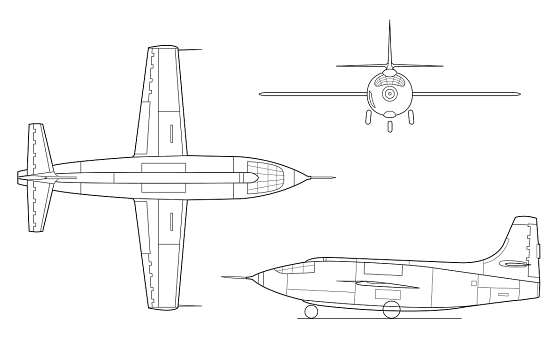
Design and key characteristics
Shaped with a streamlined, bullet-like fuselage and thin wings, the X-1 emphasized stability and predictable handling at very high speeds. It used a liquid-fueled rocket engine instead of a jet for the short, powerful thrust pulses needed to accelerate through the transonic regime. Because of limited fuel and thrust duration, X-1 flights were typically air-launched from a carrier aircraft at high altitude, allowing the test pilot to conduct brief supersonic runs and gather aerodynamic, control, and instrumentation data.
Development and historic flight
Conceived after World War II by Bell Aircraft in cooperation with U.S. Army Air Forces and the National Advisory Committee for Aeronautics (NACA), the X-1 program addressed puzzling phenomena observed as aircraft approached the speed of sound, such as buffeting, control reversal, and compressibility effects. The October 1947 flight demonstrated that controlled, level supersonic flight was achievable, validating design principles and instrumentation methods used in subsequent high-speed aircraft programs.
The X-1 series included several airframes used to explore different speed and altitude regimes; test pilots included highly experienced military aviators. The airplane earned nicknames and popular recognition, and the flight data it provided informed the design of later supersonic fighters and research vehicles.
Legacy and significance
Beyond its symbolic breakthrough, the X-1 program produced practical aerodynamic and structural knowledge that influenced both military and civil supersonic development. Data from its flights contributed to safer control systems, better airframe shaping, and improved understanding of high‑speed aerodynamics. The project also helped transition aeronautical research organizations into the postwar era, laying groundwork for later X-series programs and for NASA's research initiatives.
Further reading and resources
- Bell Aircraft and the X-1 program overview
- Technical description of the X-1
- Context: early supersonic research
- Mach number and transonic effects explained
- Records and performance data
- Air-launch techniques used by research aircraft
- Profiles of X-series experimental vehicles
- Account of the October 14, 1947 flight
- Biography of Captain Chuck Yeager
- Museums and preserved X-1 exhibits
Related articles
Author
AlegsaOnline.com Bell X-1: First Manned Aircraft to Break the Sound Barrier Leandro Alegsa
URL: https://en.alegsaonline.com/art/10276