
Ukulele: small four‑stringed instrument from Hawaii
Compact overview of the ukulele: design, sizes and tunings, history from 19th‑century Hawaii, construction, playing techniques, cultural impact, and related instruments.
Overview
The ukulele is a small, fretted plucked string instrument with four main strings, closely associated with Hawaiian music but now played worldwide across many genres. Often shortened to "uke," it belongs to the family of guitar‑like instruments and is valued for its bright, lyrical tone, portability and relative ease of learning. Most modern ukuleles use nylon or synthetic strings, which contribute to a warm, mellow timbre suited to solo performance, accompaniment and ensemble playing.
Image gallery
10 Images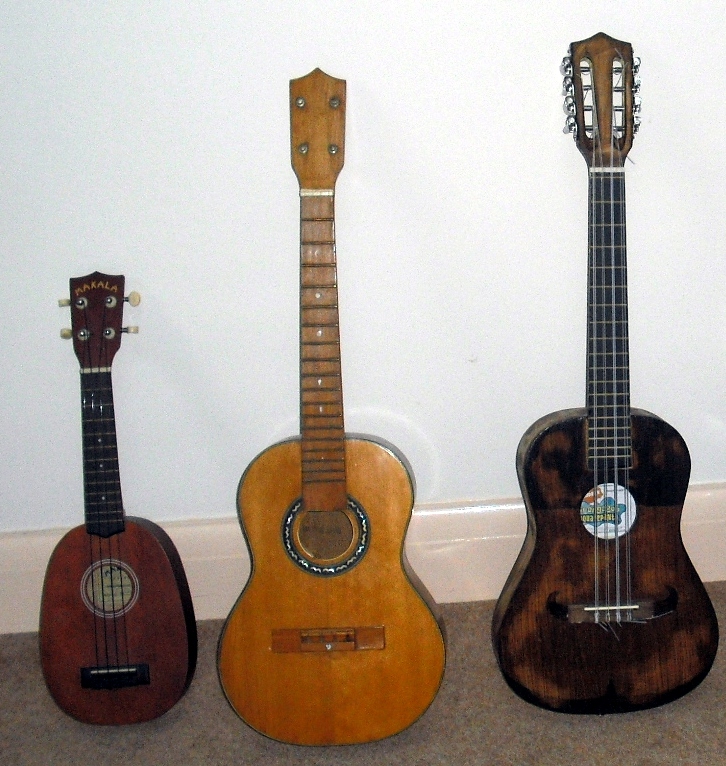





Design and parts
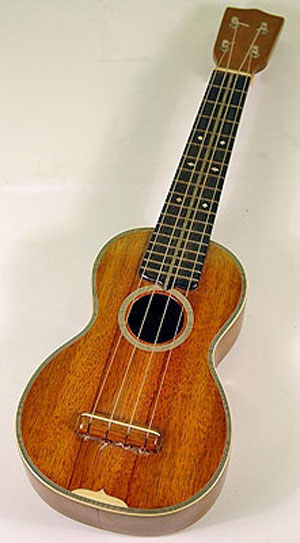
Construction generally follows a familiar pattern: a hollow body or soundbox that projects sound, a neck with a fretboard, frets to mark pitches, a headstock with tuning machines and a bridge where strings are anchored. Body shape, size, wood species and string type all influence tone, volume and sustain. Common tonewoods include varieties of mahogany, koa, spruce and maple, while some instruments use laminated woods or plastics for durability and cost efficiency. Electric and electro‑acoustic ukuleles contain pickups and preamps for amplified performance.
Sizes and tunings
Ukuleles are made in several standard sizes. The most common are soprano, concert, tenor and baritone; smaller sopranino and larger bass versions also exist. The three smaller sizes are typically tuned G–C–E–A, often with a reentrant (high G) configuration where the G string is pitched above the C and E, creating the instrument's characteristic ringing intervals. Baritone ukuleles are generally tuned D–G–B–E, matching the highest four strings of a guitar and producing a deeper, more guitar‑like voice. Bass ukuleles adopt bass instrument tuning to complement lower registers.
Strings and tonal options
Strings are most commonly made from nylon or fluorocarbon; historically, gut strings were used. Some players use wound or composite strings to obtain a deeper or more projecting sound. A frequent choice is between reentrant tuning, which favors a compact, chiming sound, and linear low‑G tuning, which extends lower range and alters fingerboard fingering and voicings. Luthiers and players experiment with string gauges and materials to match musical style and instrument construction.
Playing techniques and repertoire
Basic ukulele technique begins with simple strumming patterns and basic chord shapes, making it a popular entry instrument for learners. Advanced techniques include fingerpicking, tremolo (rapid repetition of a single note), chord‑melody arrangements, campanella style (where notes ring over each other), and percussive effects produced by tapping the body. The ukulele appears in traditional Hawaiian music, contemporary pop, jazz arrangements and instrumental virtuoso performance. Notable contemporary players have expanded its technical and expressive capabilities and helped popularize the instrument internationally.
History and cultural context
The ukulele developed in the Hawaiian Islands in the late 19th century following the arrival of Portuguese immigrants who brought small guitar‑like instruments such as the cavaquinho. Hawaiian musicians adapted these instruments in size, tuning and playing technique, and the ukulele became an emblem of Hawaiian musical culture. During the 20th century it spread to the U.S. mainland and beyond, appearing in popular music, film and education and becoming a global amateur and professional instrument.
Construction, makers and maintenance
Ukuleles are produced by small specialist luthiers and larger factories worldwide. Handmade solid‑wood instruments are prized for their tonal richness, while mass‑produced models offer affordability and consistency. Regular care includes proper tuning, gentle cleaning, and attention to humidity: wood instruments benefit from moderate, stable humidity to prevent cracks or warping. Tuning machines, nut and saddle condition, and string selection materially affect playability and tone.
Education, community and cultural significance
The ukulele is widely used in classroom music programs because of its approachable size, simple chord shapes and ability to accompany singing. Community groups, festivals and informal gatherings celebrate the instrument, and local ukulele clubs foster learning and repertoire sharing. While the ukulele is celebrated globally, it remains an important cultural symbol in Hawaii, where it continues to be part of musical practice and identity.
Variations and hybrids
Beyond standard acoustic models, variants include tenor and baritone sizes, sopranino and bass instruments, resonator ukuleles for additional volume and metallic tone, and electric or semi‑acoustic designs for amplified performance. Players and builders experiment with scale length, body depth and materials to create instruments suited to different musical roles.
Further information
For more detailed topics and comparative material see: general instrument overview, guitar family relationships, string materials and construction, bass instrument comparison, double bass relation, 19th century context, Hawaii and cultural history, cavaquinho and antecedents, island cultural exchange, Portuguese influences and maritime routes and sailors.
The ukulele remains both an accessible beginner instrument and a subject of continuing interest for performers, educators and instrument makers worldwide.
Related articles
Author
AlegsaOnline.com Ukulele: small four‑stringed instrument from Hawaii Leandro Alegsa
URL: https://en.alegsaonline.com/art/102651