
Udanoceratops
Udanoceratops is a Late Cretaceous neoceratopsian dinosaur known for an unusually large skull, distinctive dentition and a mix of primitive and derived traits that make its classification debated.
Overview
Udanoceratops is a genus of herbivorous ceratopsian dinosaur known from the Late Cretaceous of Asia. It is notable for possessing a proportionally large skull compared with other small-bodied neoceratopsians and for lacking a prominent nasal horn. Because of its combination of features, Udanoceratops occupies an uncertain position in the evolutionary tree of horned dinosaurs and is often discussed in studies of early ceratopsian diversity.
Image gallery
10 Images




Anatomy and dentition
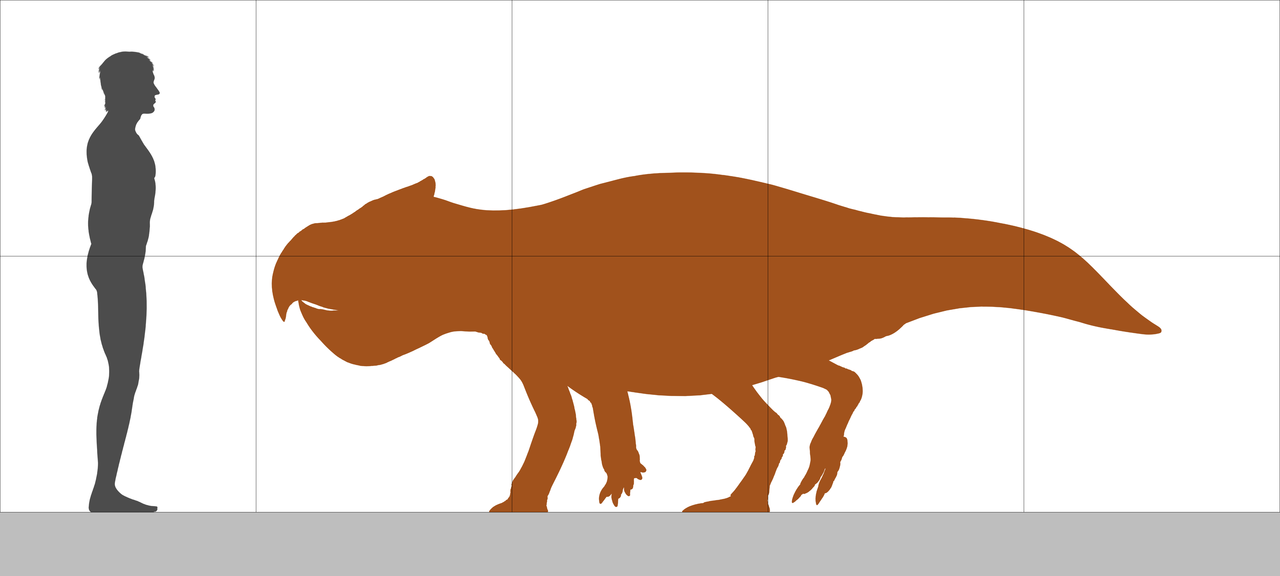
The skull of Udanoceratops is unusually large relative to its relatives: it has been described as markedly bigger than the skulls of several contemporaneous protoceratopids, including comparisons with Montanoceratops. Despite its size it shows no true nasal horn, and the facial region resembles more primitive neoceratopsians. Comparisons have emphasized its likeness to Leptoceratops in overall proportions, but it differs in several key ways: Udanoceratops has larger nasal openings, a different arrangement of teeth between the upper and lower jaws, and distinct shapes of some skull bones. One consequence of its dental arrangement is a specialized chewing surface suitable for a herbivorous diet, with teeth adapted for slicing and grinding vegetation.
Distinctive features
- Large skull: notable relative size compared with other small neoceratopsians and protoceratopids — see discussion of its large skull.
- No nasal horn: unlike many later ceratopsids, it lacks a pronounced horn on the snout.
- Uneven dentition: fewer teeth in the upper jaw and more in the lower jaw, with differences in tooth morphology and wear patterns.
Discovery and classification
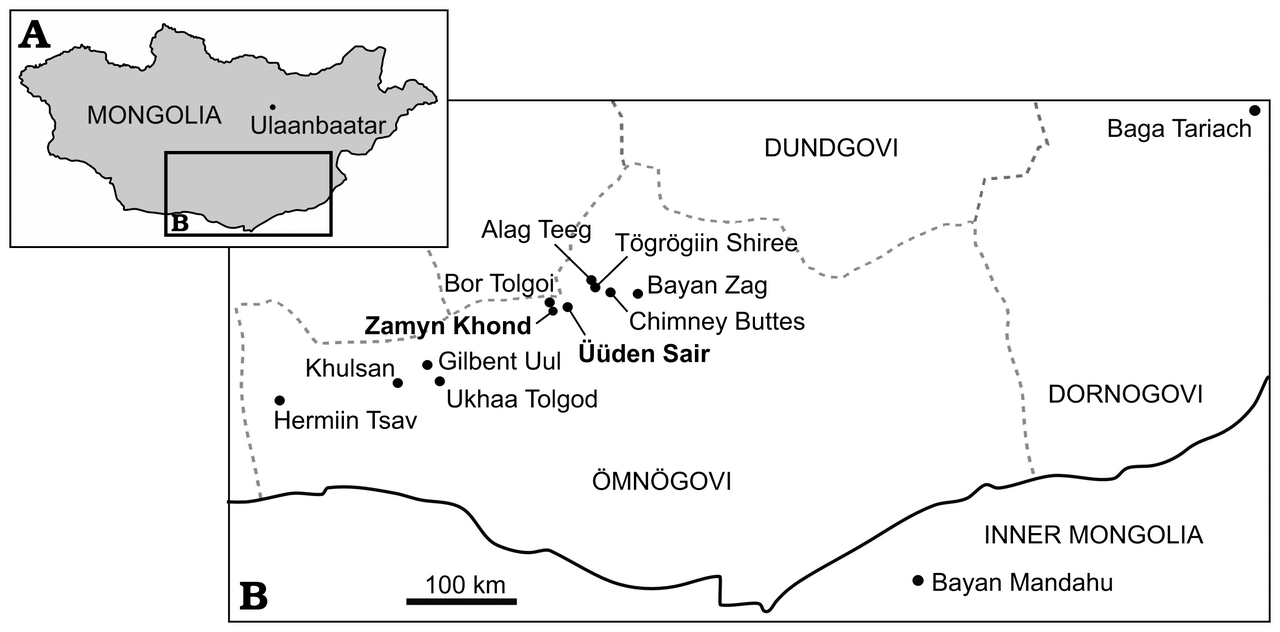
Fossils attributed to Udanoceratops were recovered from Late Cretaceous deposits in Asia and described on the basis of cranial material. Because it combines both advanced (derived) and primitive characters, different studies have placed it either close to other small-bodied neoceratopsians (often grouped informally with leptoceratopsid or protoceratopsid taxa) or as more closely allied with the lineage that gave rise to the larger, horned ceratopsids. This uncertainty means Udanoceratops is often cited in discussions of ceratopsian evolution and in analyses that test the sequence of trait changes leading to true ceratopsids.
Paleobiology and significance
Like other neoceratopsians, Udanoceratops was herbivorous, feeding on the variety of Cretaceous plants available in its arid to semi-arid environment. Its skull and tooth specializations suggest a capable bite and processing system for tough foliage. From an evolutionary perspective, Udanoceratops is important because its mosaic of features helps paleontologists trace how traits such as skull size, nasal ornamentation, and dental specializations evolved among early members of the horned-dinosaur lineage.
Notable facts
Udanoceratops illustrates how not all early relatives of ceratopsids were small, simple animals; instead some evolved large skulls and distinctive feeding adaptations independently. Its intermediate anatomy continues to inform debates about ceratopsian relationships and the timing of key evolutionary innovations among the group.
For more detailed comparative information, see studies and summaries that compare cranial proportions and tooth counts across related taxa (skull comparisons, comparisons with Montanoceratops, comparisons with Leptoceratops).
Related articles
Author
AlegsaOnline.com Udanoceratops Leandro Alegsa
URL: https://en.alegsaonline.com/art/102501