
Tunceli Province (Dersim) — geography, history and culture
Tunceli Province (Dersim) in eastern Turkey: a sparsely populated, mountainous region known for its Alevi Kurdish and Zaza communities, distinct history, and rich natural landscapes.
Overview
Tunceli Province, often referred to by its historical name Dersim, is a sparsely populated province in the Eastern Anatolia region of Turkey. Officially known as Tunceli, the area is characterised by steep mountains, deep river valleys and a scattered pattern of small towns and villages. It is the least densely populated province in the country and has a small overall population concentrated in a few urban centres including Tunceli (capital).
Image gallery
10 Images



Geography and environment
Tunceli occupies a rugged landscape dominated by the Munzur mountain range and the Munzur River valley, which supports a range of endemic plants and wildlife. Large tracts of highland meadow, cedar and mixed forest survive in the upper valleys. Parts of the province are protected for their ecological value and attract visitors for hiking and nature observation. The challenging terrain has influenced settlement patterns, transportation and local economies, with agriculture limited to terraces and pastures and some valleys supporting small-scale farming.
Administrative divisions
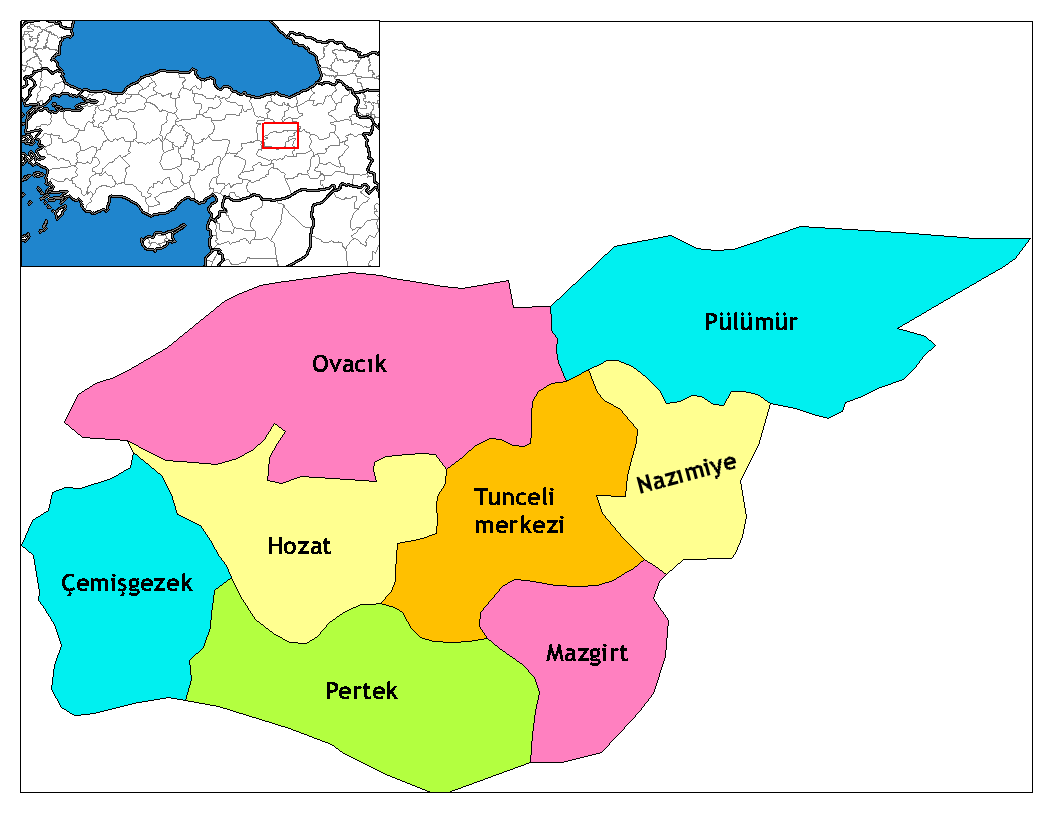
The province is divided into eight districts. These are listed below; the capital district shares the province name.
- Çemişgezek
- Hozat
- Mazgirt
- Nazımiye
- Ovacık
- Pertek
- Pülümür
- Tunceli (capital)
History
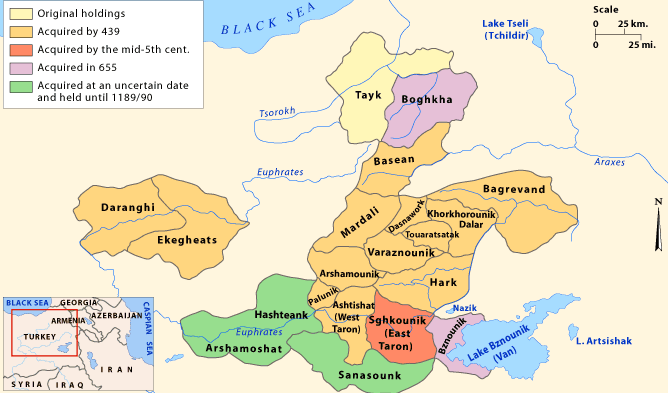
The region has a complex history shaped by successive states and diverse peoples. Historically, Dersim lay on the margins of various Anatolian and Armenian polities and later became part of the Ottoman administrative system. Before and during the early 20th century the area included Armenian communities; the local demographic picture changed dramatically in the era surrounding World War I and its aftermath, when many Armenians were killed, displaced or assimilated, events often discussed in relation to the Armenian genocide. Local oral histories and some scholarly studies also point to Armenian influence among parts of the population.
In the 1930s the region was the scene of a brutal and widely documented confrontation between the Turkish state and local groups, an episode frequently referenced in histories of the modern Turkish republic and of Dersim specifically. That period, and subsequent policies, reshaped settlement, administration and relations with the central government.
Demographics and culture
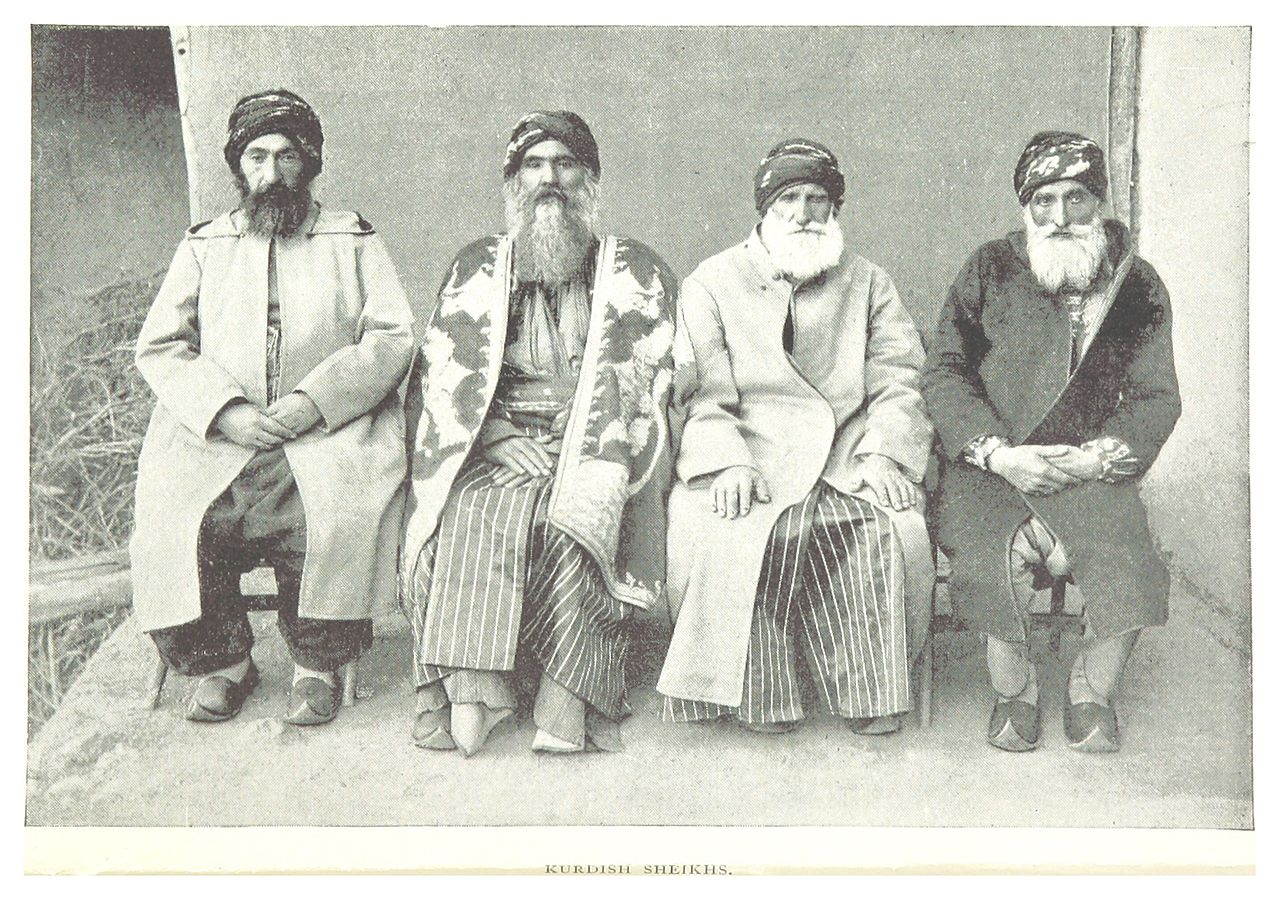
Tunceli’s population is distinctive in Turkey for the predominance of Alevi religious practice among Kurdish- and Zaza-speaking communities. Many residents identify as Kurdish or Zaza; the province’s local names reflect this multilingual environment — for example the Kurdish name Dêrsim, the Zaza form Mamekîye, and the Armenian name Դերսիմ. Some families and local traditions show traces of mixed ancestry and cultural exchange; several scholars and local accounts note that parts of the population may have Armenian origins or connections, often cited as people of partial Armenian descent who became assimilated over generations.
Economy, society and importance
The economy is based mainly on small-scale agriculture, animal husbandry and public-sector employment. Remoteness and terrain limit industrial development, but the area’s natural beauty and cultural distinctiveness have fostered niche tourism — for trekking, cultural visits and seasonal festivals. Local politics and cultural life are influenced by the province’s Alevi traditions and the social memory of the region’s historical events, making it significant for studies of minority cultures, state–society relations and regional identity in eastern Turkey.
Notable distinctions
- Tunceli is among the least densely populated provinces in the country and retains large tracts of relatively unspoiled landscape.
- Its cultural landscape includes Kurdish and Zaza languages, Alevi religious practice, and layered identities shaped by historical Armenian presence and later assimilation processes.
- The province’s history of confrontation with the central state in the early republican era is a major reference point in both local memory and wider historical discussion.
For further reading on administrative details, contemporary demographics and cultural studies, consult regional overviews and academic works that specialise in eastern Anatolia and minority populations in modern Turkey. Additional authoritative resources are available through provincial records and specialised cultural heritage sources.
Related terms and names in local languages: Dêrsim (Kurdish), Mamekîye (Zaza), Դերսիմ (Armenian). Historical and contextual links: official name, region, country, historical events, ethnic context, ancestral links.
Related articles
Author
AlegsaOnline.com Tunceli Province (Dersim) — geography, history and culture Leandro Alegsa
URL: https://en.alegsaonline.com/art/102015