
Toyotomi Hideyoshi: Unifier of Japan and Patron of the Momoyama Era
Toyotomi Hideyoshi (c.1536–1598) rose from humble origins to unify Japan, enact major social and administrative reforms, patronize the arts, and launch the Korean campaigns that shaped the transition to the Tokugawa period.
Overview
Toyotomi Hideyoshi (豊臣 秀吉) was one of Japan's most influential late-16th-century statesmen and military leaders. Born in the 1530s in the province of Owari, he rose from low status to become a leading general, daimyo, and regent to the emperor. His period of dominance brought the long era of civil war that had plagued Japan to an end and established political arrangements and cultural trends identified with the Momoyama period.
Image gallery
10 Images






Origins and rise to power
Hideyoshi's career is remarkable for its social mobility. Traditionally described as born to a peasant or low-ranking samurai family in what is now Nagoya, he entered warfare as a foot soldier and served the ambitious warlord Oda Nobunaga. After Nobunaga's death, Hideyoshi consolidated Nobunaga's gains and completed the military unification of Japan. During his ascent he adopted the family name Toyotomi, a change that signified his new status; earlier in life he had used the name Hashiba and was associated with his native province of Owari.
Titles, position, and the daimyo system
By the 1580s Hideyoshi held the power of a national ruler without taking the shogunal title. He was named regent (kampaku) and later took the honorific title Taikō upon retirement from the post, exercising authority over the court and the regional lords known as daimyo. His control relied on military strength, strategic marriages, and a reorganized system of landholding and taxation that bound regional rulers more firmly to central authority.
Major reforms and policies
Hideyoshi instituted several administrative and social measures intended to stabilize society after decades of conflict. Key policies included:
- Comprehensive land surveys and cadastral assessments to standardize taxation and record land productivity.
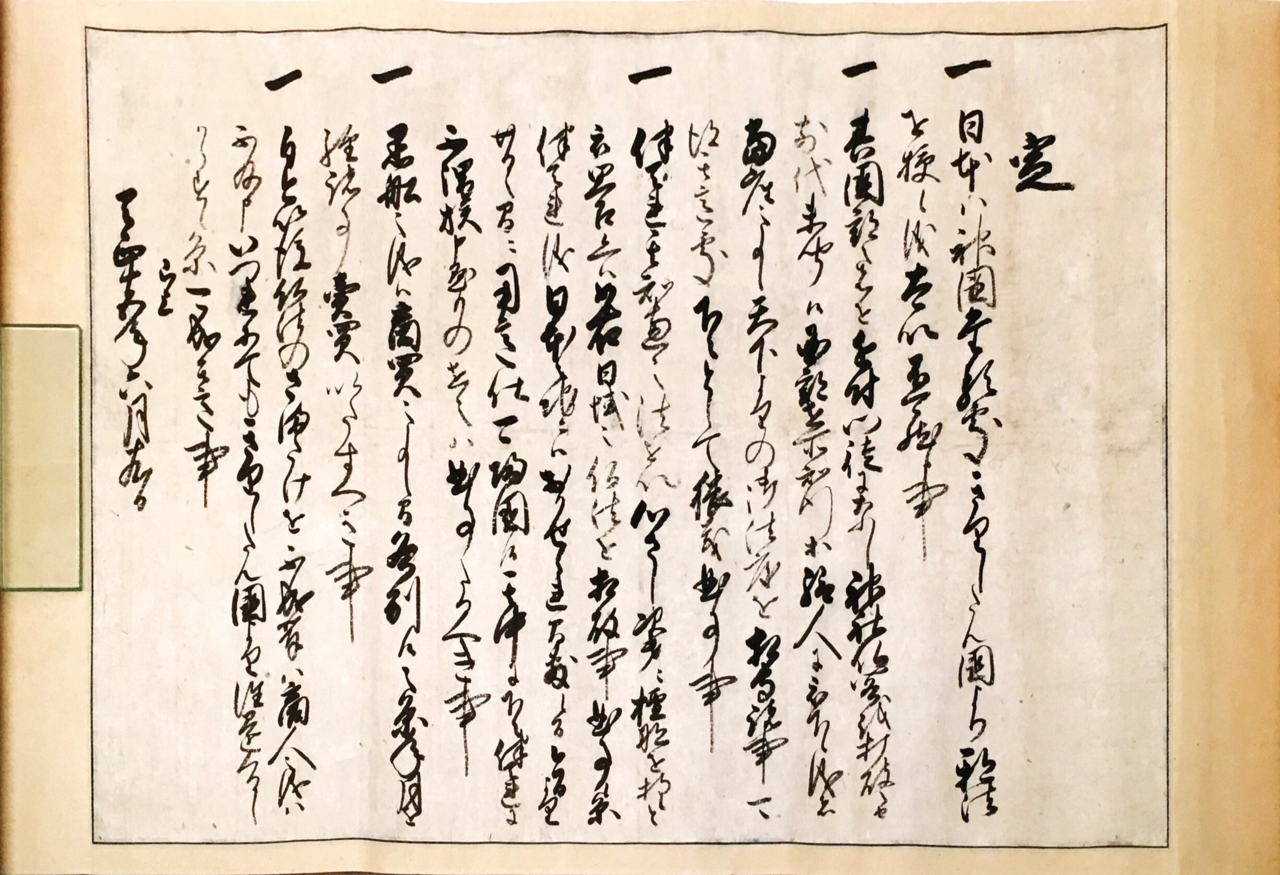
- The so-called "sword hunt" and related edicts that restricted weapon ownership to the warrior class: a measure that sought to separate peasants from martial power and reinforce social order, often summarized as limiting the right to bear arms to the samurai.
- Reordering of domains and the displacement or reassignment of lords to reduce the chances of rebellion and to reward loyal retainers.
Military campaigns and the Korean invasions
Hideyoshi launched large-scale expeditions to the Korean peninsula in 1592 and again in 1597, aiming to extend his influence to the continent and possibly to China. These invasions—often referred to as the Imjin War—were costly and ultimately failed to secure lasting gains, draining resources and contributing to political instability after his death. Domestically, he continued to fortify his power by building impressive strongholds such as Osaka Castle, which became a political and symbolic center for his regime.
Culture, architecture, and the Momoyama aesthetic
Hideyoshi was an important patron of the arts and of urban and castle architecture. The late sixteenth century saw a bold, decorative aesthetic—now known as Momoyama style—characterized by lavish interiors, monumental castles, and a flourishing of tea ceremony culture. His court and retainers supported artists, craftsmen, and religious institutions, leaving a visual legacy seen in surviving architecture and art objects.
Succession, legacy, and notable facts
Despite his achievements, Hideyoshi's arrangements for succession proved fragile. He adopted and promoted family members and allies, but his death in 1598 created a power vacuum that eventually enabled Tokugawa Ieyasu to establish a new shogunate. Historians view Hideyoshi as a central figure who closed the Warring States period and laid administrative foundations that influenced early modern Japan. Among notable facts often highlighted are his reforms limiting weapon carrying to the samurai, his construction projects such as Osaka Castle, his contested continental ambitions that led to the Korean campaigns, and the unique trajectory from commoner to de facto ruler. For general reference on naming customs and biographical details see entries on Japanese names and related historical summaries.
Hideyoshi's life continues to attract study for what it reveals about social mobility, state-building, military logistics, and cultural patronage during a turning point in Japanese history. Scholars draw on a mix of contemporary chronicles, official records, material culture, and later commentary to interpret his policies and their long-term effects.

Shintō
Posthumously, Hideyoshi was worshipped under the name Toyokuni Daimyōjin (豊国大明神 "shining deity of the wealth of the land"). As a Shintō deity (kami), he is worshipped in a number of shrines. These are called either Toyokuni Shrine (Kun reading) or Hōkoku Shrine (On reading), both of which may be spelled 豊国神社 (Shinjitai) or 豐國神社 (Kyūjitai) respectively, including Toyokuni Shrine in Kyōto (built 1599), later rebuilt as Hōkoku Shrine (built 1700 on the present site of Hōkoku-ryō Mausoleum, subsequently demolished and rebuilt elsewhere in 1880), Toyokuni Shrine in Kanazawa, Hōkoku Shrine in Tōkyō, Hōkoku Shrine in Ōsaka (along with Toyotomi Hidenaga and Toyotomi Hideyori), Nagoya Toyokuni Shrine (built in 1881), and Nagahama Hōkoku Shrine (Shiga Prefecture).

Cinematic reception
The Japanese film Death of a Tea Master deals with the conflict between Hideyoshi and his influential tea master Sen no Rikyu. The documentary The Gold of the Samurai also deals with Hideyoshi Toyotomi. The film is mainly about the extraction and use of the gold he mined. In the fantasy film The Legend Of Goemon by director Kazuaki Kiriya, besides Hideyoshi himself, both his tea master Rikyu and his predecessor Oda Nobunaga as well as his successor Tokugawa Ieyasu appear.
Related articles
Author
AlegsaOnline.com Toyotomi Hideyoshi: Unifier of Japan and Patron of the Momoyama Era Leandro Alegsa
URL: https://en.alegsaonline.com/art/100987