
Tiny Tim (Herbert Buckingham Khaury) — American novelty singer and ukulele performer
Tiny Tim (Herbert Khaury) was an American singer and ukulele player noted for his falsetto renditions of early 20th-century songs, television appearances in the late 1960s, and his 1969 on-air wedding.
Overview
Herbert Buckingham Khaury, professionally known as Tiny Tim, was an American performer whose eccentric persona and high falsetto made him a widely recognized figure in popular culture. He was born April 12, birth date 1932 and died November 30, death date 1996. Tiny Tim rose to prominence during the late 1960s with a stage act centered on early popular songs delivered on ukulele and in an unusually high voice.
Image gallery
6 Images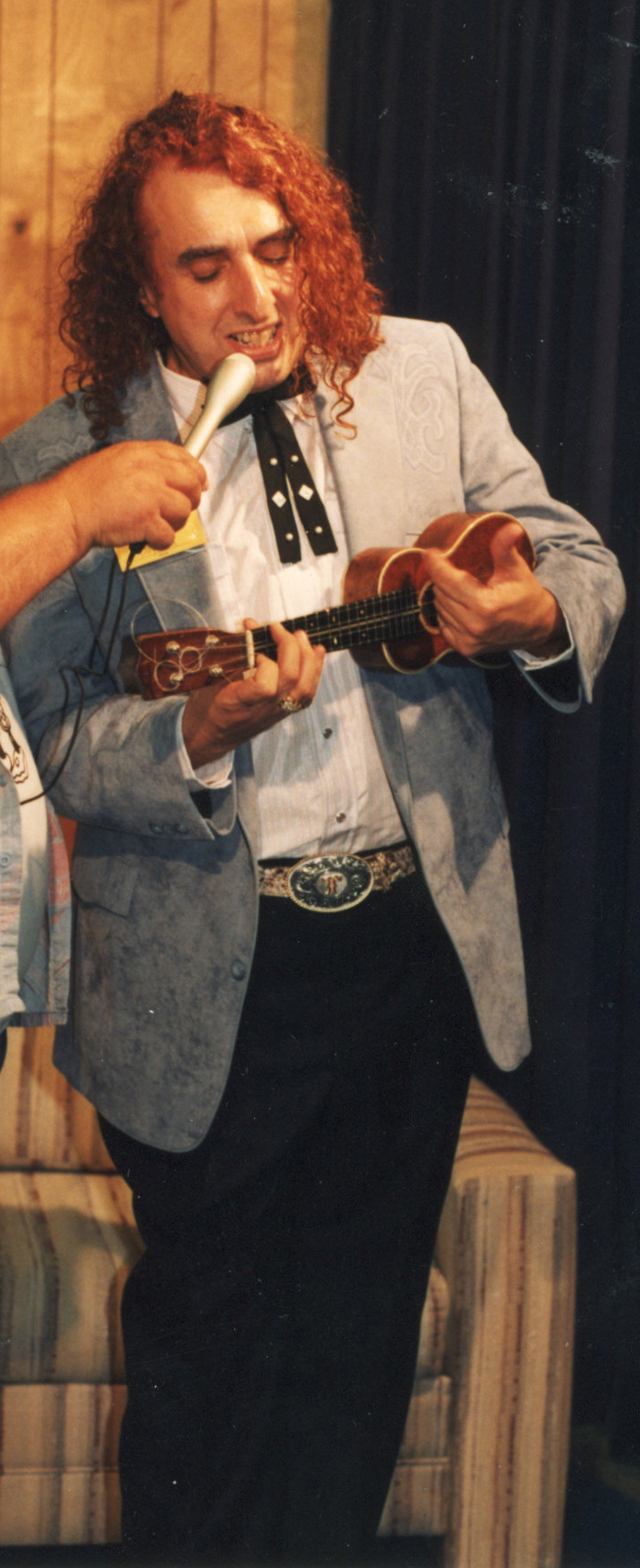


Musical style and repertoire
Tiny Tim combined elements of novelty performance, vaudeville revivalism, and sincere affection for pre-World War II popular song. He is best known for singing in a falsetto register, a characteristic often described as childlike or theatrical. His instrument of choice was the ukulele, which he used to accompany standards and novelty tunes alike. Critics and audiences noted the contrast between his fragile vocal timbre and the sometimes earnest or archaic lyrics he selected.
Career highlights and television
His breakthrough came after repeated television appearances that introduced him to a national audience. Programs that featured him included mainstream variety shows and comedy series where his performance style stood out amid more conventional acts. His best-known recording was a small, clear-voiced rendition of "Tiptoe Through the Tulips," which became emblematic of his public image. Tiny Tim's media moments included a much-discussed televised wedding in 1969, arranged during a late-night show appearance that brought mass attention to his personal life as well as his act.
Notable songs and appearances
- "Tiptoe Through the Tulips" — the song most commonly associated with Tiny Tim.
- Revivals of Tin Pan Alley and vaudeville-era tunes performed with a ukulele.
- Memorable television bookings that made him a symbol of 1960s variety programming.
Legacy and distinctions
Tiny Tim remains a figure discussed in studies of American pop culture for how he blurred the lines between sincerity and novelty. His career is often examined as part of the 1960s fascination with oddity acts and televised spectacle. While some viewed him as a comic curiosity, others appreciated his role in keeping older song forms in the public ear. His public wedding and repeated national television appearances are among the moments most often cited when his story is recounted.
For further context about different aspects of his life and career, see entries and resources that discuss his biography, recordings, and television history: biography, discography, performances, 1960s media, television, ukulele use, vocal style, Laugh-In, The Tonight Show, on-air wedding, Johnny Carson.
Related articles
Author
AlegsaOnline.com Tiny Tim (Herbert Buckingham Khaury) — American novelty singer and ukulele performer Leandro Alegsa
URL: https://en.alegsaonline.com/art/100042