
Thulium — properties, history, and applications of element Tm
Thulium (Tm, atomic number 69) is a rare-earth lanthanide metal known for its use in near- and mid-infrared lasers, a single stable isotope, and limited commercial availability.
Thulium is a chemical element with the symbol Tm and atomic number 69. It belongs to the series of rare-earth elements known as the lanthanides and is classified as a chemical element of the f-block. Thulium is a silvery-gray, soft metal that is comparatively scarce among the rare-earth elements. In most compounds it adopts the +3 oxidation state and behaves like other heavy lanthanides in its chemistry.
Image gallery
4 Images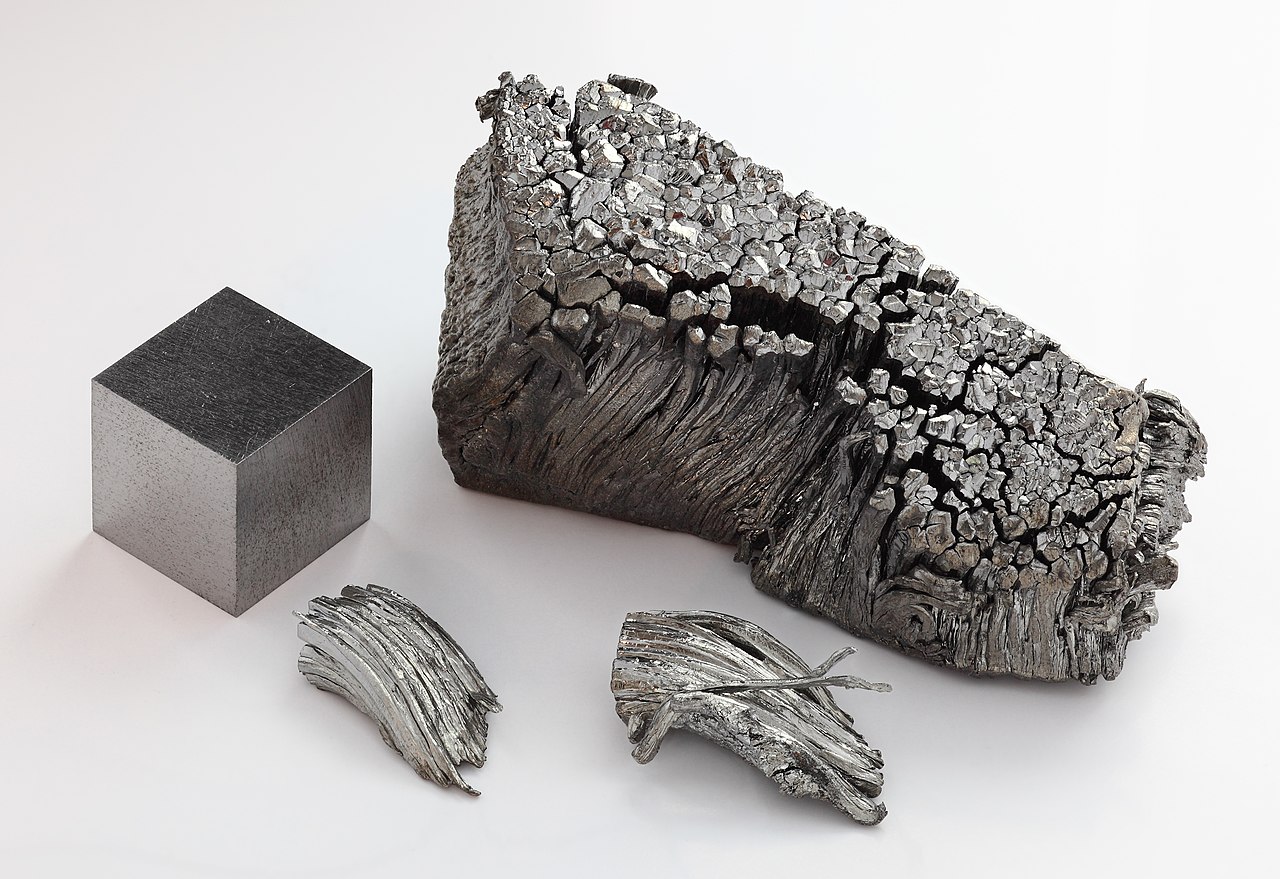



Physical and chemical characteristics
Thulium is a malleable metal with metallic luster and typical metallic conductivity. Its electron configuration places it among the partially filled 4f-series, which gives rise to sharp optical transitions that are useful in lasers and photonics. It is paramagnetic at ambient temperatures and forms oxides, halides and coordination compounds common to lanthanide chemistry. A +2 oxidation state is rare but can be stabilized in some specialized compounds.
Occurrence, extraction, and production
Thulium occurs in trace amounts in minerals that host other rare earths, such as monazite and bastnäsite, and is recovered during separation of mixed rare-earth concentrates. Its global availability is limited compared with more abundant lanthanides; commercial isolation typically uses ion-exchange or solvent-extraction techniques to separate thulium from neighboring elements.
Uses and applications
Practical uses of thulium are specialized because of its scarcity and the unique properties of its ions. Notable applications include:
- Thulium-doped solid-state and fiber lasers, which emit around two micrometers and are employed in medicine, remote sensing and materials processing.
- Radioisotopes such as thulium-170 have been used as compact radiation sources for industrial radiography and research.
- Specialty glasses and ceramics, where thulium ions provide desired infrared or optical properties.
Because of its niche demand, thulium is more common in research and high-technology applications than in mass-market products.
History, isotopes and safety
Thulium was identified in the late 19th century and named after Thule, an ancient name for northern lands, reflecting the element's Scandinavian discovery. Naturally occurring thulium is dominated by a single stable isotope, thulium-169; a range of radioactive isotopes exists and some have practical uses. Metallic thulium is not highly toxic in bulk form, but radioactive thulium requires standard radiological controls. As with other rare-earth materials, handling precautions address dust inhalation and chemical reactivity with strong oxidizers.
Notable facts: thulium is among the least abundant of the lanthanides, yet its sharp f‑electron transitions make it especially valuable for certain infrared photonics and research tools.
Related articles
Author
AlegsaOnline.com Thulium — properties, history, and applications of element Tm Leandro Alegsa
URL: https://en.alegsaonline.com/art/99695