
The Potato Eaters — Vincent van Gogh’s 1885 peasants painting
The Potato Eaters (1885) is an early oil painting by Vincent van Gogh showing a peasant family at a table. It exemplifies his social realism from the Nuenen period, with a dark palette and raw, expressive treatment.
Overview
The Potato Eaters is an oil painting created by Vincent van Gogh in 1885 while he was living in the village of Nuenen in the Netherlands. Executed when van Gogh was about 32, it shows a peasant household gathered around a table eating potatoes. The work is commonly cited as a major statement from his early, Dutch period and as an attempt to portray rural life with honesty and sympathy rather than romanticization.
Image gallery
6 Images



Composition and technique
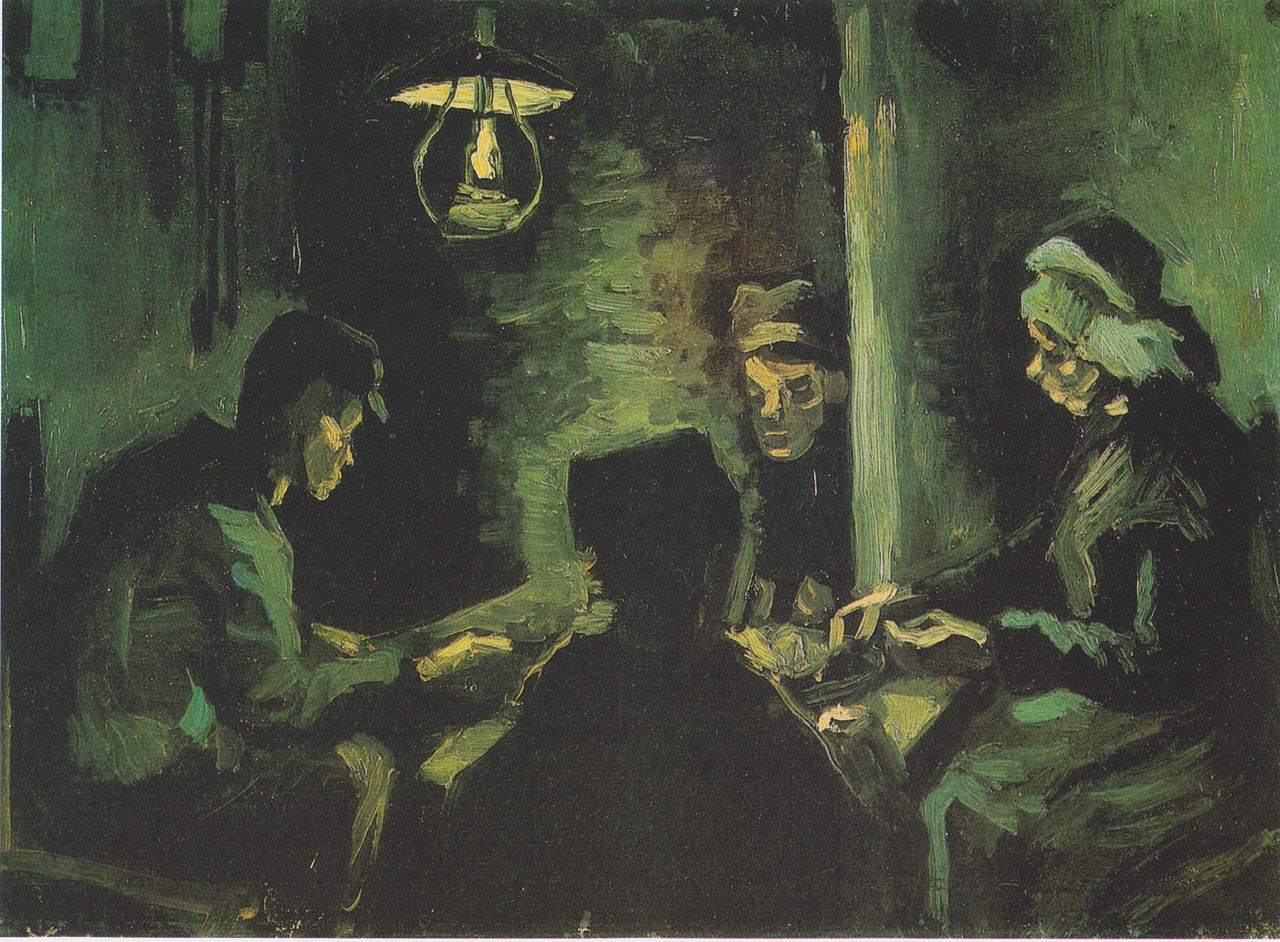
The scene is arranged around a central light source, a low lamp that throws warm highlights and deep shadows across faces and hands. Van Gogh used a predominantly earthy, muted palette—browns, greens and grays—and deliberately coarse brushwork to suggest the roughness of peasant life. He emphasized hands and faces as signs of labor, and worked from multiple preparatory sketches and studies to develop the final arrangement.
History and influences
Painted during the years van Gogh spent observing and depicting rural laborers, The Potato Eaters reflects strong influences from realist painters such as Jean-François Millet and from Dutch genre traditions. Van Gogh hoped to convey the dignity and hard conditions of agricultural workers; he studied actual local people and homes to achieve authenticity. The painting grew out of numerous drawings and small studies made in and around Nuenen.
Reception and significance
Contemporary reactions to the painting were mixed: some critics found its palette and handling ugly or unpolished, while others appreciated its frankness. Van Gogh himself considered both its strengths and shortcomings as he developed his style. Today the work is regarded as a key milestone in his early development and as an important example of social realism that foreshadows the emotional intensity of his later, more colorful period.
Notable facts
- Created in 1885 during van Gogh's Nuenen period, when he concentrated on peasant subjects.
- Built from preparatory studies; the finished canvas emphasizes lamp light and worn features.
- Seen as a deliberate effort to depict unidealized rural life and human labor.
- Often contrasted with van Gogh's later bright, Post-Impressionist palette and brushwork.
Related articles
Author
AlegsaOnline.com The Potato Eaters — Vincent van Gogh’s 1885 peasants painting Leandro Alegsa
URL: https://en.alegsaonline.com/art/98652
Sources
- vggallery.com : "Vincent van Gogh: Visitor Submissions"