
The School of Athens
A High Renaissance fresco by Raphael portraying classical philosophers in an idealized architectural setting; a landmark of perspective, composition, and the revival of ancient learning.
The School of Athens is a monumental fresco by the Italian painter Raphael, executed during the High Renaissance (painted c.1509–1511). Located in the Stanza della Segnatura of the Apostolic Palace in the Vatican, it forms part of a decorative program that celebrated branches of knowledge. The work is widely regarded as one of Raphael's masterpieces and a visual manifesto of Renaissance humanism.
Image gallery
10 Images


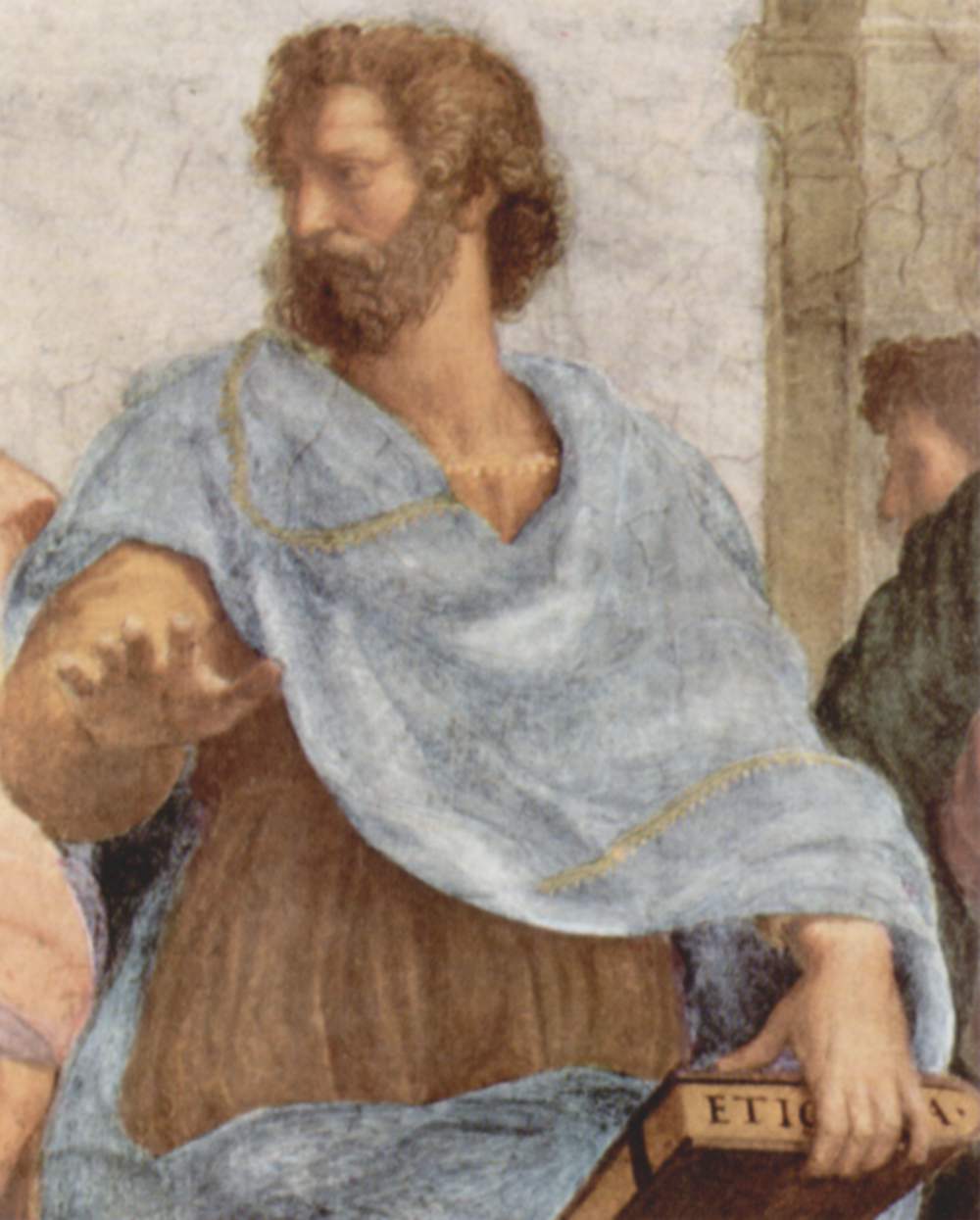



Overview and subject
The fresco is commonly described as a gathering of the great philosophers, mathematicians and scientists of antiquity assembled in a grand classical interior. At the center stand two of the most important figures in Western thought: a bearded man gesturing upward, traditionally identified as Plato, and a companion pointing toward the earth, identified as Aristotle. Around them Raphael grouped dozens of other thinkers engaged in discussion, reading, teaching and calculation, creating a lively scene that represents the discipline of philosophy.
Composition, style and technique
Raphael painted The School of Athens as a fresco, working directly on wet plaster to achieve durable pigments and unified surface. The composition displays a clear linear perspective with a central vanishing point, strong horizontal and vertical axes, and carefully balanced clusters of figures. The architectural setting — grand vaulted spaces with arches, pilasters and coffered ceilings — reflects contemporary interests in classical Roman design and is thought to have been influenced by the architect Bramante. Light and gesture guide the viewer's eye across the scene, creating a rhythm between groups and individuals.
Key figures and identifications
Many of the figures have traditional identifications, though some remain debated by scholars. Raphael included well-known characters such as Socrates, Pythagoras and the mathematician often labelled as Euclid (or sometimes as a geometrician like Archimedes). It is also widely noted that the face of Plato resembles Leonardo da Vinci, a contemporary of Raphael. The precise roster and identification of every figure have been the subject of extensive art-historical study and occasional disagreement.
Context, meaning and legacy
The commission came as part of Raphael's decoration of several rooms known as the Stanze di Raffaello, which contain frescoes themed around theology, law, poetry and philosophy. The School of Athens was intended to symbolize the resurgence of classical learning that Renaissance patrons associated with cultural renewal. Its synthesis of classical subjects, compositional clarity and naturalistic figures made it a model for later artists and an enduring emblem of the Renaissance reconciliation of art and intellect.
Notable facts and conservation
- The fresco is one panel in a larger decorative cycle executed for papal apartments; it faces another major composition that treats theology, creating a visual dialogue between faith and reason.
- Raphael is thought to have introduced portraits of contemporary figures into the crowd of ancients, a practice that links past and present.
- The painting has undergone cleaning and conservation interventions over centuries to address aging, environmental effects and earlier retouching; these treatments have been discussed among conservators and historians.
For further reading on the fresco itself and on Raphael's role in the Italian Renaissance, consult specialist studies and museum resources. Visual and scholarly resources about the work and its setting are available through catalogues and institutional descriptions of the fresco and the rooms it decorates.
Questions and answers
Q: What is The School of Athens?
A: The School of Athens is a famous fresco painted by Raphael during the Italian Renaissance between 1510 and 1511.
Q: What is the significance of The School of Athens?
A: The School of Athens is known as Raphael's masterpiece and is the perfect embodiment of the classical spirit of the High Renaissance.
Q: When was The School of Athens painted?
A: The School of Athens was painted between 1510 and 1511.
Q: Where is The School of Athens located?
A: The School of Athens is located in the Apostolic Palace in the Vatican.
Q: Why was The School of Athens painted?
A: The School of Athens was painted as a part of Raphael's commission to decorate with frescoes the rooms now known as the Stanze di Raffaello.
Q: What is the Stanze di Raffaello?
A: The Stanze di Raffaello are rooms in the Apostolic Palace in the Vatican that were decorated with frescoes by Raphael.
Q: Which period did The School of Athens belong to?
A: The School of Athens belongs to the Italian Renaissance period.
Related articles
Author
AlegsaOnline.com The School of Athens Leandro Alegsa
URL: https://en.alegsaonline.com/art/98786
Sources
- mlahanas.de : The School of Athens, "Who is Who?" · archive.org