
The Lord of the Rings: overview, setting, themes and legacy
Epic high-fantasy novel by J. R. R. Tolkien, published in the mid-1950s. Set in Middle-earth, told in three volumes, influential in modern fantasy and adapted into major films.
Overview
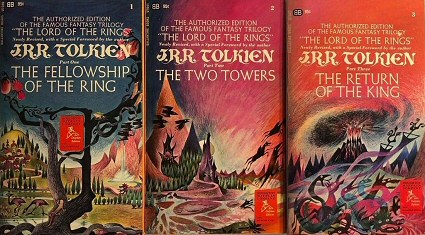
The Lord of the Rings is a high-fantasy epic written by J. R. R. Tolkien and published in the mid-1950s. The work is commonly presented in three volumes: The Lord of the Rings is the umbrella title, while the individual books are known as The Fellowship of the Ring, The Two Towers and The Return of the King. It began as a sequel to The Hobbit but grew into a far larger mythology with a complex plot, many characters, and an extended fictional history.
Image gallery
6 Images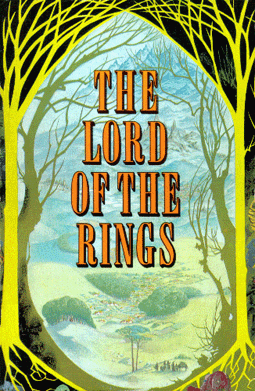


Structure and setting
The narrative takes place in Tolkien's invented world of Middle-earth, a richly detailed land with its own geography, peoples and languages. The three volumes trace a central quest: members of a diverse fellowship work to prevent a dark ruler from reclaiming a powerful ring and using it to dominate the free peoples. Much of the story follows the journey of a small group of characters through dangerous lands toward the enemy's realm.
- Geography: regions such as the Shire, Rivendell, Mordor and Rohan provide varied backdrops and strategic importance.
- Peoples and races: multiple sentient groups inhabit Middle-earth.
- Legendarium: the book draws on an extensive fictional history that precedes and informs the events of the tale.
Major races and characters
Tolkien populates Middle-earth with a range of familiar fantasy races. Notable examples include elves, dwarves, humans, and hobbits. The hobbits — especially the characters Frodo and Sam — are central to the plot, while figures such as Aragorn, Gandalf and various leaders of other peoples play crucial roles in the wider war against the dark lord.
Themes and literary importance
Common themes in the novel include the corrupting nature of power, the resilience of ordinary individuals, the value of friendship and sacrifice, and the clash between industrialized destruction and natural order. Beyond its narrative, the work is noted for its invented languages, depth of backstory and mythic tone. These features contributed to the book's standing as a foundational text of modern fantasy literature and inspired generations of writers and artists.
Adaptations and cultural legacy
The story has been adapted into many formats, from radio and stage productions to animated films and large-scale live-action movies. The most widely known cinematic adaptation is the early 21st-century film trilogy directed by Peter Jackson, which brought the tale to a global audience. Modern editions, scholarly studies and fan communities continue to explore the languages, maps and histories that Tolkien assembled, and the work remains a central reference point for discussions of myth, storytelling and fantasy worldbuilding.
Notable facts and distinctions
- The book is often published in three volumes but is a single continuous narrative.
- Its roots lie in earlier writings and myths that Tolkien developed over decades; elements of this background are collected in supplementary material and histories related to his world (see related histories).
- Though written as a sequel to The Hobbit, the tone is darker and the scale far broader.
Readers seeking introductions can consult annotated editions and guides to the peoples and maps of Middle-earth. Further resources and modern commentaries provide entry points into Tolkien's language work, narrative structure and the many artistic adaptations that keep the story in public conversation.
Questions and answers
Q: Who wrote The Lord of the Rings?
A: The Lord of the Rings was written by J. R. R. Tolkien.
Q: When was it first published?
A: The Lord of the Rings was first published in 1954.
Q: How many parts does it have?
A: The Lord of the Rings is split into three parts (or volumes), which are named The Fellowship of the Ring, The Two Towers, and The Return of the King.
Q: What is Middle-earth?
A: Middle-earth is a fictional world created by J. R. R Tolkien for his book series, including The Lord of the Rings and its prequel, The Hobbit. It has its own geography, several different races and peoples (elves, dwarves, humans, hobbits, ents), their languages, and a history that is thousands of years old.
Q: What is the plot about?
A:The plot of The Lord of the Rings is about a war between the people living in Middle-earth against a dark lord (who is referred to as 'Lord of the Rings' in title). At same time they try to destroy a ring which would give dark lord lot power if he got it but only place to destroy ring deep into enemy's territory .
Q: Has there been any film adaptations made from this book series?
A: Yes, there have been film adaptations made from this book series; most notably Peter Jackson's trilogy adaptation released between 2001 - 2003 .
Related articles
Author
AlegsaOnline.com The Lord of the Rings: overview, setting, themes and legacy Leandro Alegsa
URL: https://en.alegsaonline.com/art/98383