
The Hobbit, or There and Back Again
An encyclopedic overview of J. R. R. Tolkien's The Hobbit: its plot, characters, themes, composition, publication, reception, and relationship to The Lord of the Rings and Middle-earth.
Overview
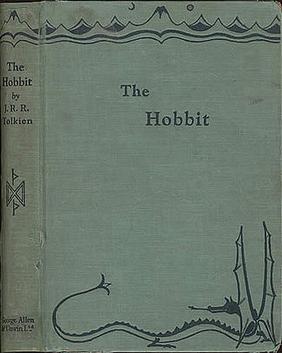
J. R. R. Tolkien's novel The Hobbit, or There and Back Again, first published in 1937, is a foundational work of modern fantasy. Written in a narrative voice that combines whimsy and mythic resonance, it follows the unexpected journey of Bilbo Baggins, a member of the small, peace-loving hobbit people. Though often introduced as a children's book, the tale contains layered themes and detailed worldbuilding that connect it to Tolkien's larger corpus.
Image gallery
7 Images



Plot
The story begins in the comfortable Shire and proceeds as Bilbo is recruited by the wizard Gandalf and a company of thirteen dwarves led by Thorin Oakenshield. Their objective is to reclaim the dwarves' ancestral home and vast hoard from the dragon Smaug. The company travels through varied landscapes, facing trolls, goblins (orcs), giant spiders, and men of Lake-town. On the way Bilbo acquires a mysterious ring and has a pivotal encounter with Gollum in a tense riddle contest, episodes that have consequences beyond this single adventure.
Characters and creatures
- Bilbo Baggins — the reluctant hero whose growth from homebody to resourceful burglar drives the narrative.
- Thorin and the dwarves — their pride, loyalty, and claim to Erebor motivate the quest.
- Gandalf — a guiding figure who both aids and sets the company on its path.
- Smaug — the intelligent, avaricious dragon guarding the mountain's treasure.
- Gollum — a strange, pitiable creature whose interaction with Bilbo introduces the ring's later significance.
Themes and style
Tolkien blends a light, often comic narrative tone with more serious undertones: the value of courage and friendship, the corrupting pull of greed, and the tension between the comforts of home and the dangers and wonders of the wider world. Linguistic invention, evocative place names, and maps give the story a sense of depth and antiquity. The book balances episodic adventure with moments of moral choice and character revelation.
Composition and publication
Tolkien began composing the tale in the early 1930s; parts were told to his children and friends in an intimate, story-telling mode often described as a bedtime story. When published in 1937 it quickly found readers among children and adults alike. Although the book was initially conceived as a largely standalone story, Tolkien later connected it more overtly to the legendarium of Middle-earth while composing his subsequent epic, The Lord of the Rings.
Reception, adaptations and influence
The Hobbit's immediate popularity established Tolkien's reputation and helped to shape the conventions of modern fantasy literature. It has been adapted into stage plays, radio productions, animated films, and large-scale live-action films, as well as numerous games and illustrated editions. Adaptations have varied in faithfulness to the original text, prompting ongoing discussion among readers and critics about interpretation and emphasis.
Legacy
While enjoyable as an independent adventure, The Hobbit also serves as an accessible entry point to Tolkien's wider mythology. Its combination of approachable storytelling and deep mythic detail continues to attract new readers and scholars. For readers seeking more background on Tolkien and his world, consult resources that cover the author, the origins of the tale, and its place in the later narratives of Middle-earth (author overview, origins and anecdotes, connections to later works, hobbit culture, dwarven lore, Gandalf and wizards, Smaug and dragon imagery, the geography of Middle-earth).
Questions and answers
Q: Who wrote The Hobbit?
A: J. R. R. Tolkien wrote The Hobbit.
Q: When was it first published?
A: The Hobbit was first published on September 21, 1937.
Q: What is the plot of the story?
A: The plot of The Hobbit is about a hobbit named Bilbo Baggins who goes on an adventurous quest with a group of dwarves and the wizard Gandalf in order to fight the dragon Smaug, which has stolen the treasures and home of the dwarves.
Q: Was The Hobbit originally intended to be part of Tolkien's Middle-earth storyline?
A: No, when Tolkien initially wrote The Hobbit it was not intended to be part of his Middle-earth world. It wasn't until he wrote The Lord of the Rings that he integrated both stories into his Middle-earth world.
Q: Why did Tolkien write this book?
A: Tolkien wrote this book as a bedtime story for his children in the 1930s.
Q: What race does Bilbo Baggins belong to?
A: Bilbo Baggins belongs to a small race called hobbits which were invented by Tolkien himself.
Q: Who helps Bilbo on his quest? A: On his quest, Bilbo is helped by a group of dwarves and a wizard named Gandalf.
Related articles
Author
AlegsaOnline.com The Hobbit, or There and Back Again Leandro Alegsa
URL: https://en.alegsaonline.com/art/98155