
The Comedy of Errors
A concise encyclopedic overview of Shakespeare’s early farce The Comedy of Errors: its plot, characters, classical sources, themes, performance history, and cultural impact.
Overview
The Comedy of Errors is one of William Shakespeare’s earliest comedies, probably written in the late 1580s or early 1590s. It is a short, fast-moving play built around mistaken identity and physical farce. Its humour relies on misunderstandings, rapid reversals, and a tightly plotted chain of events that lead to a chaotic but happy resolution.
Image gallery
5 Images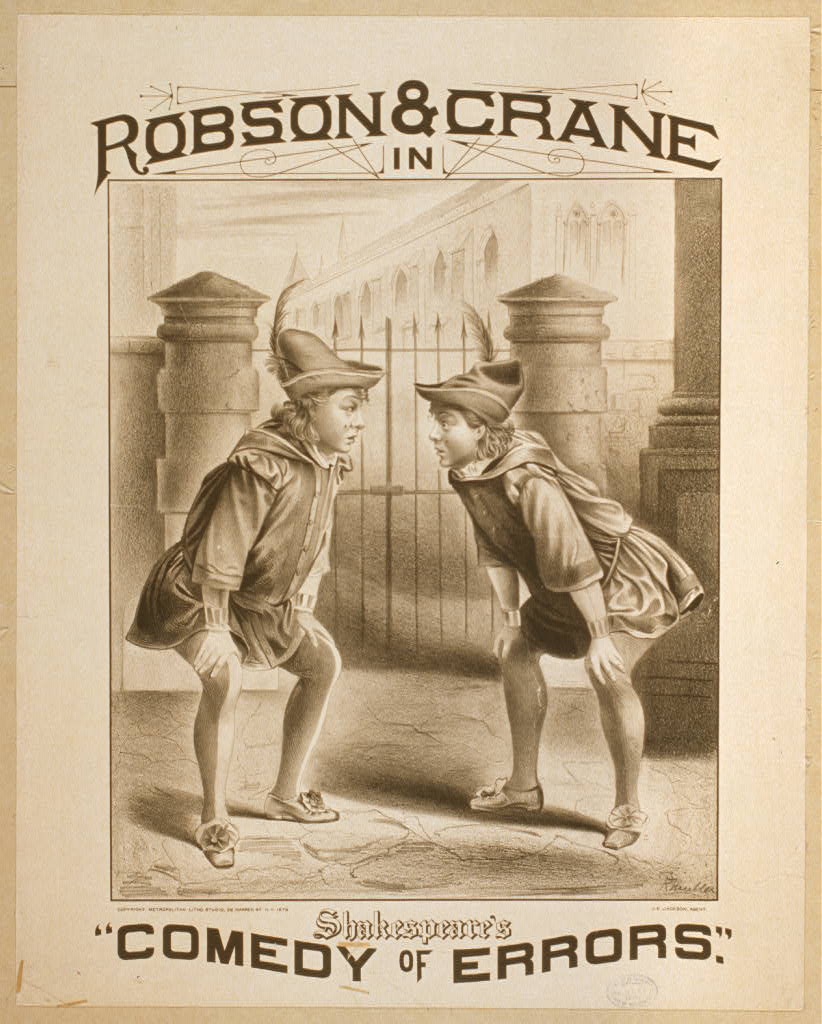


Plot in brief
The play follows two sets of identical twins separated in childhood. One pair are merchants; the other pair are their servants. Arrivals in the same city set off a series of confusions: spouses and strangers mistake one twin for the other, arrests and accusations multiply, and ordinary transactions become absurd. The confusion ends with a final unmasking and family reunification.
Characters and structure
Shakespeare keeps the cast compact and the action focused on physical comedy. Key figures include the two twin masters, their two twin servants, and a small ensemble of townspeople, a merchant, and the twins’ parents. Dramatically, the play depends on timing, entrances and exits, and short scenes that build rhythm and momentum.
Sources and classical roots
The Comedy of Errors draws directly on Roman models: Shakespeare adapted material from Plautus, especially the plays Menaechmi and Amphitruo. Elements such as the use of twins, comic servants, and legal misunderstandings have clear precedents in those Latin comedies. Shakespeare reworked the material into English Renaissance theatrical conventions and a condensed, lively five-act structure.
Themes and style
Beyond slapstick, the play explores identity, family bonds, and social order restored after disorder. Its language mixes colloquial jokes, puns, and occasional lyrical passages. The rapid tempo and reliance on physical confusion set it apart from Shakespeare’s later, more philosophically complex comedies.
Performance and adaptations
The Comedy of Errors has been staged in many settings, from Elizabethan public playhouses to modern experimental theaters. Directors often emphasize its farcical elements or update the setting to highlight mistaken identity in contemporary contexts. The play’s compact plot makes it amenable to abridgment, musical adaptation, and film versions.
Significance and notable facts
- The play is frequently cited as an example of Shakespeare’s study of classical comedy; see the author page: William Shakespeare.
- It is classified as a comedy in most editions and discussions: comic genre.
- Its indebtedness to Plautus is often noted; primary Roman sources include: Plautus’s plays.
Related articles
Author
AlegsaOnline.com The Comedy of Errors Leandro Alegsa
URL: https://en.alegsaonline.com/art/97794
Sources
- opensourceshakespeare.org : "Shakespeare's plays, listed by presumed date of composition"
- opensourceshakespeare.org : opensourceshakespeare.org/