
The Four Stages of Cruelty — William Hogarth’s moral engraving series
A guide to William Hogarth’s 1751 series The Four Stages of Cruelty: its narrative plates, social and legal context, artistic characteristics, distribution and lasting significance.
The Four Stages of Cruelty is a sequence of four engraved plates published in 1751 by the English artist William Hogarth. Presented as a continuous moral narrative, the series follows the life and crimes of a single fictional protagonist to illustrate how early acts of cruelty can escalate to grave social harm. Hogarth intended these images to function as both popular entertainment and moral instruction.
Image gallery
10 Images


Sequence and subject matter
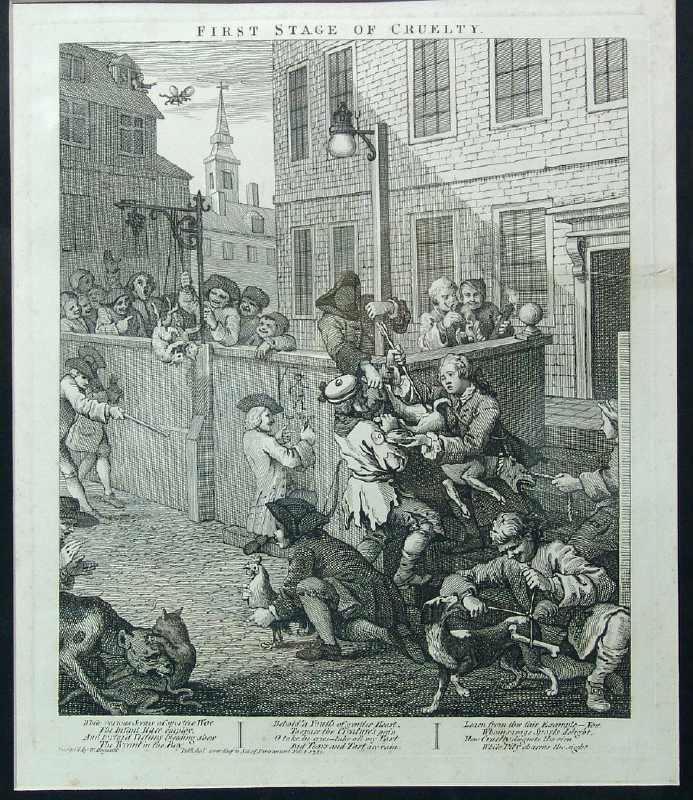
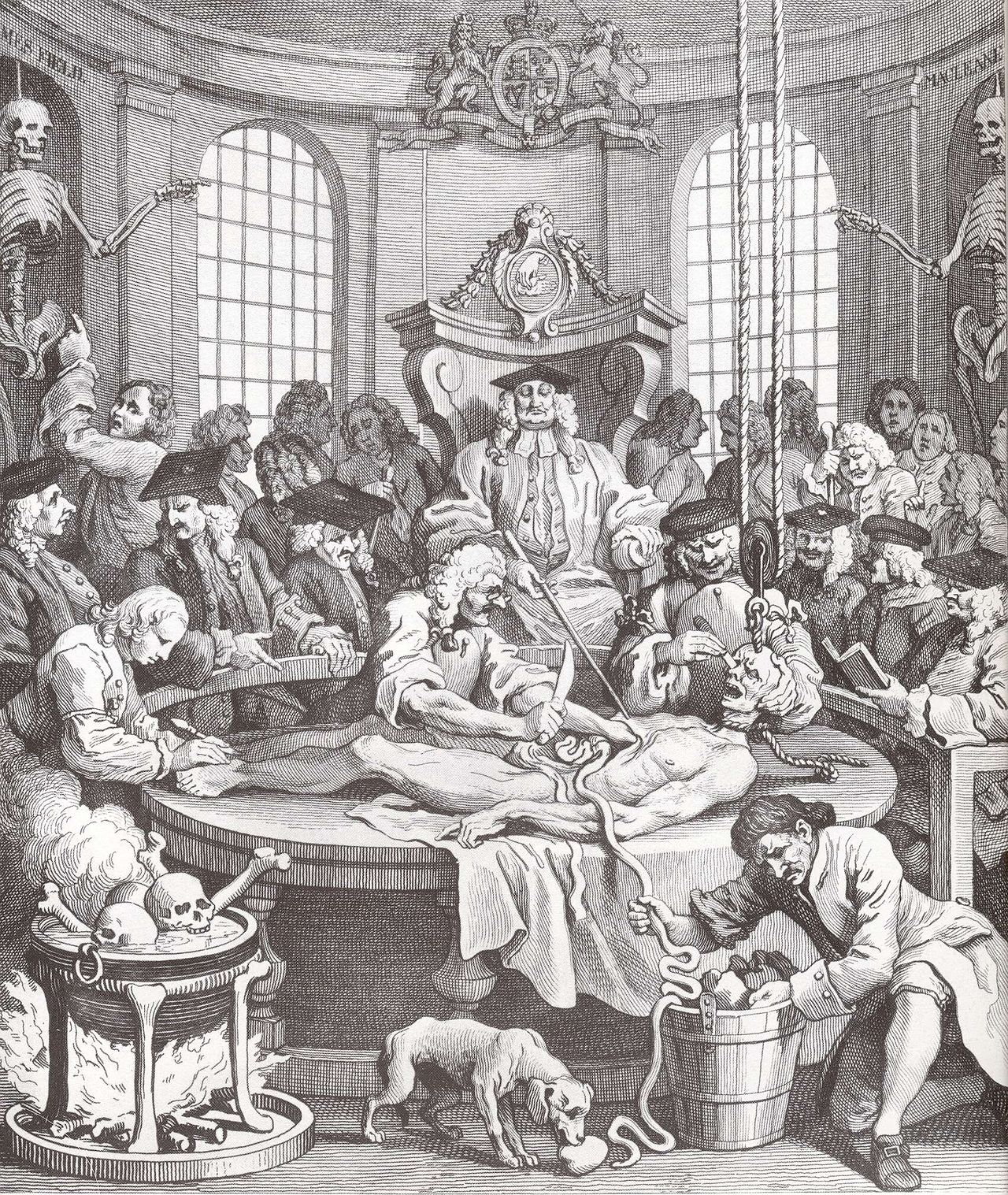
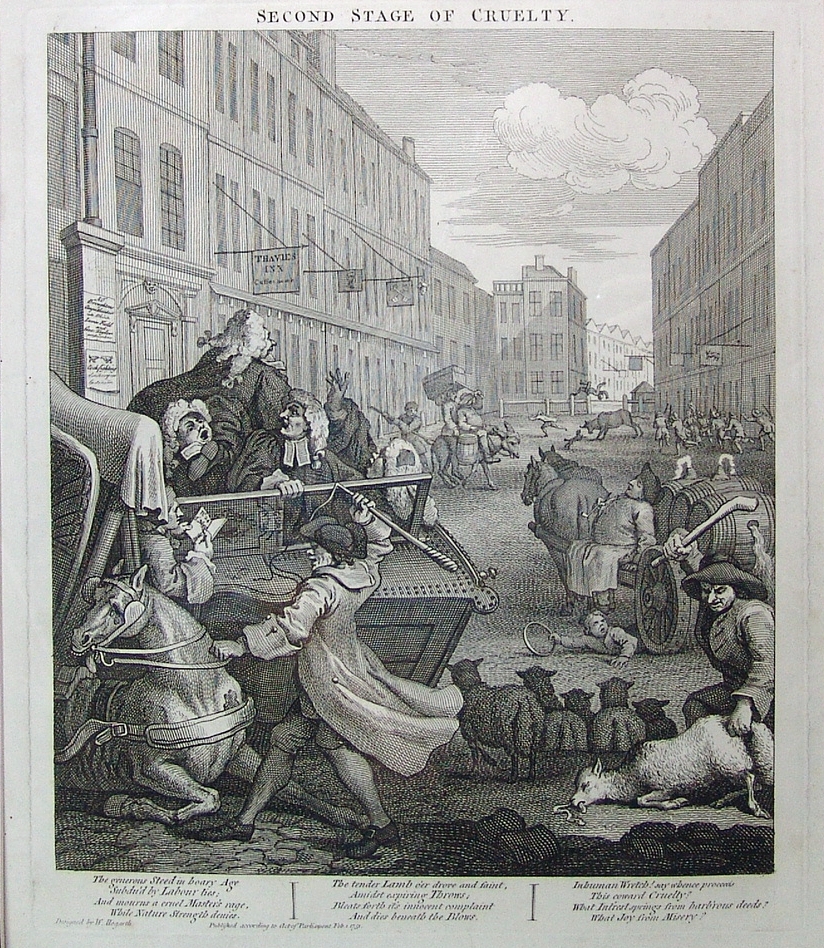
The four plates depict successive episodes in the life of Tom Nero, a made-up character whose behavior exemplifies escalating brutality. The series opens with the first plate, which shows childhood cruelty to an animal — most often described as a boy tormenting a dog — and proceeds to show how that disposition hardens. The second plate portrays him as a young man abusing his horse. The third, sometimes titled "Cruelty in Perfection," shows Tom Nero as an adult criminal who commits robbery and ultimately murders his pregnant partner. The final plate, often rendered as a grim denouement, depicts the public consequences of his crimes: execution and the post-mortem surrender of his body for anatomical dissection.Each plate is stamped with details that identify characters, objects and small moralizing motifs; the images rely on sequential storytelling to make a social point about cause and effect. Hogarth called attention to the protagonist’s name and acts in captions and marginal devices so that viewers could follow the progression from petty vice to capital crime.
Historical and legal context
Hogarth produced these plates amid growing public anxiety about rising urban crime and visible cruelty in mid‑18th‑century London. He hoped the images would shock viewers into reflection about everyday violence on the streets. The final plate alludes to a contemporary legislative response: around this time Parliament required that the bodies of executed murderers be used for anatomical study rather than merely buried. Hogarth’s depiction of the corpse being removed from the gallows and turned over to surgeons refers directly to that change and to debates about punishment, deterrence and medical practice.Purpose, audience and publication
Hogarth marketed these prints as inexpensive moral literature aimed at a wide public rather than an elite collecting audience. He produced engraved impressions suitable for mass sale and intended them to be accessible teaching tools for lower‑income readers who might not attend formal lectures or read lengthy tracts. In tone and execution the series is harsher and more violent than many of Hogarth’s other satirical works; he believed stronger imagery was needed to communicate the seriousness of cruelty.Artistic features and reception
- Technique: Hogarth used engraving to reproduce fine detail and allow multiple copies to circulate widely.
- Detailing: Like his other works, the plates contain numerous small signs and objects that help explain character and motive.
- Tone: The series is unusually grim and didactic, trading some of Hogarth’s characteristic humor for moral severity.
- Distribution: Sold cheaply, the prints reached urban audiences and were discussed in pamphlets and period commentary.
Legacy and study
Scholars and collectors study the series as an example of 18th‑century moral print culture and as part of Hogarth’s broader interest in social reform. The work is cited in discussions of animal welfare, the development of criminal law, and the history of public taste in visual satire. Reproductions and critical editions continue to be used to illustrate how art functioned as a vehicle for public pedagogy in the Georgian period.References, reproductions and catalogue entries for the series can be found in many illustrated studies of Hogarth and of British social history; for curated images and scholarly commentary see resources linked here: engraved series, background on William Hogarth (biography) and entries in artist catalogues and collections. The protagonist is a fictional character created to instruct viewers; early plates emphasize animal cruelty such as a boy beating a dog, later scenes show him as an adult who mistreats his horse, becomes a robber, and commits murder of his pregnant companion. The final picture stages the removal of the body from the gallows and the surrender to surgeons, reflecting concerns about crime in London and Hogarth’s desire to promote moral instruction.
Questions and answers
Q: What is The Four Stages of Cruelty?
A: The Four Stages of Cruelty is a series of four printed engravings published by the English artist William Hogarth in 1751. Each print follows the life of Tom Nero, a fictional character.
Q: What does the First stage of Cruelty show?
A: The First stage of Cruelty shows Nero as a child hurting a dog.
Q: What does the Second stage of cruelty depict?
A: The Second stage of cruelty depicts Nero, now an adult, beating his horse.
Q: What happens in Cruelty in perfection?
A: In Cruelty in perfection, Nero becomes a robber and murders his pregnant lover.
Q: What is depicted in The reward of cruelty?
A: In The reward of cruelty, Nero's body is taken from the gallows after his execution and cut up into pieces by surgeons. This refers to an act passed in 1752 which changed the law to require executed murderers' bodies to be used for anatomy classes before being buried.
Q: Why did William Hogarth create these prints? A: William Hogarth created these prints to make people understand his message about the acts of cruelty he saw on the streets of London and for moral learning purposes. He printed them on cheap paper so that they would be accessible to poor people as well.
Related articles
Author
AlegsaOnline.com The Four Stages of Cruelty — William Hogarth’s moral engraving series Leandro Alegsa
URL: https://en.alegsaonline.com/art/98008