
Thanatos — Greek personification of death
Thanatos is the ancient Greek personification of non‑violent death, twin of Hypnos. He appears across myth and literature and gave his name to modern ideas such as Freud's death drive.
Overview
Thanatos is the mythological personification of death in ancient Greek culture. In literary and artistic traditions he represents a peaceful, inevitable passing rather than violent slaughter. Sources usually portray him as a companion or twin of Sleep, and as one among several deities and spirits who relate to mortality and the underworld. For a concise identification see god of death and the wider context of Greek mythology.
Image gallery
6 Images



Origins and family
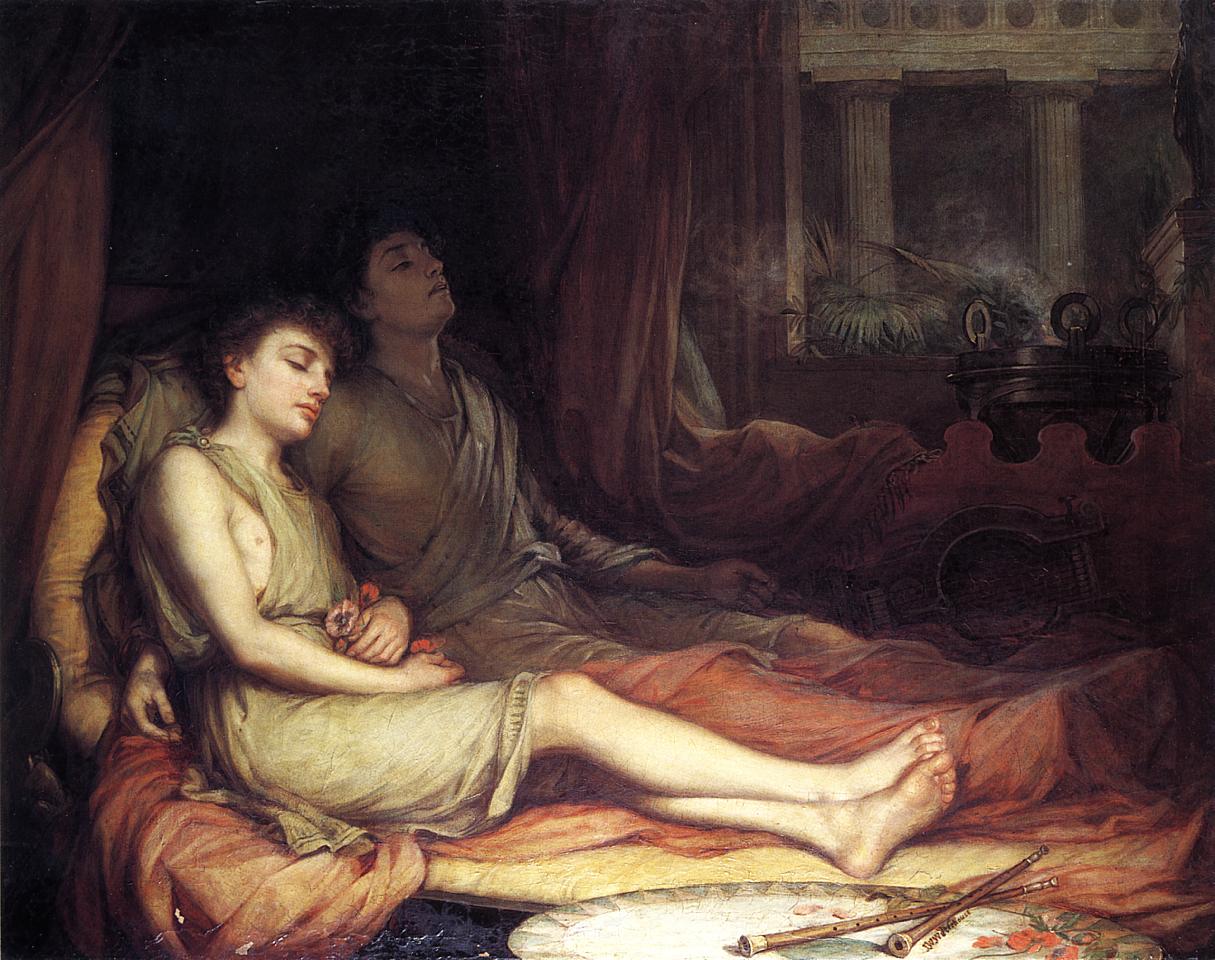
Classical genealogies often describe Thanatos as a child of Nyx, the personified Night; some accounts also name Erebus (Darkness) among his progenitors. He is commonly paired with the god Hypnos, his twin, whose realm is sleep — the two are described as closely linked in function and appearance. The literature routinely connects Thanatos with his mother Nyx and with Hypnos, the figure associated with sleep.
Characteristics and iconography
Unlike Hades, the ruler of the underworld, Thanatos personifies the moment or act of death itself rather than governance over the dead; the distinction is often emphasized in classical sources and later summaries (Hades is king of the dead, not death’s agent). Artistic depictions vary by era: he can appear as a winged youth, a bearded figure, or a shadowy daemon, sometimes bearing an inverted torch (a funerary emblem) or a gentle touch. In myth, violent deaths are typically assigned to other beings — especially the Keres, spirits of slaughter — while Thanatos is associated with calm, non‑bloody passing.
Notable myths
- Alcestis: In a famous episode a hero intercedes to retrieve Alcestis from the clutches of Death; this tale highlights Thanatos’ role as the bringer of souls and the possibility of rescue from death in exceptional circumstances.
- Sisyphus: The clever mortal who cheated death at least once by tricking and binding Thanatos, an act that temporarily halted the natural order until the gods intervened; the story is often cited as illustrating human cunning and divine limits (Sisyphus).
Literary presence and development
References to Thanatos occur in a range of ancient texts — from Hesiodic genealogies to lyrical and dramatic works — where he is used both as a literal character and a poetic personification. Over time, writers and artists adapted his image to suit different genres, from tragic stage plays to funerary art, emphasizing either the inevitability of death or the potential for heroic exception.
Later interpretations and cultural impact
In modern times the name "Thanatos" has been applied metaphorically. Sigmund Freud and later psychologists used the term to label a hypothesized death‑oriented instinct or drive, commonly called the death drive or Thanatos, introduced by the psychoanalyst Sigmund Freud to contrast with life‑preserving impulses. The figure of Thanatos also persists in literature, visual arts, and popular culture as a symbol of mortality, fate, and the boundary between life and death.
Distinctions and notable facts
Key distinctions help clarify Thanatos’ place in Greek thought: he is not identical with the ruler of the underworld, he primarily represents non‑violent death, and he belongs to a wider family of personified forces (Night, Sleep, Doom, and others). Unlike gods who received formal cults, Thanatos was rarely the focus of independent worship, though his image and motifs appear frequently in funerary settings and poetic language.
Further reading and entries may be found via general mythological resources and scholarly treatments of Greek religion and psychoanalytic history: overview, mythical context, and specialized discussions of literary appearances and later reception (Nyx, Hypnos, sleep, Freud's Thanatos, Freud, Hades, Sisyphus).
Related articles
Author
AlegsaOnline.com Thanatos — Greek personification of death Leandro Alegsa
URL: https://en.alegsaonline.com/art/97394