
The Labors of Herakles (Hercules): The Twelve Tasks and Their Significance
A concise encyclopedic overview of the Labors of Herakles: their nature, the canonical twelve tasks, origins, variations, and cultural impact from ancient Greece to modern art and literature.
The Labors of Herakles (Latin: Hercules) are a sequence of legendary tasks performed by the Greek hero as a form of penance. They are among the best known stories of classical mythology and feature feats requiring extraordinary strength and courage. In most versions the labors were imposed by King Eurystheus on behalf of the gods, particularly by Hera, who resented Herakles because he was the illegitimate son of her husband Zeus. Herakles' completion of these tasks established his reputation and, in myth, ultimately led to his immortality.
Image gallery
10 Images



Overview and context
According to the tradition widely received by later classical authors, the hero was driven mad—by Hera in most accounts—and in that state committed the murder of his own wife and children. He sought purification for this crime and, following the advice of an oracle, accepted a series of labors from King Eurystheus. The stories combine combat with monsters, difficult hunts, and nearly impossible labors of clearing, capturing, or retrieving prized objects.
The canonical twelve labors
The most familiar list contains twelve tasks. Different sources occasionally vary in order or detail, but the canonical set typically includes:
- Slay the Nemean Lion and bring back its impenetrable hide.
- Defeat the nine‑headed Lernaean Hydra.
- Capture the Ceryneian Hind — a swift sacred deer.
- Seize the Erymanthian Boar alive.
- Clean the Augean Stables in a single day.
- Drive away or destroy the Stymphalian Birds.
- Capture the Cretan Bull.
- Obtain the man‑eating Mares of Diomedes.
- Secure the girdle (belt) of Hippolyta, queen of the Amazons.
- Steal the cattle of the three‑bodied giant Geryon.
- Fetch the golden apples of the Hesperides.
- Capture Cerberus, the three‑headed guardian of the underworld, and bring him to the surface.
Characteristics and narrative motifs
The labors mix natural‑world challenges (wild beasts and difficult terrain) with supernatural or divine elements (monsters, enchanted gardens, and encounters with gods and giants). Several labors emphasize cleverness as well as brute force: for example, Herakles diverts rivers to clean the Augean Stables and relies on allies such as Iolaus in other episodes. The tasks also test boundaries between human and divine spheres—culminating in the descent to the underworld for Cerberus.
Origins, variations, and interpretations
Scholars have long proposed that the Labors reflect older ritual, heroic, or seasonal motifs from Bronze Age and Iron Age Greece: pastoral rites, boundary‑crossing quests, and symbolic combats with chaos. Early epic and lyric poets, vase painters, and later tragedians transmitted and adapted the tales, producing a range of regional variants. In some traditions fewer labors are listed or certain episodes are combined, while Hellenistic and Roman authors shaped the canonical twelve that dominate modern retellings.
Cultural impact and legacy
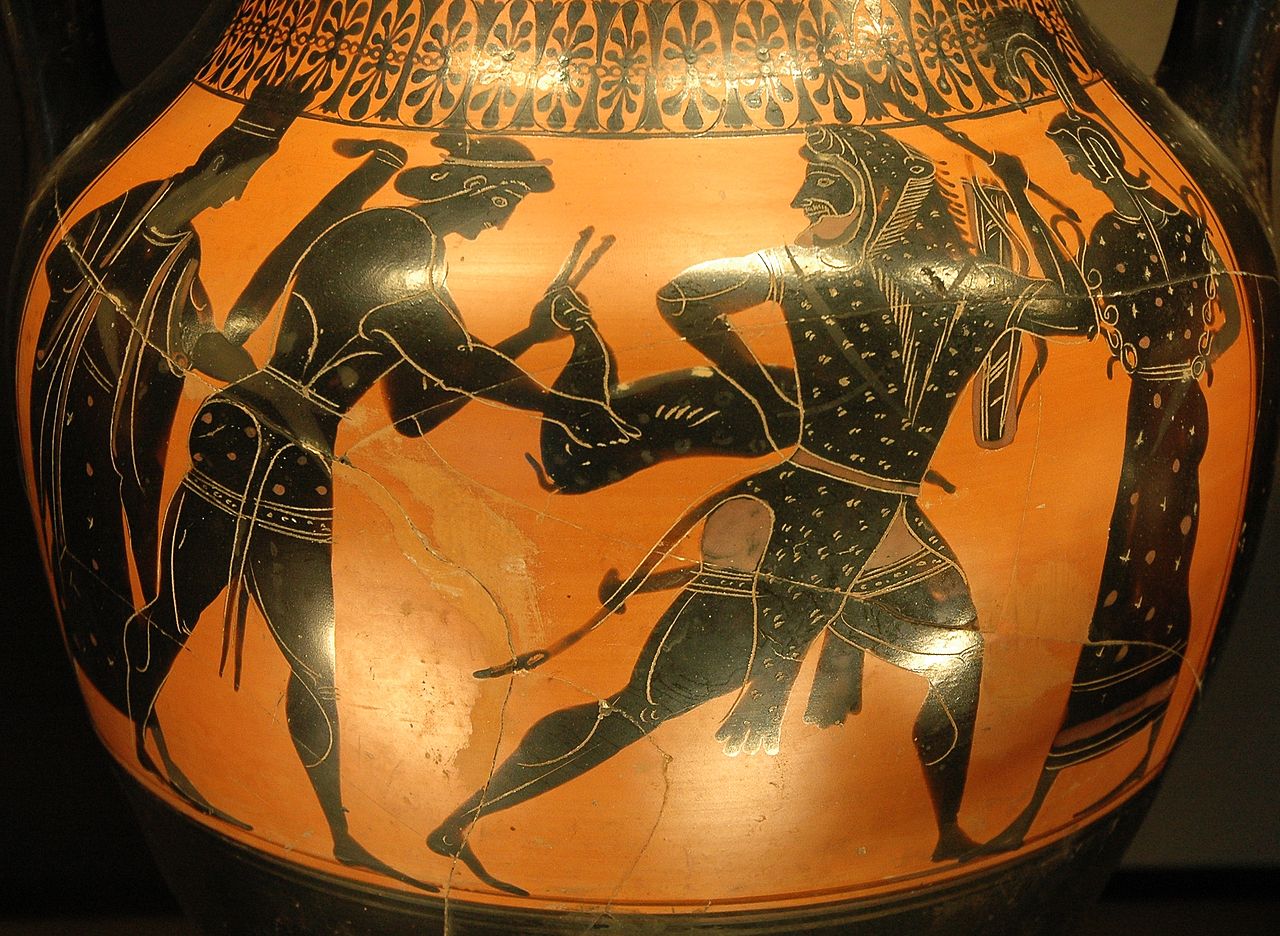
The Labors of Herakles have been a dominant theme in ancient Greek and Roman art—on vases, reliefs, and sculpture—and remained a favored subject through the Renaissance and into modern popular culture. They function both as heroic biography and as symbolic moral drama: overcoming chaos, purifying guilt, and achieving apotheosis. In many versions the completion of the labors is a step toward Herakles' deification, where the mortal hero is reconciled with the gods and granted a place among them.
Notable distinctions
- Roman authors often use the name Hercules and adapt details to Roman tastes.
- Some narratives regard certain labors as more symbolic (e.g., the apples of the Hesperides) while others are overtly martial.
- Reception history shows continued reinterpretation—literary, artistic, and psychological—so the labors can be read as mythic history, ritual memory, or heroic allegory.
For further exploration see classical treatments and modern summaries that compare ancient sources and artistic depictions: Herakles, the role of penance, mythic strength and courage, the influence of Hera, questions about royal lineage and the illegitimate son motif, and Zeus' part in the larger Olympian context via Zeus.
Questions and answers
Q: What were the Labors of Herakles?
A: The Labors of Herakles were a series of tasks performed by the Greek hero Herakles as a penance for a terrible crime he committed. These tasks required great strength and courage, and mostly involved killing fierce animals and horrible monsters.
Q: Who devised the Labors?
A: The Labors of Herakles were said to have been devised by Hera, the goddess of marriage.
Q: Why did Hera devise them?
A: Hera devised these tasks in order to kill Herakles because she hated him due to his being a bastard son of her husband Zeus.
Q: How did Herakles perform on these tasks?
A: Despite their difficulty, Herakles performed them with great success and became very famous in the process.
Q: Where did the Labors originate from?
A: The origin of the Labors is believed to be from religious and magical practices from prehistoric man.
Q: What is their significance today?
A: The Labors are still significant today as they are often featured in ancient and modern artworks.
Related articles
Author
AlegsaOnline.com The Labors of Herakles (Hercules): The Twelve Tasks and Their Significance Leandro Alegsa
URL: https://en.alegsaonline.com/art/98283