
The Battle of the Labyrinth (Percy Jackson & the Olympians)
A 2008 fantasy-adventure novel by Rick Riordan; fourth in the Percy Jackson series, in which Percy Jackson navigates Daedalus's Labyrinth to stop an invasion of Camp Half-Blood.
Overview
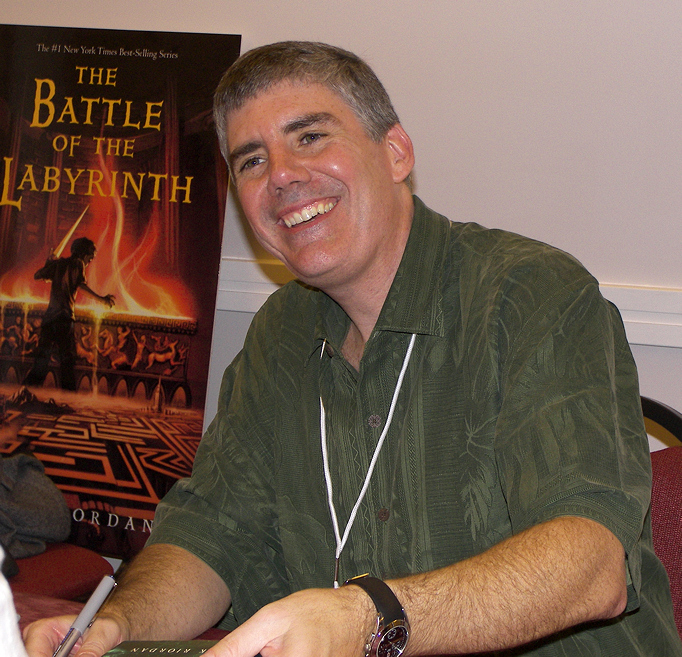
The Battle of the Labyrinth is a 2008 young-adult fantasy-adventure novel by Rick Riordan. It is the fourth installment in the Percy Jackson & the Olympians sequence and draws its antagonists, monsters and motifs from Greek mythology. The story follows the demigod Percy Jackson shortly before his fifteenth birthday as he discovers and enters Daedalus's legendary Labyrinth to prevent a large-scale attack on Camp Half-Blood.
Image gallery
3 Images

Plot and main characters
The novel centers on Percy's attempt to stop Luke Castellan and the forces gathering to invade the sanctuary of demigods. Inside the Labyrinth, the characters face shifting corridors, traps and creatures sprung from myth. Key figures include Annabeth Chase, whose knowledge of architecture and strategy guides much of the group's navigation; Grover Underwood, a satyr on a quest for Pan; Tyson, Percy's cyclops half-brother; and the inventor Daedalus, who appears in a disguised role.
- Percy Jackson – the protagonist and narrator.
- Annabeth Chase – strategist and friend whose bond with Percy deepens.
- Grover Underwood – protector and seeker of nature gods.
- Daedalus/Quintus – the Labyrinth's creator with a complex agenda.
- Luke Castellan – antagonist leading the invasion effort.
Themes and literary elements
Riordan blends contemporary settings with ancient legends to explore themes of loyalty, choice, identity and the consequences of revenge. The Labyrinth functions as both a physical maze and a symbolic test of character: its mutable passages and illusions force the protagonists to rely on wit, teamwork and moral judgment rather than brute force. The book also expands the series' worldbuilding by deepening the roles of minor deities, half-blood politics and the legacy of past heroes.
Publication, reception and significance
Released in May 2008 in North America, the novel continued the commercial success of the series and reinforced its appeal among middle-grade and teen readers. Critics and readers noted the faster pacing, inventive puzzles and increased stakes that set up later events in the saga. The Percy Jackson books have influenced renewed interest in myth-based storytelling for young audiences and led to adaptations and wider media attention for earlier volumes.
Notable facts
Readers often point to the Labyrinth as a memorable setting because Riordan reimagines Daedalus's creation as a dynamic, almost sentient structure rather than a static puzzle. The book also marks important character developments that carry forward into subsequent installments and concludes with choices that change the balance of power among gods, monsters and demigods. For publication details and editions, see release information: release notes.
Questions and answers
Q: What is 'The Battle of the Labyrinth'?
A: 'The Battle of the Labyrinth' is a book from the Percy Jackson & the Olympians series by Rick Riordan that was released in 2008.
Q: What is the genre of 'The Battle of the Labyrinth'?
A: 'The Battle of the Labyrinth' is a fantasy-adventure novel that is based on Greek mythology.
Q: What is the main character's name in 'The Battle of the Labyrinth'?
A: The main character in 'The Battle of the Labyrinth' is Percy Jackson, a demigod who is almost fifteen years old.
Q: What is the goal of Percy Jackson in 'The Battle of the Labyrinth'?
A: Percy Jackson's goal in 'The Battle of the Labyrinth' is to prevent Luke and his army from invading Camp Half-Blood by navigating Daedalus's labyrinth.
Q: When was 'The Battle of the Labyrinth' released in the US and Canada?
A: 'The Battle of the Labyrinth' was released on May 6, 2008 in the US and Canada.
Q: Who is Daedalus in 'The Battle of the Labyrinth'?
A: Daedalus is a character in 'The Battle of the Labyrinth' who created the labyrinth that Percy has to navigate through.
Q: How many Percy Jackson books are there in total?
A: There are five books in the Percy Jackson & the Olympians series, including 'The Battle of the Labyrinth'.
Related articles
Author
AlegsaOnline.com The Battle of the Labyrinth (Percy Jackson & the Olympians) Leandro Alegsa
URL: https://en.alegsaonline.com/art/97578
Sources
- rickriordan.com : Rick Riordan – Percy Jackson
- worldcat.org : 180753884
- search.barnesandnoble.com : "The Battle of the Labyrinth"
- audible.com : "The Battle of the Labyrinth: Percy Jackson and the Olympians, Book 4 (Unabridged)"
- randomhouse.com : "The Battle of the Labyrinth Audiobook"
- amazon.com : "The Battle of the Labyrinth (Percy Jackson and the Olympians, Book 4) [Audiobook][Unabridged] (Audio CD)"
- audiofilemagazine.com : "THE BATTLE OF THE LABYRINTH : Percy Jackson and the Olympians, Book 4"
- iht.com : "'Percy Jackson' series ending next year"