
Tārā (Buddhism): Female bodhisattva and tantric deity of liberation
Tārā is a central figure in Tibetan Vajrayana: a liberating female buddha or bodhisattva with many forms, practiced through visualization, mantra, and ritual to cultivate compassion, protection, and skillful means.
Overview
Tārā, also known in Tibetan as Jetsun Dolma, is a widely venerated female figure in Vajrayana and Tibetan Buddhism. Frequently described as a female buddha or an enlightened bodhisattva, she is honored as the "mother of liberation" because practitioners appeal to her for swift help in removing obstacles, fear and suffering. Tārā’s role spans devotional prayer, ritual practice and meditative visualization within tantric systems; her image functions both as an object of refuge and as a contemplative archetype for cultivating compassion and skillful activity.
Image gallery
10 Images


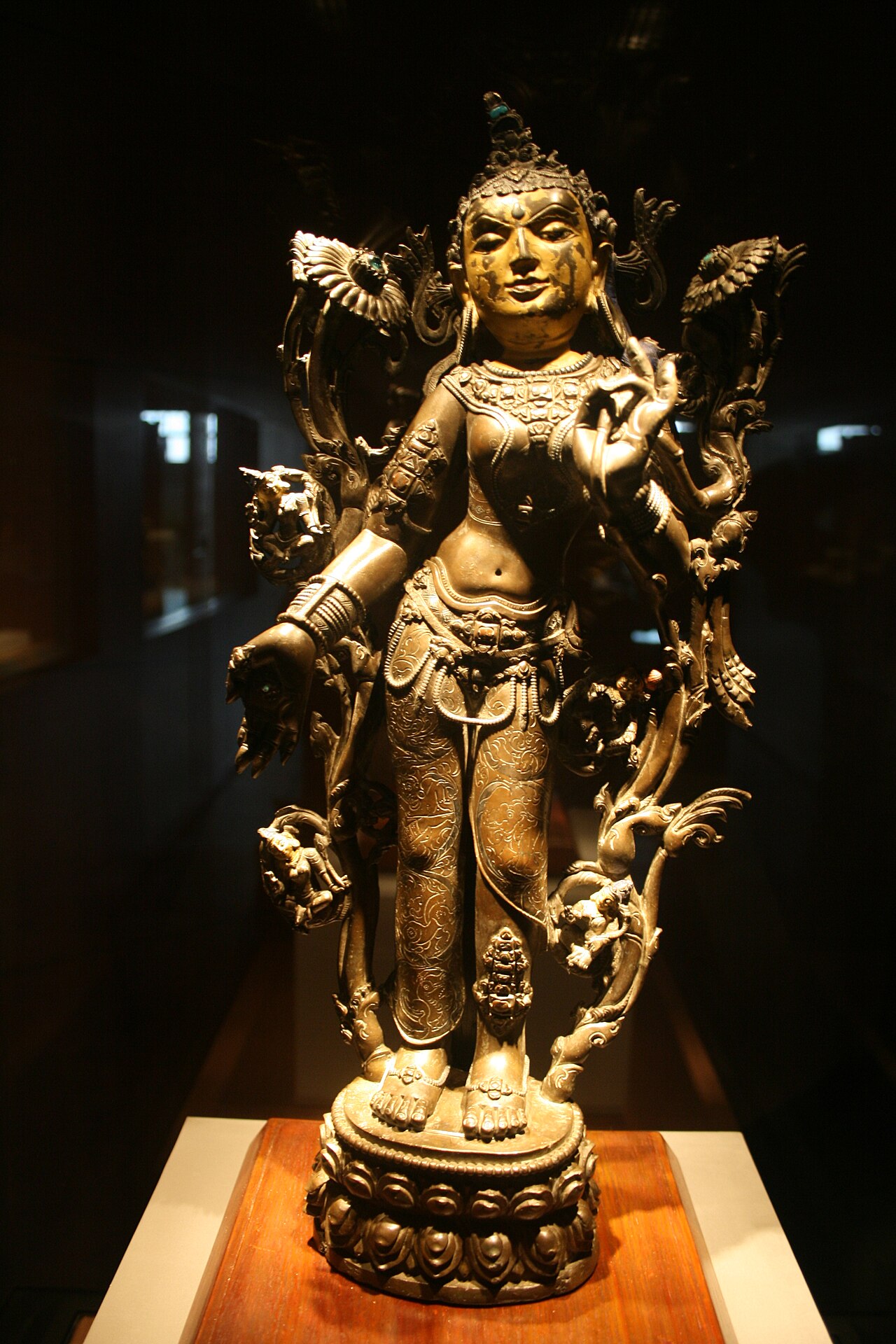

Forms and iconography
Tārā is represented in multiple colors and aspects, each signifying particular qualities and methods of practice. The forms are depicted in painting, sculpture and ritual objects, and they guide distinct liturgies and visualizations. Commonly recognized manifestations include:
- Green Tārā — associated with enlightened activity and active compassion; often shown in a posture of readiness to aid beings.
- White Tārā — connected with long life, healing, serenity and the granting of beneficial wishes.
- Red, Yellow, Blue and Black Tārās — colors that emphasize magnetizing qualities, prosperity, transformation of anger, and power respectively.
- Cittamāṇi Tārā — a form practiced in higher tantric systems and sometimes identified with Green Tārā in specific lineages.
- Khadīravana Tārā — a Tara linked in tradition to the teak forest (Khadīravana) and to narratives involving early Indian teachers.
Historical development and textual sources
The cult of Tārā arose within the broader evolution of Indian Mahāyāna and tantric literature and became central to Tibetan devotional and sadhana practice. Many ritual manuals and liturgies preserve verses and instructions for her various forms. In several Tibetan traditions a set of twenty‑one Tārās is enumerated and praised in a liturgical text commonly known in practice as "In Praise of the Twenty‑One Tārās," which is recited across the main schools of Buddhism in Tibet. Hagiographical accounts link some Tara manifestations to eminent figures of the Indian and Tibetan past and to sacred places such as the Khadīravana forest referenced in those traditions.
Practice, mantra and visualization
Tārā practice combines visualization, ethical aspiration, and ritual recitation. Practitioners generate the deity in mind, recite her mantra, and make prostrations and offerings to cultivate fearlessness and compassion. The best known formula is the Sanskrit mantra Oṃ tāre tuttāre ture svāhā, which is commonly pronounced in Tibetan communities as "Oṃ tāre tu tāre ture soha." This mantra and associated sadhanas are taught at various levels, from basic devotional practices to more advanced meditations within Highest Yoga Tantra as transmitted in lineages such as the Gelug school.
Significance and interpretation
Tārā embodies a synthesis of compassion (karuṇā) and skillful means (upāya). She is interpreted in multiple ways across lineages: sometimes as a fully enlightened buddha, sometimes as an idealized bodhisattva or an emanation manifesting particular methods. Teachers often present bodhisattvas and buddhas as pedagogical devices or metaphors to convey doctrinal points, and Tārā’s feminine form is regularly emphasized to illustrate nondual qualities rather than ordinary gender distinctions. Her association with tantra (tantra) and the wider Vajrayana path highlights practices that integrate visualization, mantra and ethical conduct to develop inner qualities and wisdom.
Names, language and comparative notes
The name Tārā is Sanskrit in origin (Sanskrit) and conveys the sense of a savior or guide across the ocean of saṃsāra. Her practices and iconography are part of a living religious tradition and appear in comparative discussions with other tantric systems; for example, Tārā-related liturgy is prominent in Tibetan contexts but is not a central figure in Japanese Shingon practice. In devotional life Tārā remains one of the most accessible and frequently practiced figures, invoked for protection, healing, longevity and the removal of obstacles to both worldly and spiritual aims. For readers seeking further guidance, introductory ritual manuals and chant collections used in Tibetan communities provide translations, instructions and commentary on these rites (virtues).
Across centuries and cultures, Tārā’s vivid imagery and concise practices have made her a lasting focus for those who seek compassionate, swift assistance and a pedagogical model of enlightened activity.
For additional contextual material and liturgical texts, traditional chant manuals and modern surveys of Tibetan iconography can be consulted within practitioner and academic literature (Khadiravani).
Related articles
Author
AlegsaOnline.com Tārā (Buddhism): Female bodhisattva and tantric deity of liberation Leandro Alegsa
URL: https://en.alegsaonline.com/art/96354