
Temple Square — religious and historic center in Salt Lake City
Temple Square is a National Historic Landmark in downtown Salt Lake City owned by The Church of Jesus Christ of Latter-day Saints, containing the Salt Lake Temple, Tabernacle, Assembly Hall and visitor centers.
Overview
Temple Square is a prominent religious, cultural, and historical complex in downtown Salt Lake City owned and maintained by The Church of Jesus Christ of Latter-day Saints. Designated a National Historic Landmark, the site draws millions of visitors annually and serves as a focal point for worship, musical performances, public gatherings, and tourism.
Image gallery
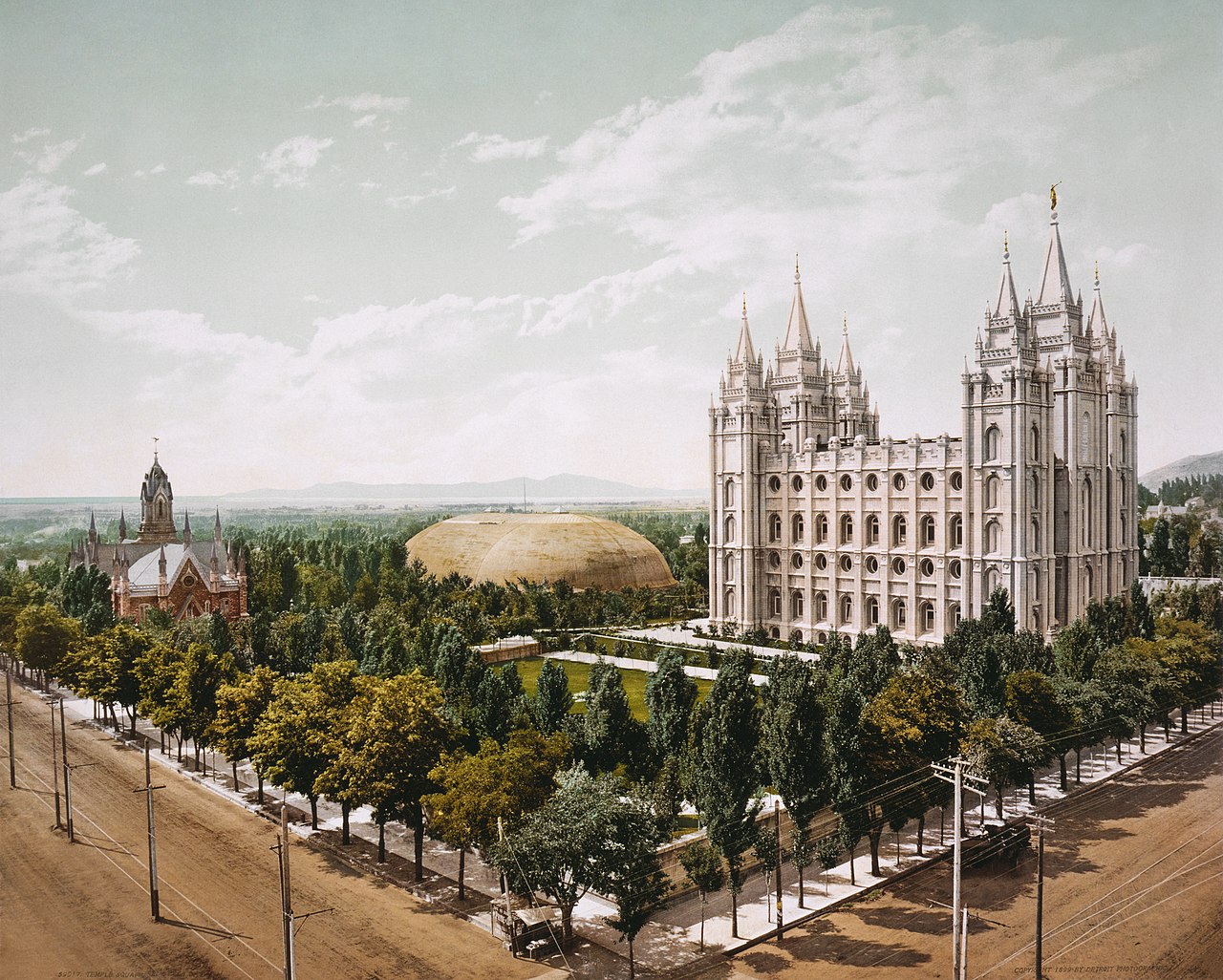
10 Images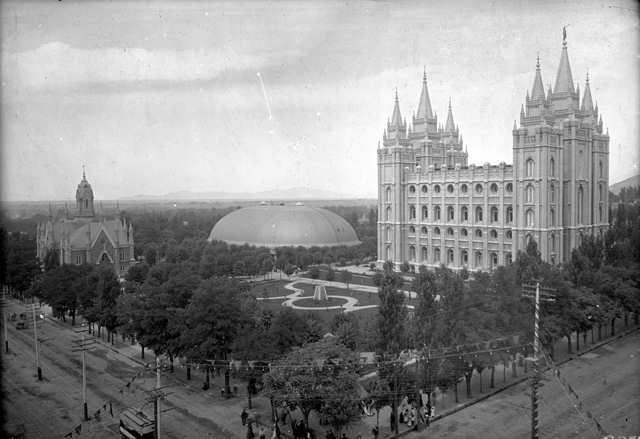



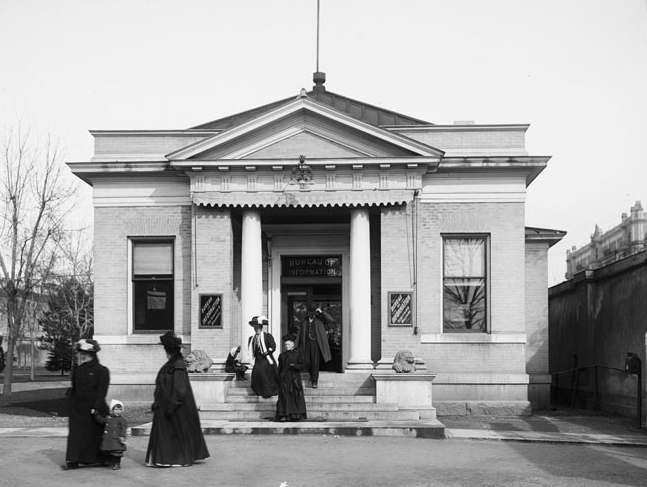
Main buildings and features
The complex combines religious buildings, monuments, landscaped grounds and visitor facilities. Key elements include:
- Salt Lake Temple — the temple is a granite-clad building with multiple spires that is central to the site and to Latter-day Saint temple worship. It was begun in the 19th century and reflects symbolic design important to church practice.
- Salt Lake Tabernacle — an assembly hall known for its distinctive domed roof and exceptional acoustics; it hosts large meetings and concerts.
- Salt Lake Assembly Hall — a smaller, Victorian Gothic-style building used for meetings and musical events.
- Seagull Monument — a sculptural memorial recalling a local event of ecological and cultural significance to early settlers.
- Visitors' centers — two centers offer exhibits, orientation films, guided tours and information for the public year-round.
History and development
The site was established soon after the Mormon pioneers arrived in the Salt Lake Valley in the late 1840s. Work on the Salt Lake Temple began in the mid-19th century and continued for decades, with the building becoming an enduring symbol of the community. Other structures were erected in the later 19th century to serve congregational, administrative and cultural needs, while landscaping and public access evolved to accommodate tourism and civic uses.
Uses and cultural importance
Temple Square functions both as a sacred precinct for members of the church and as a civic attraction. The Tabernacle and Assembly Hall host concerts and religious gatherings; the Tabernacle Choir at Temple Square (long associated with the site) gives regular performances and broadcasts. The visitors' centers provide historical context and explanations of Latter-day Saint beliefs and practices to a broad public. Although the temple building itself is reserved for certain religious ceremonies and is not open to general tourist access, the grounds and many buildings welcome visitors.
Notable distinctions
Temple Square is one of Utah's most visited destinations, attracting several million visitors each year. Its combination of distinctive 19th-century architecture, landscaped urban grounds and ongoing role in religious life makes it a notable example of a living historic site where worship, music, tourism and community identity intersect.
Practical information
Visitors commonly explore the grounds, attend free guided tours and hear musical performances; seasonal events and special programs are offered throughout the year. For official visitor information, hours and event schedules, consult church-provided resources and onsite visitor centers.
Related articles
Author
AlegsaOnline.com Temple Square — religious and historic center in Salt Lake City Leandro Alegsa
URL: https://en.alegsaonline.com/art/96926
Sources
- commons.wikimedia.org : Temple Square
- tps.cr.nps.gov : "Temple Square"
- media.utah.edu : "The Salt Lake Temple: A Monument to a People"
- newsroom.lds.org : "Style Guide - The Name of the Church"
- heraldextra.com : "Temple Square still top tourist attraction in Utah"
- tools.wmflabs.org : 40°46′13″N 111°53′33″W / 40.77041°N 111.89246°W / 40.77041; -111.89246