
Tamil language: history, features, and modern use
Tamil is a major Dravidian language with a continuous literary tradition, an independent script, and millions of speakers across South Asia and the global diaspora.
Overview
Tamil is a Dravidian language spoken primarily in the Indian state of Tamil Nadu and the union territory of Puducherry, and in parts of India beyond those borders. It is also an official language in Sri Lanka and one of Singapore's official languages; sizeable communities of Tamil speakers live in Singapore, Malaysia and in many countries of the global diaspora.
Image gallery
10 Images



Classification and linguistic features
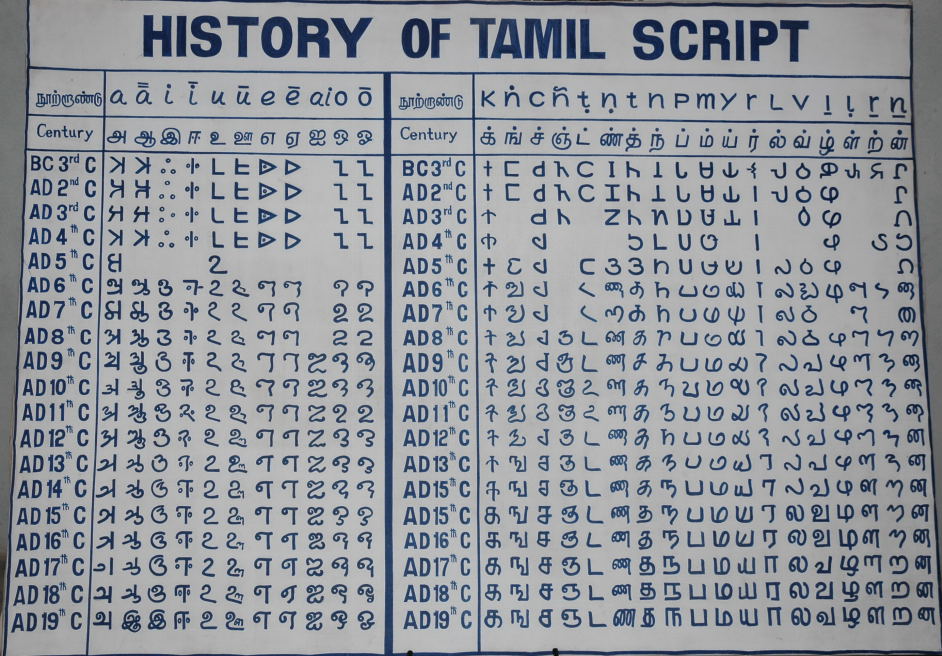
Tamil belongs to the Dravidian family, whose better-known members include Telugu, Kannada and Malayalam. It is an agglutinative language with predominantly subject–object–verb word order and uses postpositions rather than prepositions. The modern Tamil script is syllabic and developed from ancient Brahmi-derived forms; the orthography combines a set of vowels and consonants into syllable blocks. Commonly noted features include rich verbal morphology, extensive use of suffixes for tense, mood and respect, and a clear distinction between formal literary registers and everyday colloquial speech.
History and literary tradition
Tamil has one of the longest continuous literary histories among the world's languages. Early works include a classical grammar known as the Tolkāppiyam and the corpus known as Sangam literature, composed centuries ago and preserved in poetic anthologies. Epigraphic evidence, medieval devotional literature and later modern prose and poetry show a long trajectory from ancient inscriptions to contemporary publishing and digital media. The language has been recognized for its classical status and sustained literary culture.
Dialects, registers and writing
Tamil exists in multiple regional dialects and social registers. Spoken varieties differ between urban and rural areas and between the Tamil of India and that of Sri Lanka; there are also distinctive registers used in religious, legal and literary contexts. The written standard is used in education and most media, while colloquial speech varies widely across regions and communities.
Uses and cultural importance
- Education and administration in Tamil-speaking states and territories.
- A rich body of classical and modern literature, including poetry, devotional works and secular prose.
- Mass media and entertainment: newspapers, broadcasting and a vibrant film and music industry.
- Religious, social and cultural life across South India and the diaspora, maintaining language continuity abroad.
Notable facts and distinctions
Tamil is often noted for its longevity as a living literary language and for its distinct development within the Dravidian family. It continues to be taught, published and used in everyday life, serving both as a marker of regional identity and as a link among Tamil-speaking communities worldwide.
Related articles
Author
AlegsaOnline.com Tamil language: history, features, and modern use Leandro Alegsa
URL: https://en.alegsaonline.com/art/96199
Sources
- ethnologue.com : Tamil language
- censusindia.gov.in : "Scheduled Languages in descending order of speaker's strength - 2011" · web.archive.org
- tn.gov.in : "Official languages of Tamil Nadu" · web.archive.org
- nclm.nic.in : Report of the Commissioner for Linguistic Minorities in India: 50th report (delivered to the Lokh Sabha in 2014)
- asean.org : Languages of ASEAN
- www10.gencat.net : School languages
- tvaraj.com : Tamil on Mauritian Currency
- gov.za : "Constitution of the Republic of South Africa, 1996 – Chapter 1: Founding Provisions"
- glottolog.org : "Tamil"
- glottolog.org : "Old Tamil"
- doi.org : 10.2307/2053325