
Telegraphy: long-distance transmission of written messages
Telegraphy is the transmission of written or symbolic messages over distance using coded signals. It arose in the 18th–19th centuries and shaped communication, transport, commerce and military operations.
Overview
Telegraphy is the transmission of written or symbolic information over long distances without the physical movement of documents. The word derives from Greek roots such as tele + graphein, literally "writing from afar." In practical terms telegraphy converts characters into a sequence of signals—short and long marks, pulses, or other distinguishable states—sent through a medium and decoded at the far end.
Image gallery
10 Images



History and development
Before electric systems existed, optical semaphore networks used visual towers to relay messages across regions. The discovery and application of electricity in the early 19th century led to the first electrical telegraphs, which became widespread during the mid-1800s. Over the following decades networks expanded across continents and under oceans, and wireless radio-based telegraphy emerged around the turn of the 20th century. Parallel developments produced automated teleprinters and telegraphy over telephone lines, while later digital systems replaced many traditional telegraph functions.
Technology, components and codes
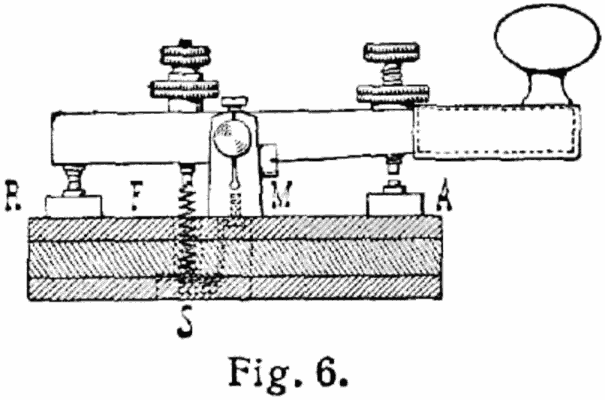
Fundamentally a telegraph system has three parts: a transmitter that encodes information into signals, a transmission path (wire, cable, or radio), and a receiver that decodes the signals back into readable characters. Early electrical telegraphs used on/off pulses relayed mechanically or electrically. Different coding schemes map symbols to signal patterns; the most famous is Morse code, a variable-length code of dots and dashes. Other systems used fixed-length character codes such as the Baudot code for teleprinters. General descriptions of coding and signaling principles can be found under coding conventions.
Types and modes
- Optical/visual telegraphy (semaphore towers)
- Wired electrical telegraphy (needle, relay and recording systems)
- Wireless or radio telegraphy (spark and later continuous-wave systems)
- Teleprinter/telex networks using mechanical or electronic printers
Uses and impact
Telegraphy transformed commerce, journalism, diplomacy and military command by enabling near-instant exchange of information across great distances. It revolutionized railway operations and scheduling and contributed to the standardization of time. News agencies and commercial firms used telegraph networks to coordinate markets and disseminate information quickly.
Legacy and distinctions
While largely superseded by telephone, fax, and modern digital networks, telegraphy established fundamental concepts of remote signalling, coding and networked communication that underpin contemporary data transmission. Distinct from telephony (real-time voice) and modern packet-switched data, traditional telegraphy focused on symbolic message transmission, either manually keyed or machine-printed. Historical telegraph systems remain important for understanding the emergence of global communications infrastructure and its social and economic effects.
Notable facts: the telegraph accelerated news flow and commerce, fostered specialized companies and regulatory frameworks, and was a direct technological ancestor of many modern communications services.
Questions and answers
Q: What is telegraphy?
A: Telegraphy is the long-distance transmission of written messages without physical transport of letters.
Q: What are the Greek roots of the word telegraphy?
A: The Greek roots of the word telegraphy are 'tele' meaning far and 'graphein' meaning write.
Q: How do telegraphs send messages?
A: Telegraphs send messages through the transmission of electric pulses in a special code, composed of short and large marks.
Q: What is the code usually used by amateur radio operators?
A: Usually, amateur radio operators use Morse code.
Q: Is telegraphy an outdated mode of communication?
A: Yes, telegraphy is an outdated mode of communication.
Q: What is the main advantage of telegraphy over physical transport of letters?
A: The main advantage of telegraphy over physical transport of letters is the ability to transmit messages over long distances without physically transporting letters.
Q: What is Morse code?
A: Morse code is a special code composed of short and large marks that is used for transmitting messages through telegraphy.
Related articles
Author
AlegsaOnline.com Telegraphy: long-distance transmission of written messages Leandro Alegsa
URL: https://en.alegsaonline.com/art/96801
Sources
- 150.si.edu : "Telegraph"
- npr.org : "Western Union Sends Its Last Telegram : NPR"
- drive.google.com : "SecretMsg.wav"