
Takeichi Nishi — Japanese Olympic Equestrian and WWII Tank Commander
Takeichi Nishi (1902–c.1945) was a Japanese equestrian who won Olympic gold in 1932 and later served as an Imperial Japanese Army officer, killed while commanding tanks at Iwo Jima.
Takeichi Nishi (西 竹一, Nishi Takeichi; July 12, 1902 – c. March 22, 1945) was a notable figure in both international sport and Japan's wartime history. Born into a Japan that still valued cavalry traditions, he gained prominence first as an internationally competing rider and later as a military officer. In discussions of his name and heritage see Japanese conventions and name order; his family name is Nishi.
Image gallery
3 Images

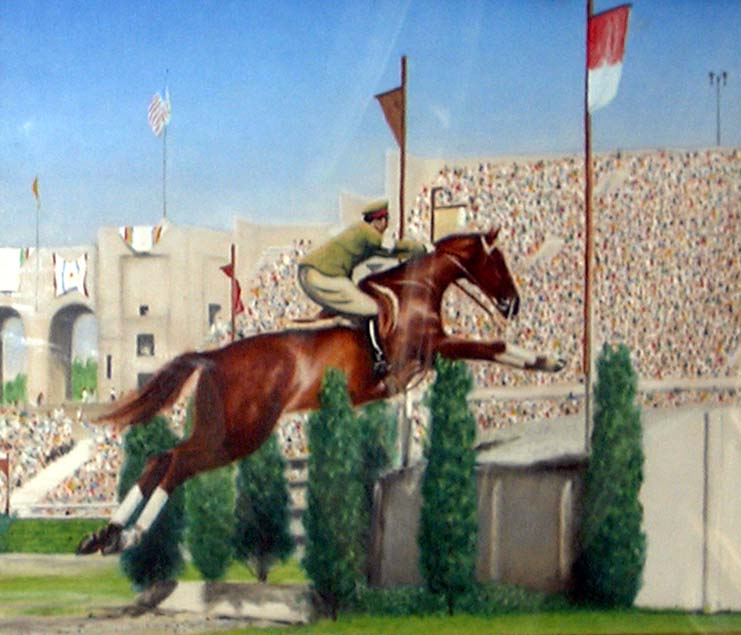
Equestrian career and Olympic achievements
Nishi became best known for his skill in show jumping. As an accomplished athlete and dedicated equestrian, he represented Japan in international competition. He participated in two Summer Olympic Games, a rare dual role at the time for a Japanese officer and sportsman.
His most celebrated sporting success came at the 1932 Summer Olympics, where his performance in show jumping earned him the gold medal. The victory in Los Angeles was an early Olympic triumph for Japan in equestrian events and helped raise the profile of the sport in his home country.
Nishi also took part in the 1936 Summer Olympics in Berlin, competing against much of the world’s leading riding talent. While he did not repeat his gold-medal performance there, his presence at two consecutive Games underscored the dual path of his career: elite sport and military service.
Military service and death
After a career in cavalry and equestrian circles, Nishi served as an officer in the Imperial Japanese Army. During the closing stages of World War II he was assigned to armored forces and is known to have been a tank unit commander during the Battle of Iwo Jima. He was reportedly killed in action while defending the island of Iwo Jima, around March 1945; the exact circumstances and date remain subjects of historical reconstruction.
Legacy and notable facts
Nishi's life is often cited as an example of the overlap between sporting achievement and military duty in the early 20th century. His Olympic gold remains a milestone in Japan's equestrian history, and his wartime death links him to one of the Pacific War's most studied battles. Collections of Olympic records and military histories refer to him when discussing the cultural impact of athletes who also served in uniform.
- Olympic show jumping gold medalist (1932) — international recognition for Japanese equestrian sport.
- Competitor at the 1936 Berlin Olympic Games — continued international presence.
- Imperial Japanese Army officer and tank unit commander — killed during the Battle of Iwo Jima.
For further reading on naming conventions, Olympic history, and the battle in which he fell, follow the linked topics above or consult dedicated sports and military archives. Each of the placeholder links corresponds to aspects of his name, athletic career, Olympic appearances, and the final battle where he served.
Related articles
Author
AlegsaOnline.com Takeichi Nishi — Japanese Olympic Equestrian and WWII Tank Commander Leandro Alegsa
URL: https://en.alegsaonline.com/art/96039
Sources
- sports-reference.com : "Takeichi Nishi"
- la84foundation.org : "Baron Nishi: 1932 Olympic Gold Medalist for Japan,"
- imdb.com : Letters from Iwo Jima