
Summer Olympic Games
The Summer Olympic Games are the leading international multi-sport event held every four years under the International Olympic Committee, tracing roots to ancient Greece and evolving into a global festival of sport.
Overview
The Summer Olympic Games, often shortened to the Olympics or the Games of the Olympiad, are an international multi-sport competition staged every four years under the authority of the International Olympic Committee. Each edition is hosted by a different city chosen through a multi-stage bidding process; winning the right to stage the Games is widely regarded as a major cultural and economic honour. The Summer Games attract far more nations and athletes than their winter counterpart, the Winter Olympic Games, which feature sports practiced on snow or ice.
Image gallery
10 Images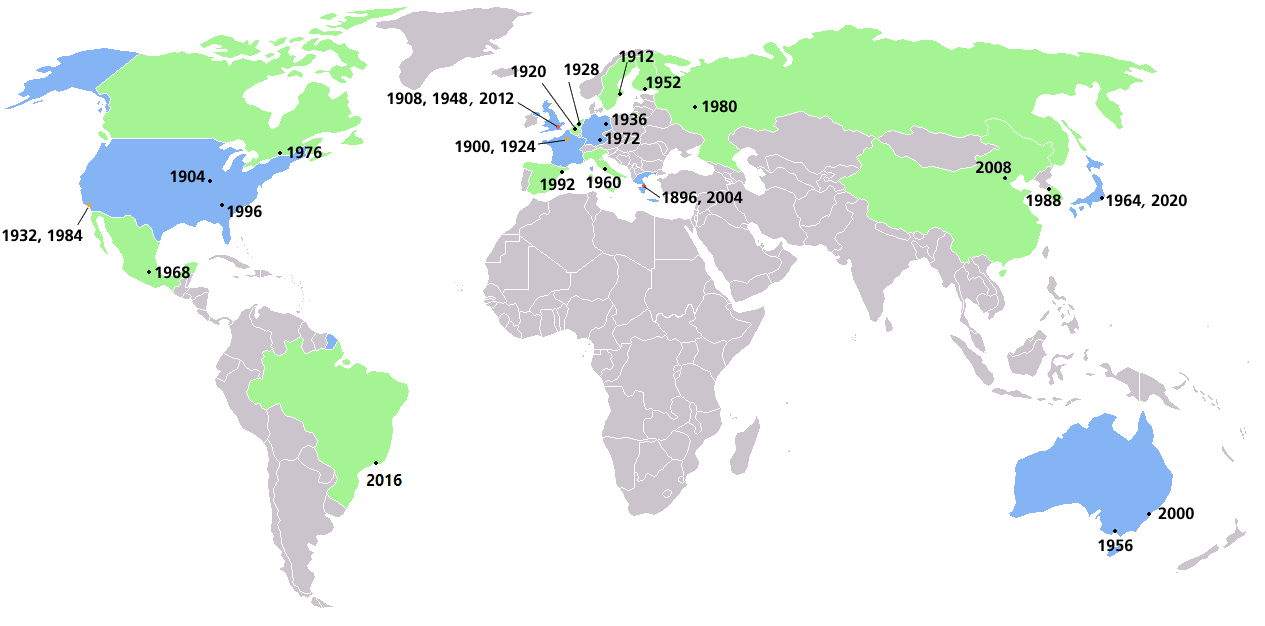


Characteristics and format
The modern Summer Games bring together athletes from dozens to hundreds of countries to compete across dozens of sports and disciplines. Competitions are staged over roughly two weeks and are introduced by an opening ceremony and closed by a closing ceremony that celebrate the host city and the Olympic movement. Since 1904, medals have been awarded to the top three finishers in each event, with gold for first place, silver for second and bronze for third. The program is periodically reviewed and revised to reflect changes in global sporting practice and audience interest.
History and origins
The Olympic tradition traces back to athletic festivals held in ancient Greece; the modern revival began in the late 19th century. The first international Summer Olympic Games of the modern era took place in Athens in 1896. That edition involved a few hundred competitors, mostly from Europe, and helped establish a pattern of organizing a global sporting festival every four years. Over the 20th century the Games expanded dramatically in scale and scope and gradually opened to professional athletes alongside amateurs.
Evolution of the program
The number of events and participating athletes has grown steadily. Early modern Games featured only a few dozen events, while later editions included hundreds. For example, the program for the 2008 Summer Olympics in Beijing listed more than 300 medal events and expected a very large athlete delegation. Sports may be added or removed by the organizing bodies; new disciplines and gender-balanced competitions have been introduced over time to increase inclusiveness and relevance.
Typical events and organization
Summer Olympic sports cover a range of athletic activities, from track and field, swimming and gymnastics to team sports like football and basketball, combat sports, cycling and sailing. Competition venues are organized across the host city and its region and include purpose-built arenas as well as existing stadiums. The Games also involve a large volunteer workforce, broadcasters, national delegations and an accreditation system to manage access and logistics.
Significance, reforms and challenges
The Summer Olympics are a major platform for athletes and nations, offering the highest-profile competitive stage in many sports. They also serve diplomatic and cultural roles, promoting international exchange and showcasing host-city development. Over time the movement has confronted issues such as the professionalization of athletes, doping and the environmental, financial and social impacts of hosting. Reforms by the governing bodies seek to improve sustainability, legacy planning and fairness in competition.
Notable facts and references
- The Olympic motto, adopted from Latin translations, and symbols such as the five interlocking rings are internationally recognised emblems of the Games.
- Medals for the top three competitors have been awarded consistently since 1904, and the awarding practice remains one of the defining features of Olympic competition.
- Participation has grown from a few hundred competitors—early editions included small national delegations such as the roughly two hundred athletes from Greece and under fifty from other nations in 1896—to thousands in the modern era, with national teams of varying size and scope (athlete delegations).
For additional authoritative information on governance, history and past Games see the institutions and archival resources linked by the International Olympic movement: ancient origins, the medal traditions, and official Olympic reports and host-city documentation (IOC, host cities, individual editions).
Questions and answers
Q: What are the Summer Olympic Games?
A: The Summer Olympic Games are an international sporting event that are held every four years by the International Olympic Committee.
Q: How often are the Olympic Games held?
A: The Olympic Games are held every four years.
Q: Where are the Olympic Games held?
A: The Olympic Games are held in a different city each time.
Q: When are the Winter Olympic Games held?
A: The Winter Olympic Games are held two years after the Summer Olympics.
Q: Where are the Winter Olympic Games held?
A: The Winter Olympic Games are held in a cold, mountainous place because the sports are all snow and ice sports such as skiing.
Q: When were the first modern Summer Olympic Games held?
A: The first modern Summer Olympic Games were held in Athens in 1896.
Q: How many events were on the program for the 2008 Summer Olympics in Beijing?
A: 302 events were on the program for the 2008 Summer Olympics in Beijing.
Related articles
Author
AlegsaOnline.com Summer Olympic Games Leandro Alegsa
URL: https://en.alegsaonline.com/art/94785
Sources
- olympic.org : "Beijing 2008: Games Programme Finalised"