
Swabian Jura (Schwäbische Alb): karst plateau of southwestern Germany
The Swabian Jura is a Jurassic limestone plateau in Baden-Württemberg, Germany, known for its karst landscape, caves, abundant fossils and prehistoric finds, scenic foothills and outdoor recreation.
The Swabian Jura, known in German as Schwäbische Alb and in regional dialects as Schwobm Alb, is a prominent upland plateau in Baden-Württemberg, Germany. Framed by the Black Forest to the west, the urban basin around Stuttgart to the north, the border with Bavaria to the east and the shores of Lake Constance to the south, the region combines a gently sloping plateau with a steep escarpment and a deeply eroded karst interior.
Image gallery
10 Images

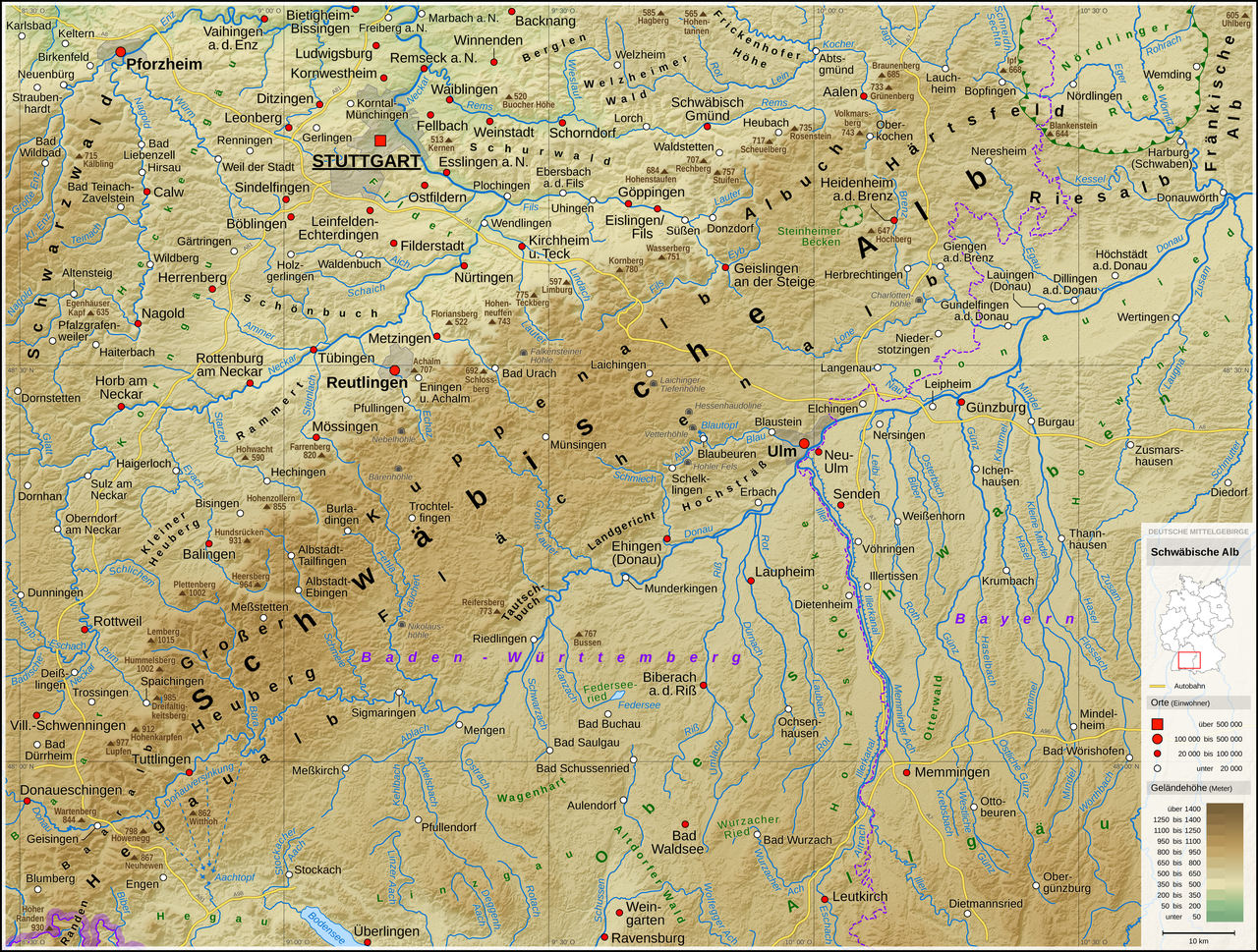


Geology and landscape
The plateau is built chiefly of Jurassic limestone that was deposited in shallow seas and later uplifted. Rain and groundwater action on soluble rock produced a classic karst terrain: caves, sinkholes, dry valleys, springs and cliffs. The highest point is the Lemberg (about 1015 m), while much of the upland sits several hundred metres above the surrounding lowlands.
Fossils, archaeology and natural history
The Jurassic limestones yield abundant fossils of marine life that lived tens of millions of years ago, making the area important to paleontologists and fossil collectors. In addition, the Swabian Jura is famous for its Ice Age caves and prehistoric artefacts: several cave sites have produced early figurative carvings and tools and are recognised for their archaeological value. A number of caves and finds are protected and interpreted in local museums.
Human use, culture and recreation
Settlements, castles and monasteries dot the escarpment and valleys; traditional agricultural land use has shaped the open hilltops and woods. Today the region attracts hikers, climbers, cavers and cyclists, and offers museums, guided cave tours and cultural trails. Small towns such as Blaubeuren and others nearby provide visitor services, local cuisine and access to springs and historic sites.
Key features and distinctions
- Karst topography with notable show caves and springs.
- Rich Jurassic fossil record, valuable to science and education.
- Important Paleolithic cave sites with early art and artefacts.
- A mix of natural scenery and cultural heritage that supports tourism and outdoor recreation.
Visitors and students interested in geology, paleontology, archaeology or rural landscapes find the Swabian Jura a compact region that links scientific significance with accessible trails and museums. For further reading and practical information, regional authorities and interpretive centres maintain resources and guided services.
Questions and answers
Q: What is the Swabian Jura?
A: The Swabian Jura is a plateau located in Baden-Württemberg, Germany.
Q: Where is the Swabian Jura situated?
A: The Swabian Jura is situated between the Black Forest to the West, Stuttgart to the North, Bavaria to the East, and Lake Constance to the South.
Q: What is the significance of the Swabian Jura?
A: The Swabian Jura is significant because a lot of fossils are found in the area.
Q: What is the highest mountain in the Swabian Jura?
A: The highest mountain in the Swabian Jura is the Lemberg, which is 1015 meters tall.
Q: What is the German name for the Swabian Jura?
A: The German name for the Swabian Jura is Schwäbische Alb.
Q: What is the Bavarian name for the Swabian Jura?
A: The Bavarian name for the Swabian Jura is Schwobm Alb.
Q: What region of Germany are you likely to find the Swabian Jura in?
A: You are likely to find the Swabian Jura in the region of Baden-Württemberg in Germany.
Related articles
Author
AlegsaOnline.com Swabian Jura (Schwäbische Alb): karst plateau of southwestern Germany Leandro Alegsa
URL: https://en.alegsaonline.com/art/95394