
Supergiant (stellar class)
Supergiant stars are extremely luminous, massive stars (luminosity class I). This entry explains their properties, classification, life cycles, roles in nucleosynthesis and supernovae, and notable examples.
A supergiant is a very luminous, very large star that occupies the upper region of the Hertzsprung–Russell diagram and is assigned luminosity class I. Supergiants are more luminous and often much larger than ordinary giant stars; they include both cool red supergiants and hot blue supergiants. For introductory resources on stellar taxonomy and context see stellar classification resources.
Image gallery
7 Images




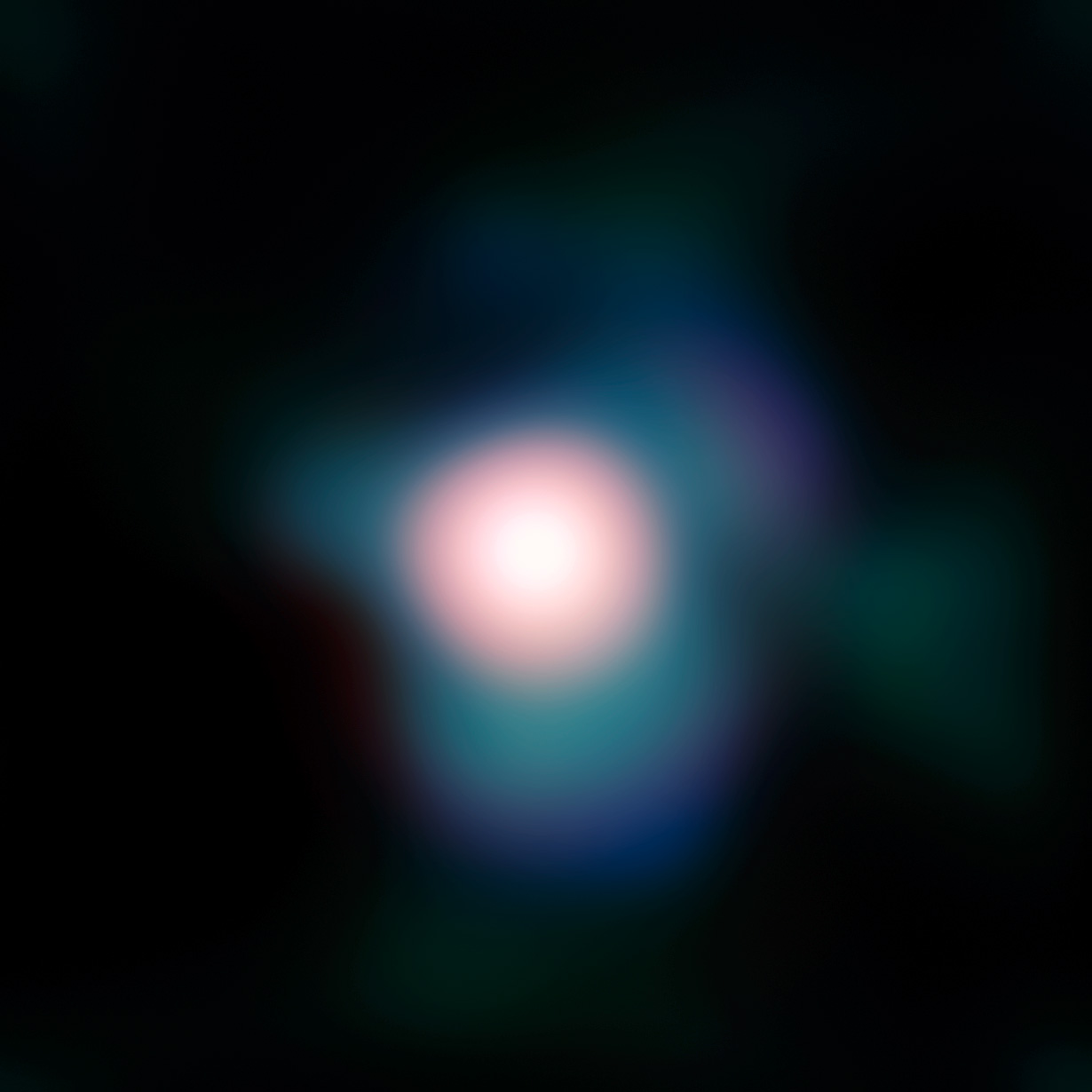

Physical characteristics
Supergiants typically have radii of hundreds to more than a thousand times the Sun's radius and luminosities that can be tens of thousands to several hundred thousand times solar. Surface temperatures span a wide range: red supergiants are relatively cool (a few thousand kelvins), while blue supergiants reach tens of thousands of kelvins. Many show strong, sustained stellar winds and episodic mass loss that create extended atmospheres and circumstellar shells. Their placement near the top of the Hertzsprung–Russell diagram reflects both very high luminosity and a broad temperature range; further discussion of the HR diagram is available at Hertzsprung–Russell resources.
Classification and subtypes
- Spectral range: Supergiants occur across spectral types O through M and therefore appear as blue, white, yellow or red supergiants depending on temperature.
- Luminosity subclasses: Observationally they are grouped as Ia (most luminous), Iab, and Ib (less luminous) to indicate relative brightness among supergiants.
- Special categories: Some extremely luminous or unstable stars are termed luminous blue variables (LBVs) or hypergiants; these show irregular eruptions or very high mass-loss rates and represent the upper extreme of massive-star behaviour. See specialized reviews at reviews on massive star instability.
Evolution and fate
Supergiants are usually the evolved stages of stars born with relatively large initial masses—commonly above about 8–10 solar masses. Their cores pass through successive nuclear burning stages much more rapidly than lower-mass stars, consuming fuels on timescales of millions rather than billions of years. When core fusion can no longer support the star, many supergiants end their lives in core-collapse supernovae, producing neutron stars or black holes and dispersing heavy elements into the interstellar medium. This nucleosynthetic role makes supergiants important contributors to galactic chemical evolution; introductory summaries of stellar evolution and nucleosynthesis are collated at stellar evolution summaries.
Observational importance
Because of their intrinsic brightness, supergiants dominate the light of young stellar populations in galaxies and can be seen at great distances. Some evolved supergiants become pulsating variable stars such as classical Cepheids, which serve as reliable distance indicators in extragalactic astronomy. Observations of supergiants also provide tests of late-stage stellar physics: convection in extended envelopes, pulsation behaviour, mass-loss mechanisms, and the influence of rotation and binarity. Practical observational catalogs and guides for identifying and studying these stars are available from professional and amateur resources at observational and database resources.
Notable examples
Familiar nearby supergiants studied in detail include red supergiants such as Betelgeuse and Antares, and well-known blue supergiants such as Rigel and Deneb. Some extreme and variable examples, like the luminous blue variable Eta Carinae, illustrate the instability and dramatic mass-loss episodes that can occur in the most massive stars. These objects remain active subjects of research because they link stellar evolution, explosive endpoints, and the enrichment of the interstellar medium.
Related articles
Author
AlegsaOnline.com Supergiant (stellar class) Leandro Alegsa
URL: https://en.alegsaonline.com/art/95048